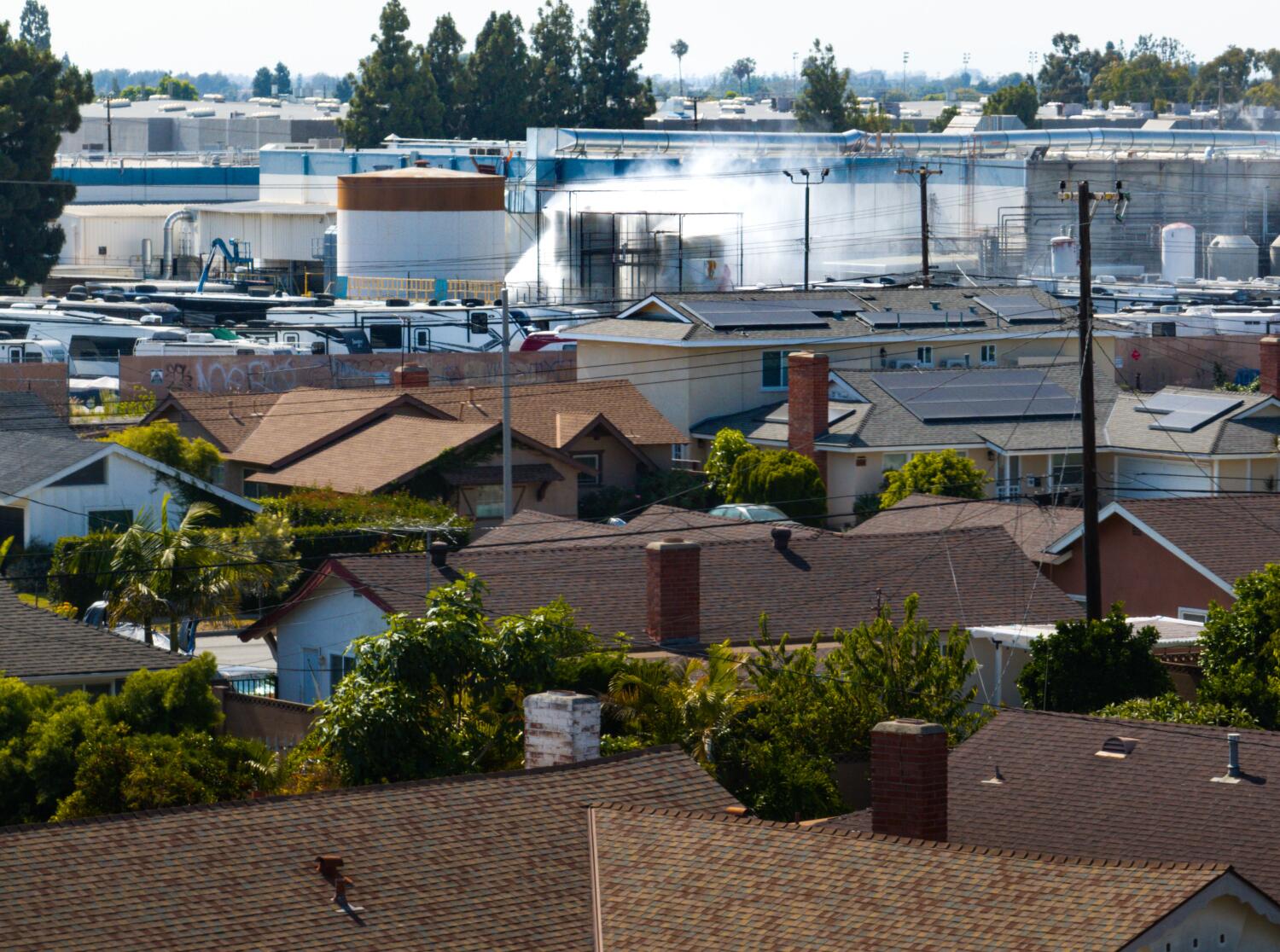
A hairline fracture in a hazardous material storage unit is rarely a cause for celebration. Yet, early reports surrounding a recent industrial incident in Garden Grove, California, attempted to spin a structural failure as a stroke of good fortune. When a localized crack was discovered on a pressurized chemical tank, local emergency channels and early media dispatches suggested the fissure served as a accidental pressure-relief valve, effectively lowering the immediate risk of a catastrophic explosion.
This is a dangerous misinterpretation of industrial mechanics. While a drop in internal pressure can technically reduce the immediate blast radius of a vessel, treating a structural breach as a safety feature ignores the volatile reality of chemical engineering. A compromised hull does not stabilize a crisis. It merely trades a sudden detonation for an unpredictable, toxic trajectory. If you found value in this piece, you might want to read: this related article.
Understanding the true nature of this incident requires looking past the comforting narrative of a managed crisis. Industrial facilities operate under strict thermodynamic balances, and when those balances fail, the margin for error vanishes entirely.
The Myth of the Controlled Crack
Pressure vessels are engineered to withstand immense internal force, often holding volatile compounds at specific temperatures to keep them stable. When a crack forms, the structural integrity of the entire system degrades exponentially. For another angle on this development, see the latest update from NPR.
To understand why a fracture is never a safety mechanism, consider the mechanics of stress concentration. Material stress does not distribute evenly across a damaged surface. Instead, it pools at the sharpest point of a crack, acting like a wedge driven into the metal. What begins as a minor fissure can rapidly unzip under the influence of fluctuating thermal conditions or internal agitation.
If the chemical inside reacts with the atmosphere, the introduction of outside air through a crack can catalyze a secondary disaster. Many industrial agents are pyrophoric or highly reactive when exposed to ambient moisture. A drop in pressure might temporarily avert a mechanical rupture, but the resulting chemical ingress can trigger rapid decomposition, internal fires, or toxic cloud formation that is far more difficult to contain than a predictable pressure spike.
How Safeguards Actually Fail
Industrial facilities do not rely on metal fatigue to manage pressure. Modern chemical storage tanks are outfitted with redundant, highly engineered safety systems designed to prevent over-pressurization without compromising the physical containment unit.
- Rupture Disks: These are thin membranes designed to burst at a precise pressure threshold, directing excess gas safely into a scrubbed flare system or containment auxiliary.
- Spring-Loaded Relief Valves: These mechanical valves open to vent pressure and reseat themselves once safe operating parameters are restored.
- Emergency Cooling Loops: Automated systems that flood the tank jacket with coolant to suppress runaway thermal reactions before pressure builds.
When a crack becomes the primary method of pressure reduction, it indicates a systemic failure of these primary defenses. Investigators looking into the Garden Grove event must determine why the standard mechanical relief systems failed to actuate before the tank hull reached its breaking point. Relying on a structural failure to bleed off energy is equivalent to trusting a car's crumbling frame to slow it down instead of the brakes.
The Invisible Threat of Toxic Plumes
An explosion is a brief, violent event with a defined geographic impact. A chemical leak, fueled by a structural crack, is an ongoing logistical nightmare that can shift with the wind.
When hazardous liquids or gases escape a compromised tank, they form vapor clouds that hang low to the ground. In dense municipal areas like Orange County, these plumes present an immediate risk to nearby residential zones, schools, and commercial corridors. First responders cannot easily patch a active fissure on a pressurized tank, forcing them to establish wide exclusion zones and issue shelter-in-place orders that paralyze local infrastructure.
Furthermore, the environmental remediation required after a prolonged leak often eclipses the cleanup of a localized blast. Soil contamination, groundwater infiltration, and long-term air quality degradation require months of monitoring and costly extraction efforts. The narrative that a crack reduced risk completely ignores the compounding long-term liabilities of environmental exposure.
Aging Infrastructure and the Regulatory Gap
The Garden Grove incident highlights a broader, systemic issue facing industrial corridors across the country. Aging containment infrastructure is being pushed past its intended operational lifespan, often maintained through patchwork inspections rather than comprehensive system overhauls.
Non-destructive testing methods, such as ultrasonic thickness gauging and radiographic testing, are supposed to catch internal micro-fissures before they breach the surface. However, these inspections are only as good as their frequency and execution. Economic pressures often incentivize operators to extend inspection intervals or overlook minor anomalies, miscalculating the speed at which chemical corrosion can degrade high-tensile steel.
Regulatory oversight frequently lags behind material degradation. Local enforcement agencies often lack the specialized manpower required to audit every pressurized vessel in their jurisdiction, leading to a reliance on self-reporting and historical safety data that may not reflect the current physical state of the machinery.
Redefining Industrial Risk Management
Preventing the next structural failure requires an immediate shift in how facility operators evaluate risk. True safety is found in absolute containment, not accidental mitigation.
Facilities must implement continuous acoustic emission monitoring, a technology that uses sensitive sensors to listen for the distinct sound of microscopic metal tearing long before a visible crack appears. Coupled with automated isolation valves that can split a large chemical payload into smaller, isolated volumes during an emergency, these tools give operators the ability to manage a crisis actively rather than reacting to a structural blowout.
Relying on luck or convenient structural failures is a strategy destined for catastrophic failure. The Garden Grove scare must serve as a warning that a leaking tank is not a crisis averted, but a disaster in motion.