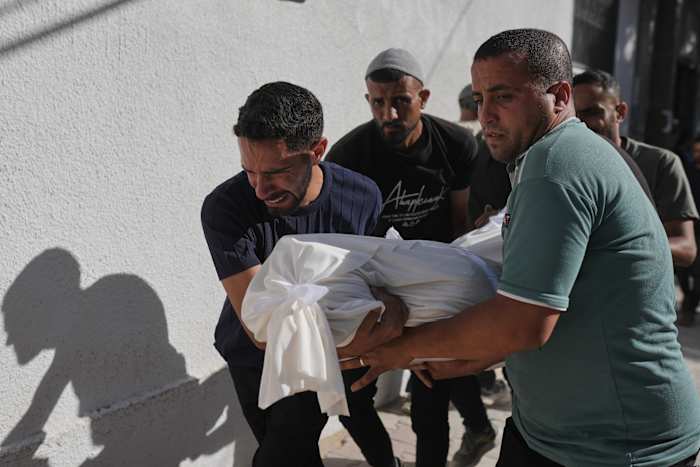
The Palestinian death toll in Gaza has passed 73,000, according to data from the local health ministry, revealing the stark failure of the U.S.-brokered truce signed last October. While global headlines initially celebrated that diplomatic agreement for ending full-scale warfare and facilitating hostage exchanges, the reality on the ground has been a slow, grinding war of attrition. Nearly 1,000 Palestinians have been killed since the ceasefire theoretically went into effect, proving that paper agreements mean little when the core mechanisms of enforcement are entirely absent. This staggering loss of life underscores a deeper structural deadlock where tactical pauses are treated as permanent peace, while the underlying triggers of violence remain entirely unaddressed.
The Mechanics of a Phantom Truce
When diplomats in Washington and regional capitals finalized the October truce, the immediate objective was achieved. The remaining hostages captured on October 7, 2023, were returned, and the intense carpet-bombing campaigns that defined the early phases of the conflict subsided. However, the agreement contained a fatal flaw. It linked structural reconstruction, Israeli troop withdrawals, and international aid access directly to a mandate that Hamas completely disarm.
Hamas refused. The group viewed its weaponry as its sole remaining political leverage and survival mechanism. Consequently, international mediators found themselves presiding over an unworkable compromise. With disarmament stalled, the Israeli military shifted its strategy from massive division-level maneuvers to highly targeted, persistent cross-border incursions and surgical airstrikes.
The results are visible across the strip. Over the weekend, an Israeli strike on the Jabaliya refugee camp in northern Gaza killed four people, including a 13-year-old boy. The Israeli military maintains that these actions are defensive reactions to ceasefire violations and specific intelligence regarding militant activity. Yet, for the two million displaced Palestinians living amidst the concrete ruins, the distinction between active war and a broken ceasefire is completely indistinguishable.
The Mathematics of Attrition
The data provided by Gaza’s health officials, led by records department chief Zaher al-Waheidi, places the exact death toll at 73,001. More than 173,200 individuals have been wounded since the initial Hamas-led attack that killed 1,200 Israelis and ignited the war. International agencies, including the United Nations, continue to validate these figures as historically accurate, despite the political alignment of the local administration.
Gaza Conflict Cumulative Toll (As of June 2026)
+------------------------+------------------------+
| Metric                 | Figure                 |
+------------------------+------------------------+
| Total Fatalities       | 73,001                 |
| Total Wounded          | 173,200                |
| Post-Ceasefire Deaths  | Nearly 1,000           |
| Israeli Soldier Deaths | 5                      |
+------------------------+------------------------+
Analyzing these numbers reveals a specific trend. The daily casualty rate has flattened compared to the peak of the conventional war, but the steady accumulation of fatalities continues without interruption. This is what military planners call low-intensity conflict, but its civilian impact remains severe. Five Israeli soldiers have also died in skirmishes since October, illustrating that the security risks remain mutual and active.
The structural problem with the current diplomatic framework is its reliance on ambiguous rules of engagement. Israel maintains the right to strike preemptively against perceived threats. Hamas operatives continue to melt back into urban centers, utilizing the dense civilian infrastructure of places like Khan Younis and Jabaliya for cover. When a drone strike hits a residential building, the immediate tactical target may be a militant commander, but the systemic cost is borne by the families sharing the structure.
The Economics of Blockade and Ruin
Beyond the immediate trauma of airstrikes, a quiet crisis is accelerating due to the political stalemate over the border crossings. Except for a single entry point, Israel maintains total control over Gaza's perimeter. The October agreement promised an influx of commercial goods and rebuilding materials, but these provisions remain frozen due to the disarmament deadlock.
The lack of open logistics corridors has distorted the local economy. Basic foodstuffs, medicine, and clean water are technically available in localized markets, but prices have inflated by up to ten times their pre-war levels. Fresh vegetables and meat are luxury items completely out of reach for the vast majority of families who depend entirely on dwindling international cash transfers and irregular aid convoys.
Estimated Local Price Inflation Matrix (Pre-War vs. June 2026)
[Pre-War Baseline: $1.00]
Flour:       ########## ($10.00)
Vegetables:  ######## ($8.00)
Fuel:        ############ ($12.00)
Public health infrastructure has buckled under these economic restrictions. UNICEF reports that rodent and ectoparasitic infestations have surged, with over 70,000 documented cases of related illnesses this year alone. Without specialized medical supplies, simple infections turn lethal. The physical destruction of the territory’s schools and sanitation systems means that even if the kinetic violence stopped tomorrow, the environment itself has become hazardous to human survival.
The Diplomatic Impasses
International monitors, including special envoys overseeing the truce, have repeatedly signaled that progress is entirely blocked by the political priorities of both combatants. The Israeli government faces significant domestic pressure to ensure that Hamas cannot reconstitute its offensive capabilities. Any substantial troop withdrawal without verifiable disarmament is viewed by Israeli leadership as a strategic defeat.
Conversely, the leadership of Hamas views the presence of Israeli troops within the newly established security buffers inside Gaza as an occupation that justifies ongoing resistance. This creates a closed loop of violence. A militant fires a mortar tube from an alleyway; an Israeli drone responds with a missile strike on the neighborhood; mediators issue a statement urging restraint; the death toll ticks upward.
The international community's insistence that the October ceasefire is still functional serves a diplomatic purpose, preventing a slide back into regional escalation. However, this formal status masks the reality of a population trapped in a state of permanent instability. The diplomatic machinery has prioritized maintaining the appearance of a deal over reforming the unviable conditions that cause it to fail daily.
The illusion of peace in Gaza has become more dangerous than an open acknowledgement of conflict. It permits major global powers to divert their attention elsewhere, satisfied that a diplomatic victory was recorded on the books, while the actual machinery of war continues to claim lives in the shadows of the ruins.