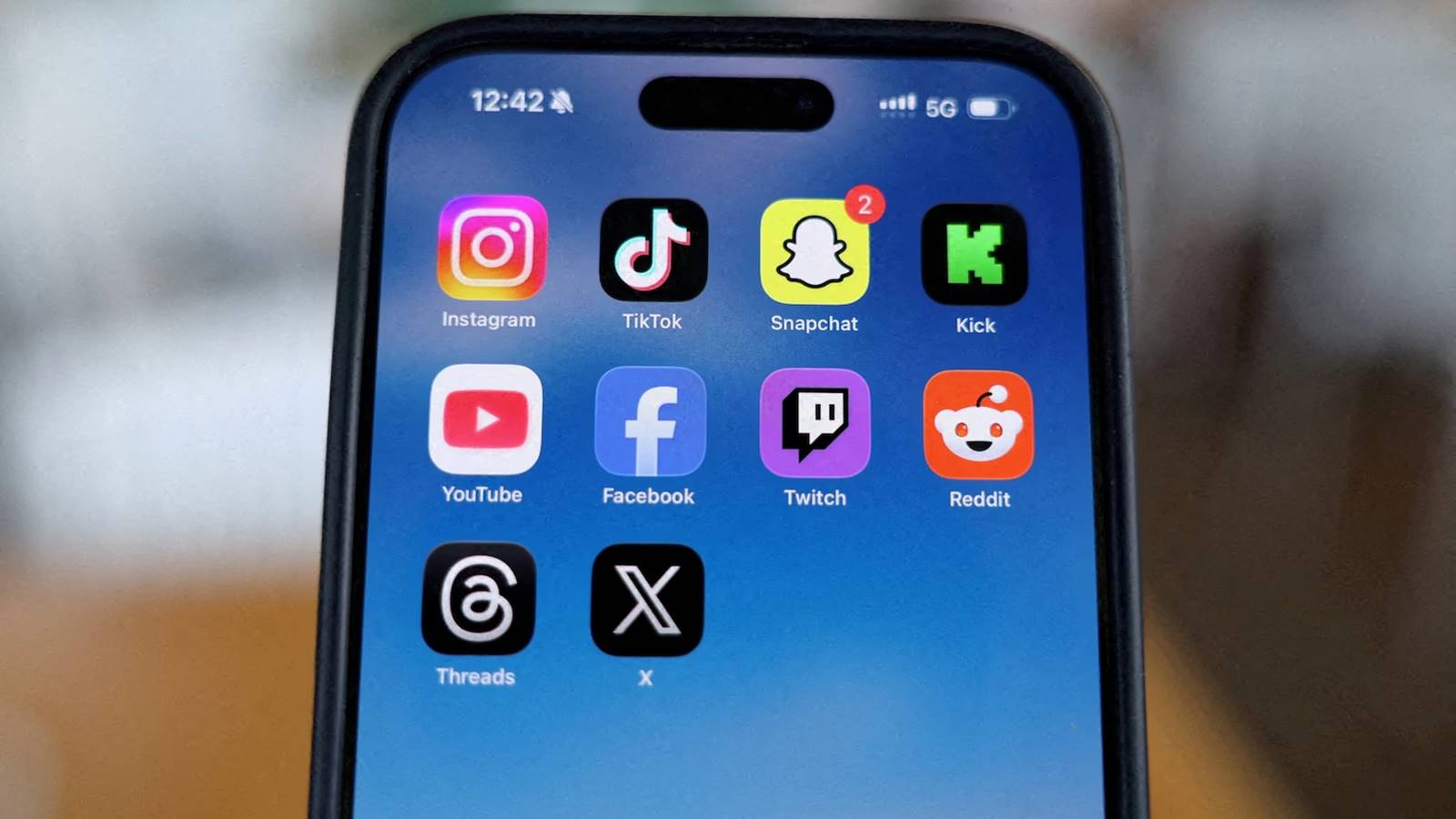
Greece has moved to prohibit children under 15 from accessing social media platforms, joining a rapidly expanding wave of governments trying to legislate adolescent attention spans back into the physical world. Under the policy framework championed by Prime Minister Kyriakos Mitsotakis’s administration, tech platforms face strict obligations to verify user ages and block minors under 15 from creating or maintaining accounts on major algorithmic feeds, backed by state-level digital verification tools and the threat of regulatory penalties. On paper, Athens is drawing a hard legislative line to protect youth mental health. In practice, the country is walking straight into the thorniest technical, legal, and behavioral enforcement trap in modern internet governance.
For years, European capitals deferred to Brussels on platform regulation, assuming the European Union’s Digital Services Act would tame Big Tech’s most addictive mechanics. It didn’t happen fast enough. Following Australia’s landmark under-16 ban and parallel legislative pushes in France, Spain, and Norway, Greece decided to stop waiting for consensus and act unilaterally. Yet passing a statute in Parliament is the easy part; making that statute function across an open, encrypted, borderless network without turning the internet into a surveillance state is where every previous attempt has buckled. Meanwhile, you can explore similar developments here: The Anatomy of China’s AI Compute Deficit and the Offshore Cloud Workaround.
Why Athens Pulled the Trigger Now
The political calculus in Athens was driven by mounting clinical alarm and an electorate demanding tangible action. Pediatricians, educators, and parent associations across Greece have spent the past several years documenting steep spikes in adolescent anxiety, sleep deprivation, and cyberbullying tied directly to short-form video feeds and infinite-scroll architectures. When algorithms optimize purely for watch time, developing prefrontal cortices stand no chance against behavioral engineering teams worth hundreds of billions of dollars.
Greece had already tested the waters with strict classroom mobile phone bans, requiring students to keep devices tucked away in school bags throughout the academic day. Officials reported noticeable drops in classroom disruptions and playground incidents, which emboldened the government to take the next logical step. If keeping phones out of classrooms improved focus between 8:00 AM and 2:00 PM, ministers reasoned, cutting off algorithmic feeds entirely for under-15s would protect them during the evening hours when the worst social comparison spirals occur. To understand the full picture, check out the detailed analysis by Engadget.
There is also an undeniable geopolitical signal at play. Small and mid-sized European nations have realized that waiting for all 27 EU member states to agree on harmonized age-gating laws guarantees years of committee gridlock. By moving ahead with an under-15 threshold, Athens is intentionally forcing a regulatory collision with the European Commission, betting that Brussels will eventually have to adopt national standards rather than strike them down.
The Architecture of Enforcement and the Kids Wallet Dilemma
A ban is only as credible as its verification mechanism. Historically, age restrictions on the internet have relied on the honor system—a drop-down menu asking users to confirm their birth year, which takes a ten-year-old roughly three seconds to bypass. Greece knows that self-declaration is dead on arrival, which is why the government has leaned heavily into state-backed digital infrastructure, most notably its Kids Wallet initiative built atop the Gov.gr ecosystem.
The technical premise is straightforward enough. Parents authenticate their identity through existing state tax or banking credentials, link their child’s profile, and generate a cryptographic age token. When a minor attempts to log into a social platform, the app queries that token rather than collecting raw identity documents. In theory, this zero-knowledge proof model confirms whether a user is over or under 15 without handing Silicon Valley a copy of a Greek birth certificate or passport.
Look closer at the implementation, however, and cracks appear immediately.
- Device-level versus account-level friction: If age verification happens strictly at the app-store or operating-system level, Apple and Google carry the compliance burden. If it happens at the individual platform level, every niche messaging app, forum, and video host must integrate with Greece’s specific API.
- The shared-device blind spot: In thousands of households, younger siblings routinely borrow older siblings’ tablets or use a parent’s unlocked phone. A cryptographic token tied to a device or a primary account holder does nothing to stop a 13-year-old from scrolling on an older brother’s logged-in profile.
- Third-party browser workarounds: Even if native mobile apps lock out unverified accounts, most major social networks remain fully accessible through standard mobile web browsers. Blocking native apps while leaving web portals open merely shifts adolescent traffic from an app icon to a Safari or Chrome tab.
Consider a hypothetical scenario illustrating how quickly technical barriers erode in real households. Imagine a 14-year-old in Thessaloniki whose primary Instagram and TikTok accounts are locked when the enforcement deadline hits. Within an afternoon, that teenager downloads a free virtual private network, routes their connection through a server in Frankfurt or Sofia where no identical national block exists, and registers a fresh account using a secondary email address. Unless platforms deploy invasive hardware fingerprinting or mandate universal ID checks for every single user regardless of age, the most determined teenagers will simply route around the fence.
The Privacy Paradox Nobody Wants to Own
Here lies the central contradiction that politicians routinely gloss over during press conferences. You cannot verify that someone is under 15 without verifying the age of everyone else.
If a 38-year-old journalist in Athens wants to open an account on a social platform, how does that platform know the journalist isn't a 14-year-old lying about their birth date? It doesn’t—unless the platform forces the 38-year-old to prove their age too. Suddenly, an initiative marketed as a child-protection measure transforms into a mandatory digital identity checkpoint for the entire adult population.
Digital rights advocates across Europe have warned for years about this exact mission creep. Once an infrastructure exists that ties every social media account to a verified state identity, anonymity online effectively evaporates. Political dissidents, whistleblowers, domestic abuse survivors, and ordinary citizens discussing sensitive medical or personal issues lose the ability to speak without leaving a permanent, state-linked trail. Even if the verification token is designed to be privacy-preserving today, future administrations inherit a turnkey surveillance switch that can be tightened with a single legislative amendment.
What Happens When You Push Teens Into the Dark Corners
Veteran trust-and-safety engineers have observed a predictable pattern whenever mainstream platforms tighten restrictions without addressing underlying demand. Traffic doesn't vanish; it migrates.
Mainstream platforms like YouTube, Instagram, and TikTok, for all their glaring algorithmic flaws, operate under intense regulatory scrutiny. They employ massive moderation teams, automated child sexual abuse material detection systems, and clear legal reporting channels in the European Union. When an under-15 ban pushes millions of teenagers off these regulated spaces, those teenagers do not suddenly put down their phones and pick up hardcover novels. They migrate to unmoderated fringe platforms, encrypted group chats, offshore video hosts, and obscure gaming forums that ignore European court orders altogether.
Child safety researchers call this the waterbed effect. Press down hard on one regulated corner of the internet, and the water bulges upward in places where neither parents nor police have any visibility. A 14-year-old using an unmoderated messaging server hosted outside EU jurisdiction faces far greater exposure to grooming, extremist recruitment, and self-harm communities than they ever would on a heavily policed mainstream app.
The Digital Literacy Deficit
There is another casualty of outright prohibition that rarely makes campaign speeches: graduated resilience. Learning to navigate manipulation, algorithmic outrage, and peer pressure online is not entirely unlike learning to swim or drive. If society keeps teenagers completely out of the water until their fifteenth birthday, and then suddenly removes all guardrails on the exact day they turn 15, they enter the most toxic environments on the internet with zero practical immunity.
Schools across Greece—and across most of the Western world—still treat digital literacy as an occasional seminar on password hygiene rather than a rigorous curriculum on how recommendation engines exploit human psychology. Banning access before 15 without teaching adolescents how feeds manipulate dopamine loops simply delays the collision by a few years.
The Brussels Collision Course
Greece’s ban also faces a formidable legal obstacle in the form of European Union law. Under the EU’s Digital Services Act and the Audiovisual Media Services Directive, the bloc operates on a country-of-origin principle. Most major tech companies have established their European headquarters in Ireland or the Netherlands, meaning the Irish Data Protection Commission and Dutch media regulators hold primary jurisdiction over how those platforms operate across the entire single market.
When an individual member state like Greece passes unilateral rules dictating how platforms must verify user ages or design interfaces, tech giants inevitably challenge those rules in European courts, arguing that national laws fragment the single market and violate EU preemption. France encountered this exact legal wall when it passed its own digital majority law, forcing Paris into prolonged negotiations with Brussels to bring its enforcement mechanisms into compliance with European standards.
Athens is betting that political momentum across Europe has shifted permanently. With Spain proposing an under-16 ban, Denmark pushing for strict age limits, and public opinion overwhelmingly favoring tougher controls on Big Tech, Greece calculates that the European Commission will look politically tone-deaf if it strikes down a national child-protection law. Whether that political calculation survives a formal challenge before the Court of Justice of the European Union remains an open question.
Silicon Valley’s Quiet Counter-Strategy
Publicly, major tech companies express support for child safety while warning that national bans are unworkable and infringe on privacy. Privately, their lobbying teams in Brussels and Athens are working a very different angle.
Platforms like Meta and Snap have spent the last two years lobbying aggressively for age verification to be shifted away from individual apps and onto app stores—specifically Apple’s App Store and Google Play. Their logic is purely defensive. If Apple and Google are forced by law to verify a user’s age at the operating system level before allowing any app download, social media companies get absolved of billions of dollars in compliance costs and legal liability.
Apple and Google, unsurprisingly, are fighting that proposal tooth and nail, arguing that operating system providers shouldn't be turned into global identity gatekeepers for every third-party app on the market. Meanwhile, platforms are rolling out stripped-down teen accounts with default private settings, disabled direct messaging from strangers, and nighttime quiet modes, hoping these voluntary concessions will convince regulators to soften hard bans into parental-consent frameworks.
The Missing Piece in the Debate
Notice what is almost entirely absent from Greece’s legislation and the broader European debate: product liability for algorithmic design.
Politicians love age bans because they are easy to explain in a thirty-second news clip and place the burden of compliance on families and verification gateways. Far fewer lawmakers are willing to ban the specific engagement mechanisms that make these platforms harmful in the first place—such as autoplay video loops, variable-reward notification schedules, beauty filters that distort adolescent body image, and engagement-based ranking algorithms that amplify outrage.
If a toy manufacturer sells a product coated in lead paint, regulators do not pass a law banning children under 15 from entering toy stores while leaving the toxic product on the shelf. They ban the lead paint. Yet when it comes to social media, governments repeatedly leave the most manipulative algorithmic mechanics untouched for anyone over 15, while erecting leaky age gates around the perimeter.
Greece’s under-15 ban will undoubtedly reduce casual, everyday usage among younger schoolchildren whose parents actively enforce the rules at home. That alone is not nothing. For millions of other teenagers, however, the ban will become an arms race between state cryptographic tokens and teenage ingenuity—leaving the underlying machinery of the attention economy completely intact.



