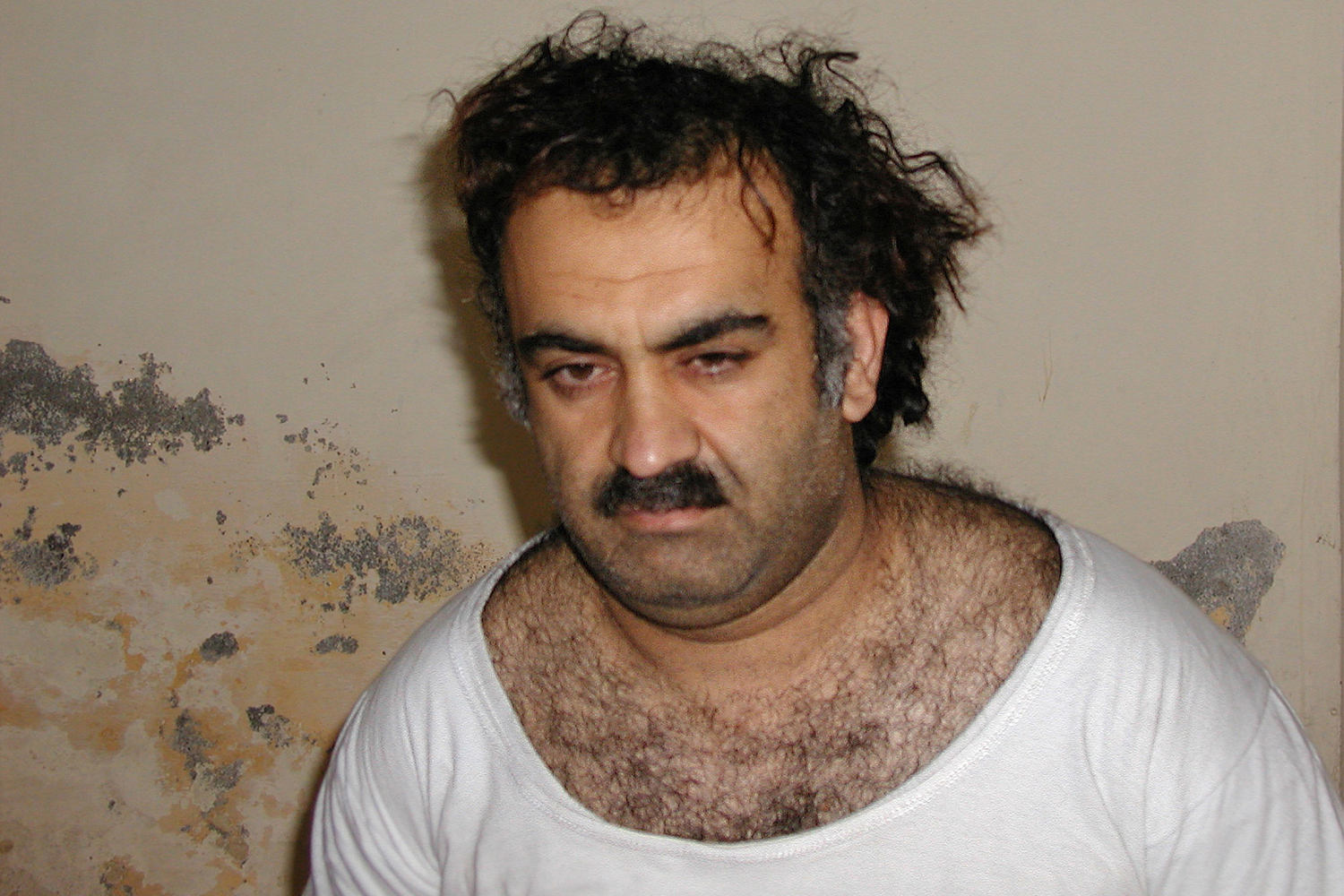
The Supreme Court declined to revive a pretrial plea deal for Khalid Sheikh Mohammed and his co-defendants, leaving the highest-profile prosecution in the history of the military commissions system stalled before a trial even begins. That refusal keeps the alleged 9/11 mastermind and his remaining co-defendants trapped in a procedural maze where constitutional questions, executive authority, and family expectations collide without a clear exit. For more than two decades, the United States has tried to turn the September 11 attacks into a finished legal chapter. Every time a shortcut appears, the machinery of Guantanamo Bay buckles under the weight of its own history.
To understand why the Supreme Court stepped aside rather than rescuing the agreement, you have to look past the surface drama of a rejected deal. Prosecutors and defense attorneys had spent years hammering out pretrial agreements that would have traded capital punishment for life sentences without the possibility of parole, alongside sworn testimony and historical admissions. Then political leaders intervened, tearing up or repudiating the terms before a military judge could lock them in, triggering years of appeals over who actually holds final authority inside the commission system. When the justices let lower rulings stand, they did not invent a new rule of law. They reinforced a harsh reality. Deals made inside an extraordinary wartime tribunal rarely survive shifting political winds in Washington.
Decades of covering national security courts teach a simple lesson. Tribunals built in the shadow of a crisis carry permanent structural friction. Unlike civilian federal courts, where rules of evidence, chain of custody, and prosecutorial discretion have been tested across generations of cases, the military commissions at Guantanamo were improvised after September 11 and revised repeatedly by Congress and the courts. Whenever a plea deal promises certainty, someone immediately asks whether a convening authority or a cabinet official can undo it at will.
Why Pretrial Agreements Keep Breaking Down at Guantanamo
On paper, a plea agreement looks like an administrative relief valve. It spares victims' families from years of grueling pretrial litigation and testimony about the worst day of their lives. It saves taxpayers millions of dollars in travel, security, and courtroom logistics. It gives the government a guaranteed conviction and a permanent prison sentence without risking an acquittal or a mistrial on a technicality.
In practice, Guantanamo turns routine negotiations into constitutional trench warfare. Defense lawyers argue that once a convening authority signs off on a plea agreement, binding contract and due process principles attach, preventing superiors from pulling the rug out later. Government lawyers counter that military justice operates under a chain of command where civilian leadership retains oversight and authority until final approval is properly completed.
Both sides have a point, and that is why the litigation drags on. When executive branch officials assert broad power to reject or unwind deals negotiated by their own prosecutors, defendants claim unlawful command influence or arbitrary reversal. When courts treat those agreements as locked-in commitments, critics in Congress and the executive branch complain that unelected officials or lower-level legal officers are trading away accountability for mass murder.
Consider a hypothetical example to see how fragile these bargains become in a high-stakes security case. Suppose a defense team agrees to a life sentence in exchange for the defendant providing detailed accounts of intelligence networks, while the government agrees to drop the death penalty. Months later, a new administration takes office with a different political mandate and argues the bargain was struck without sufficient political sign-off. The defendant files motions claiming bad faith and reliance. The government files briefs arguing executive prerogative. Years vanish before a single witness takes the stand.
That dynamic is not theoretical at Guantanamo. It is the central rhythm of the case. Pretrial hearings stretch across seasons over suppression motions, classified discovery disputes, and torture claims that trace back to Central Intelligence Agency black sites. A plea deal briefly looks like a bridge across a chasm. Then political pressure hits the bridge, and everyone ends up back in the water.
Torture, Classified Evidence, and the Shadow Over Any Verdict
No honest analysis of the 9/11 military commissions can ignore how the detainees were treated before they ever saw a courtroom. Years of public reports, Senate investigations, and court filings have documented brutal interrogation methods used against high-value detainees in secret overseas facilities prior to their transfer to Guantanamo. Those methods have shaped every legal move since.
Defense attorneys have argued for years that statements obtained through coercion or torture taint the evidentiary record and violate fundamental standards of justice. Prosecutors have had to build a case using evidence that avoids or survives challenges tied to those early interrogations, while protecting sensitive intelligence sources and methods under strict classification rules.
The High Cost of Secrecy in Open Court
Classified information creates a quiet crisis inside any national security prosecution. Defense lawyers need access to material to prepare a vigorous defense and challenge government claims. The government needs to keep intelligence sources, operational methods, and partner relationships secret.
At Guantanamo, those competing demands produce endless delays. Documents are redacted, reviewed, argued over in closed sessions, and appealed. Even when a plea deal is proposed, questions linger about what facts can be publicly stated, what admissions are admissible, and how much of the historical record ever sees daylight.
A plea bargain offered one possible way through that fog. By accepting guilt on the record, defendants could have established a formal factual basis without forcing a multi-year trial over every contested piece of evidence. Yet without rock-solid legal finality, a plea agreement is only as good as the court's power to enforce it. When the Supreme Court declines to revive a deal, the case reverts to the slow grind of contested motions and unresolved evidentiary battles.
What Victims' Families Actually Want Versus What the System Delivers
Walk away from the legal briefs for a moment and think about the people sitting in the observation galleries. For nearly a quarter-century, relatives of those killed on September 11 have watched legal arguments unfold at a glacial pace. Some have grown old waiting for a verdict. Others have died before seeing the case reach a conclusion.
Families do not speak with one voice, and pretending they do erases real pain. Some want a full public trial, every piece of evidence laid bare, and the maximum penalty allowed by law. Others prefer a negotiated resolution that guarantees life imprisonment without parole right now, sparing them decades of appeals and reopening old wounds every time a hearing is scheduled or postponed.
Why Both Paths Carry Heavy Trade-Offs
A full trial promises public reckoning and formal accountability. It also carries immense risk. Appeals in capital cases can run for another decade or more even after a verdict and sentence. Delays can stretch on if key witnesses are unavailable, if classification disputes stall proceedings, or if legal challenges to the commission's jurisdiction return to higher courts.
A plea deal promises speed and certainty on sentence length, removing the death penalty from the table in exchange for finality. Yet if the deal itself is legally contested, it delivers neither speed nor certainty. Instead, it creates another layer of litigation about whether the deal existed in the first place.
That is the cruelest part of the Guantanamo predicament. A system designed to deliver justice after an unprecedented attack has struggled for years to deliver a finished outcome. Every procedural twist feels like a fresh delay to families who have already endured more than enough.
The Institutional Limits of Wartime Justice
Step back and look at the broader institutional picture. When the United States created the military commissions after September 11, policymakers argued that federal courts were ill-suited to handle captured enemy combatants, classified intelligence, and wartime conduct. Over time, however, the commissions have faced repeated constitutional and statutory tests that look remarkably familiar to anyone who watches federal appellate courts.
Questions about jurisdiction, habeas corpus, due process, and executive authority keep resurfacing. Congress has amended the rules multiple times. Military judges have ruled, appellate panels have reversed or affirmed, and the Supreme Court has periodically weighed in on specific legal questions while leaving broader structural tensions unresolved.
| Dimension | Military Commissions at Guantanamo | Civilian Federal Courts |
|---|---|---|
| Primary Legal Framework | Military Commissions Act and commission rules | Federal criminal code and constitutional procedure |
| Core Tension | Wartime executive authority vs. procedural finality | Speedy trial and evidentiary rules vs. national security secrecy |
| Plea Deal Vulnerability | Exposed to command, policy, and jurisdictional disputes | Governed by established plea colloquy and sentencing rules |
| Typical Pace | Slowed by classification, torture litigation, and appeals | Faster in routine cases, though complex terrorism trials still take years |
This comparison does not mean civilian courts are a magic wand. Complex terrorism cases in federal court still involve massive discovery, classified evidence protocols under the Classified Information Procedures Act, and years of appeals. Still, federal courts operate within a mature, predictable legal architecture that does not have to reinvent its legitimacy with every new administration.
At Guantanamo, legitimacy is constantly contested. Critics argue the venue itself is tainted by its history of detention without trial and harsh interrogation. Supporters argue it provides a dedicated forum to try enemy belligerents for war crimes and terrorism without importing wartime rules into everyday civilian justice.
When the Supreme Court leaves a plea deal rejection standing, it underscores how narrow the path forward has become. The legal system is not broken because judges and lawyers are failing to work. It is strained because it is trying to resolve a historic trauma inside a hybrid forum where political authority and judicial finality remain locked in a tug-of-war.
What Comes Next in a Stalled Prosecution
With the plea deal effort turned away at the highest court, the immediate reality is more litigation. Pretrial motions, evidentiary disputes, and scheduling battles will continue to test the patience of everyone involved—prosecutors, defense teams, military judges, and above all the families waiting for closure.
Any serious observer watching this case should stop expecting a sudden, neat resolution. High-stakes national security cases rarely end with a tidy bow when the underlying legal and political questions remain fiercely disputed. Instead, progress comes—if it comes at all—through painstaking rulings on concrete motions, careful handling of sensitive records, and steady attention to whether the process can move forward without breaking down again.
Watch the next set of pretrial rulings and administrative orders closely, because that is where the real momentum of the case will show up—not in grand speeches or sudden breakthroughs, but in whether the courtroom clock finally moves toward a verdict.


