Gulf Cooperation Council states are aggressively accelerating non-oil economic diversification because escalating military conflict involving Iran threatens maritime chokepoints, sovereign credit ratings, and foreign direct investment, forcing oil-dependent monarchies to insulate their domestic revenues before a regional recession takes hold.
For decades, the economic bargain across the Persian Gulf was straightforward. Hydrocarbons funded everything, from subsidized electricity and state salaries to sovereign wealth funds that bought up Western real estate and trophy sports teams. Whenever oil prices dipped, Riyadh, Abu Dhabi, and Doha tightened their belts, burned through foreign reserves, and waited for the market to rebound. That playbook is dead. The current geopolitical crisis surrounding Iran has exposed a vulnerability that high crude prices can no longer fix. When missiles fly near shipping lanes and insurance premiums for tankers skyrocket, having oil in the ground means very little if you cannot safely move it to market—or if the broader regional instability scares away the global capital required to keep domestic economies humming.
The financial markets have already priced in the anxiety. Even brief spikes in crude prices fail to mask the underlying panic among institutional investors watching the Strait of Hormuz. If maritime traffic faces sustained disruption, the immediate result is not an oil windfall for Gulf producers; it is a physical export bottleneck paired with an import inflation shock. The Gulf states import roughly eighty-five percent of their food and the vast majority of their industrial machinery, pharmaceuticals, and consumer goods. A regional war turns that supply chain into a liability overnight.
The Illusion of the War Windfall
A persistent myth among casual market observers is that Middle Eastern oil producers automatically profit from regional conflict. Historically, geopolitical flare-ups sent Brent crude soaring, filling the treasuries of Gulf nations while Western consumers suffered at the pump. That dynamic relies on one critical assumption: that the producers themselves remain outside the blast radius and their export terminals stay open.
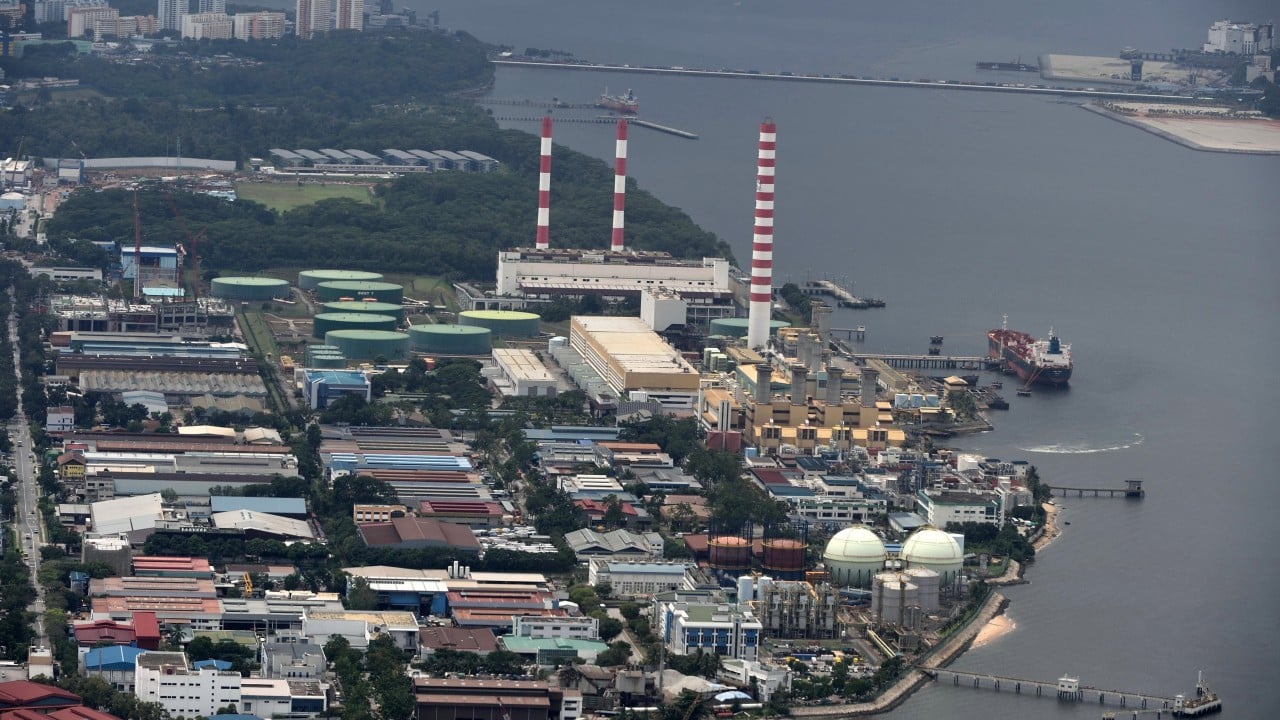
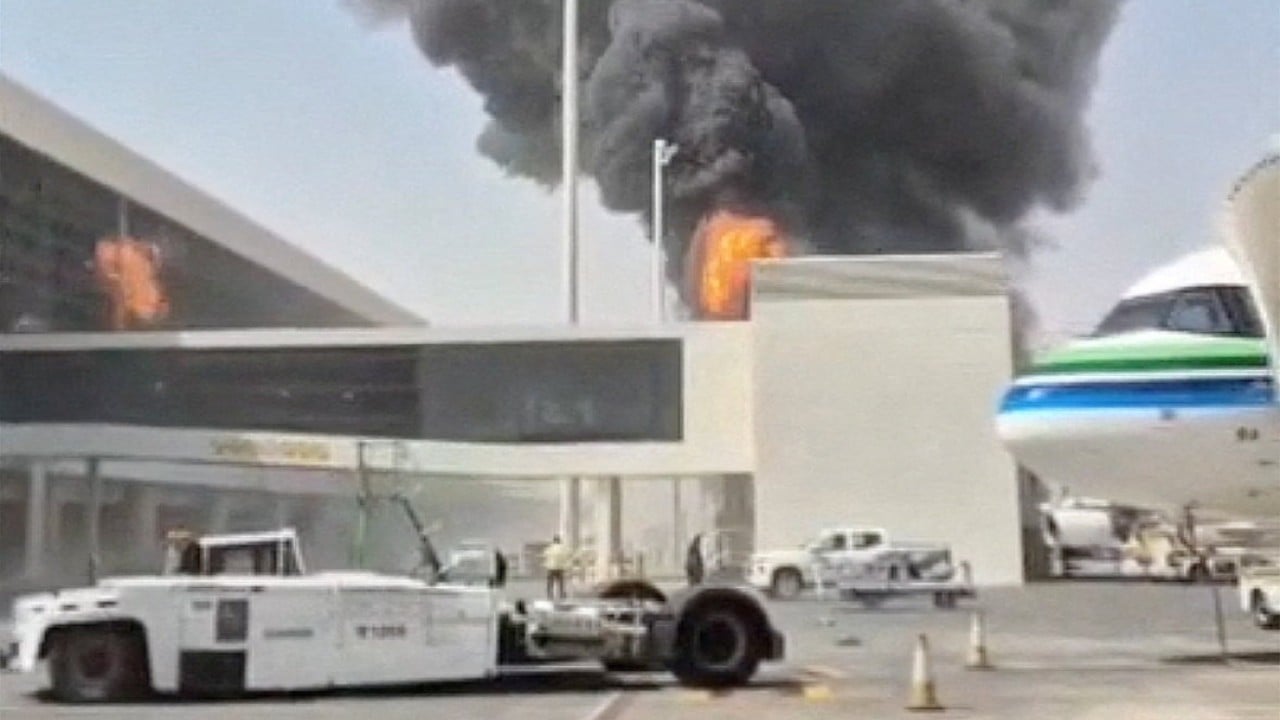
Today, that assumption no longer holds. Modern asymmetric warfare, characterized by low-cost drones and ballistic missiles, puts desalination plants, petrochemical complexes, and export terminals directly in the crosshairs. Consider the precedent set by the 2019 attacks on Saudi Aramco's Abqaiq and Khurais facilities, which temporarily knocked out half of the kingdom's crude production. Now, scale that risk across an entire region facing prolonged hostilities with Iran.
When risk rises to that level, sovereign wealth funds stop acting solely as long-term generational savings vehicles and immediately transform into emergency liquidity buffers. Governments have to divert capital from gleaming megaprojects toward defense procurement, hardened infrastructure, and domestic subsidies to keep populations calm. The math gets ugly fast. If oil exports are throttled while defense and import bills surge, fiscal breakeven prices—the oil price a country needs to balance its budget—become entirely academic. You cannot balance a budget with barrels stuck in storage tanks.
The Strait of Hormuz Chokepoint
Roughly a fifth of the world's petroleum passes through the Strait of Hormuz, a narrow waterway between Oman and Iran. While Saudi Arabia and the United Arab Emirates have spent billions constructing overland pipelines to bypass the strait—such as the East-West Petroline to the Red Sea and the Habshan-Fujairah pipeline to the Gulf of Oman—these alternatives do not possess the capacity to absorb total regional output. Qatar, one of the world's top exporters of liquefied natural gas, has virtually no overland bypass option at all. Every single LNG carrier leaving Ras Laffan must transit the strait.
If commercial shipping halts or faces prohibitive war-risk insurance rates, the resulting economic contraction across the Gulf would be immediate. Recession in this context does not look like a slow, two-quarter dip in consumer spending. It looks like a sudden freeze in trade finance, delayed contractor payments, and an exodus of expatriate labor.
Why Non-Oil Revenue Is Now a National Security Mandate
For years, economic diversification was marketed through glossy consulting decks and ambitious national visions like Saudi Vision 2030 or the UAE's Operation 300bn. Critics rightly pointed out that much of this early diversification was circular: the state took oil money, pumped it into sovereign funds, and used those funds to build domestic tourism, entertainment, and real estate sectors. If the oil money stopped, the non-oil sector collapsed alongside it.
The threat of a war-induced recession has forced a brutal recalibration. Policymakers in Riyadh, Abu Dhabi, and Manama realize they need genuine, self-sustaining revenue streams that do not depend on hydrocarbons or state handouts.
This urgency explains the sudden, aggressive push into sectors that generate real intellectual property, localized manufacturing, and digital infrastructure. Look closely at where the capital is actually moving right now:
- Sovereign Artificial Intelligence and Data Centers: Gulf states are leveraging cheap domestic energy and vast capital reserves to build massive compute clusters. By positioning themselves as neutral data hubs connecting Europe, Asia, and Africa, they aim to generate recurring service revenues that are physically immune to maritime blockades.
- Localized Defense Manufacturing: Rather than simply buying fighter jets and missile interceptors from Washington or Paris, Saudi Arabia and the UAE are demanding technology transfers and joint ventures. Building munitions, drones, and naval vessels domestically keeps billions of dollars inside the local economy while insulating militaries from foreign supply chain delays during a crisis.
- Corporate Taxation and Fee Structures: The introduction of federal corporate taxes in the UAE and stricter compliance regimes across the region represent a quiet revolution. Governments are building the bureaucratic plumbing to tax domestic commercial activity directly, weaning themselves off oil royalties.
- Logistics and Re-export Hubs: Ports along the Red Sea and the Indian Ocean coast are receiving priority funding. The goal is to capture global maritime trade routes that bypass the Persian Gulf entirely, turning geographic vulnerability into a logistical hedge.
The Expatriate Exodus Risk
You cannot understand the Gulf economy without understanding its demographics. In countries like the UAE and Qatar, foreign nationals make up nearly ninety percent of the population. Even in Saudi Arabia, expatriates form the backbone of the private sector workforce, running everything from hospitals and software engineering firms to construction sites and retail chains.
These workers do not stay for ideological reasons. They stay for tax-free salaries, personal safety, and economic opportunity. A prolonged conflict with Iran threatens all three pillars simultaneously.
If missile alerts become routine or regional airspace faces frequent closures, Western and Asian multinationals will activate evacuation protocols for their executives. Once the corporate leadership leaves, regional headquarters empty out. A hypothetical scenario illustrates how quickly this unravels: imagine a mid-sized European engineering firm based in Dubai. If war-risk premiums double the cost of operating in the Gulf and key staff demand relocation to Singapore or London, the company shuts its local office. That single closure removes dozens of high-earning consumers from the local housing market, international schools, and retail economy. Multiply that across thousands of firms, and the real estate boom turns into a vacancy crisis within six months.
To prevent this, Gulf governments are scrambling to anchor foreign talent through long-term residency programs, property ownership rights, and aggressive regulatory reforms designed to make moving away financially painful. They are trying to turn transient expats into permanent stakeholders before fear drives them to the airport.
Capital Flight Versus Capital Magnetism
The financial contradiction at the heart of the Gulf's current predicament is stark. On one hand, the region holds some of the deepest pools of liquid capital on earth. On the other, domestic private-sector growth still relies heavily on foreign direct investment (FDI) to bring in technical expertise, global networks, and institutional discipline.
When war looms, private capital flees toward safety—typically the US dollar, Swiss francs, or physical gold. Gulf central banks, whose currencies are mostly pegged to the dollar, must match Federal Reserve interest rate policies regardless of whether their domestic non-oil economies need stimulus or restraint. If a regional conflict triggers a recession in the Gulf while inflation remains sticky in the United States, Gulf monetary authorities will find themselves trapped. They cannot cut interest rates to revive local businesses without risking a run on their currency pegs.
This monetary straitjacket leaves fiscal policy as the only viable tool. Yet fiscal policy is constrained by the very war risks driving the crisis. Consequently, Gulf states are leaning heavily on bilateral investment treaties, sovereign-to-sovereign deals with Asian powers like China, India, and South Korea, and state-backed co-investment guarantees. If private Western institutional investors hesitate due to geopolitical risk, Abu Dhabi and Riyadh are stepping in to underwrite the downside risk themselves, effectively paying foreign firms to stay in the game.
The Competition Between Riyadh and Abu Dhabi
The pressure of looming recession has also fractured the polite façade of regional unity. While the Gulf Cooperation Council presents a unified diplomatic front regarding regional security, its two largest economies are locked in a zero-sum battle for survival and dominance.
Saudi Arabia's mandate requiring multinational firms to establish their regional headquarters in Riyadh—or forfeit lucrative government contracts—was already straining relations with Dubai, the region's traditional commercial hub. Now, with regional instability shrinking the overall pie of available foreign capital, that rivalry has turned cutthroat. Dubai offers established infrastructure, liberal social laws, and decades of commercial trust. Riyadh offers sheer market scale, massive state procurement budgets, and the brute financial force of the Public Investment Fund.
For global corporations, this rivalry creates leverage, yet it also forces a difficult strategic choice. Splitting operations across multiple Gulf cities becomes prohibitively expensive during an economic downturn. Companies are consolidating their regional footprints, forcing Gulf capitals to outbid one another with tax holidays, subsidized land, and regulatory carve-outs at the exact moment state treasuries need to conserve cash.
What Actually Survives a Regional Downturn
Not every diversification initiative will survive the collision of regional warfare and global economic slowdown. The vanity projects—the futuristic linear cities, the indoor ski resorts, the sprawling luxury island developments—are the first casualties when fiscal reality bites. You cannot market ultra-luxury tourism to wealthy Europeans if commercial flight paths are routinely rerouted around active missile defense zones.
Quietly, budgets are already being reallocated away from speculative real estate and toward hard industrial capacity. Petrochemical downstream integration, where crude is refined into high-value plastics, fertilizers, and specialty chemicals locally rather than exported raw, continues to receive full backing. Mining is another priority. Saudi Arabia sits on vast, largely untapped reserves of phosphate, gold, copper, and rare earth elements. Extracting and processing these minerals provides a non-oil export commodity that global supply chains desperately need, insulated from the politics of the energy transition.
Food security has also moved from an agricultural footnote to a top-tier budget item. Sovereign funds are buying up farmland in Africa, South America, and Eastern Europe while pouring capital into domestic vertical farming and desalination efficiency. If a conflict disrupts maritime trade, having domestic caloric production becomes more valuable than any sovereign credit rating.
The Structural Limits of Speed
The central flaw in the Gulf's accelerated diversification push is that institutional maturity cannot be bought at any price. You can purchase the world's fastest supercomputers, hire the best management consultants in New York, and pour concrete twenty-four hours a day. You cannot instantly manufacture a deep, skilled domestic workforce or an independent, battle-tested legal system that gives foreign investors total confidence during a crisis.
In several Gulf states, nationalization quotas—policies forcing private companies to hire local citizens—are colliding with the urgent need for specialized technical talent. Businesses already squeezed by rising security costs and sluggish regional demand face higher labor expenses and lower productivity when forced to hire underqualified staff to meet regulatory mandates. Meanwhile, the dominance of state-owned enterprises continues to crowd out genuine private entrepreneurship. When a sovereign wealth fund owns the local telecom provider, the dominant bank, the major real estate developer, and the startup incubator, private capital struggles to find room to breathe.
If a full-scale regional conflict erupts, the state's instinct will be to tighten control, centralize decision-making, and prioritize regime stability over free-market reforms. That instinct is entirely rational from a security standpoint, yet it runs directly counter to the open, transparent economic environment required for true diversification.
The Gulf monarchies are attempting one of the most difficult economic maneuvers in modern history: completely rewiring the engines of their economies mid-flight while storm clouds gather directly ahead. Their vast financial reserves buy them time that poorer nations do not have, cushioning the initial shock of trade disruptions and capital flight. Still, money only delays reckoning; it does not prevent it. If the conflict with Iran drags the region into a sustained recession, the winners in the Gulf will not be the states with the tallest skyscrapers or the loudest marketing campaigns, but the ones that managed to build real, functioning industries before the shipping lanes closed.