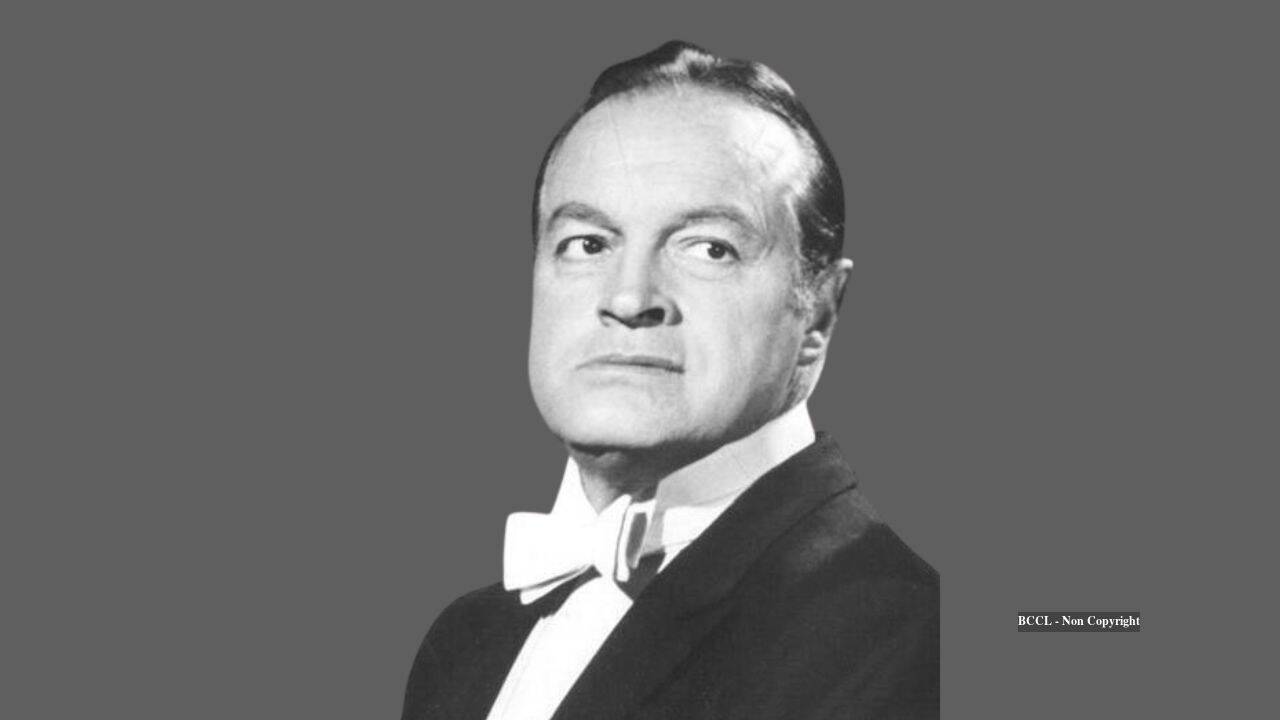
In June 1993, comedian Bob Hope traded 2,308 acres of his sprawling Southern California holding, Jordan Ranch, to the federal government for $16.7 million. For decades, popular media has framed the transaction as a generous conservation victory, a heartwarming moment where a Hollywood icon handed his private estate over to the public.
The reality was far messier. The transaction was the culmination of bitter zoning battles, protracted real estate maneuvers, and intense pushback from local environmental groups who viewed the deal through a lens of profound skepticism.
Long before the ink dried on the National Park Service contract, Hope was one of the largest private landowners in eastern Ventura County. Through various corporate entities, he accumulated roughly 10,000 acres, viewing Southern California real estate not merely as a vacation retreat, but as an aggressive investment vehicle. Jordan Ranch, nestled in the Simi Hills east of Thousand Oaks, was initially eyed for upscale residential development and commercial growth.
Local opposition was fierce. Neighborhood activists and regional planners organized against sweeping suburban encroachment into the Santa Monica Mountains ecosystem. Town hall meetings devolved into shouting matches. The friction between private property rights and environmental preservation created a political gridlock that threatened to stall development indefinitely.
Enter the federal government. By the early 1990s, the National Park Service faced mounting pressure to consolidate and expand the Santa Monica Mountains National Recreation Area. Piecemeal acquisitions were moving too slowly to protect critical wildlife corridors from urban sprawl.
The $16.7 million price tag for Jordan Ranch quieted some critics, but opened new fronts of debate. Environmental watchdogs questioned the valuation, pointing out that federal agencies were paying top dollar to a politically connected celebrity to resolve land use deadlocks that Hope himself had engineered through years of speculative acquisition. Mary Wiesbrock, a prominent local activist at the time, pointedly noted that an ordinary landowner attempting to offload controversial parcels to the federal government would have faced immediate administrative rejection rather than a red-carpet negotiation.
The complications didn't end with the cash exchange. The transaction left behind approximately 200 cattle actively grazing on the newly designated federal property. Managing a national recreation area while accommodating a commercial cattle operation required a secondary tier of administrative acrobatics. The Park Service had to issue strict relocation timelines, clashing with local ranchers who treated the hills as an open range by generational right.
Beyond Jordan Ranch, Hope's broader land portfolio liquidation strategy involved multi-layered negotiations with local park districts. Transactions like the 360-acre donation to the Conejo Recreation and Park District—which established the Hope Nature Preserve—offered significant tax shelters and public relations rehabilitation for a man whose corporate entities were routinely accused of environmental indifference.
The transaction succeeded in expanding public parkland to over 20,400 contiguous acres, saving a vital ecological bridge from concrete foundations and asphalt. Yet, looking back at the mechanics of the deal reveals a pragmatic financial exit strategy disguised as philanthropy. Hope traded undevelopable, contested hillsides for guaranteed liquidity, while federal agencies secured a vital conservation asset at a substantial cost to taxpayers.
The hills of the Simi Hills remain open to hikers today, free of subdivisions. But the path to that public access was paved with political leverage, high-priced legal maneuvering, and a multi-million-dollar payout that proved even conservation has a steep corporate entry fee.