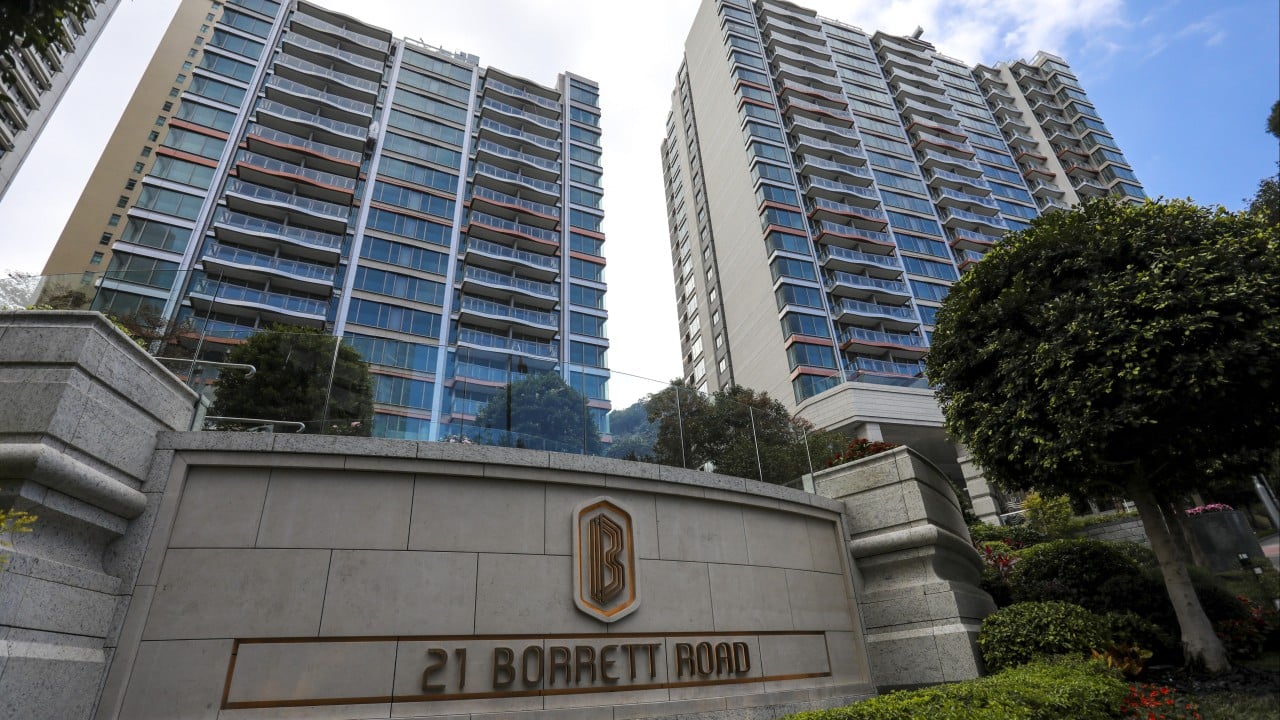
The sale of a single penthouse in Hong Kong for US$48.5 million has been widely heralded as the definitive proof that the city’s ultra-luxury real estate market is roaring back to life. CK Asset Holdings secured the HK$380.77 million deal for a 3,022-square-foot unit at 21 Borrett Road, translating to a staggering HK$126,000 per square foot. This transaction stands as the highest price per square foot recorded for a new home in the city this year. Yet, beneath the celebratory headlines issued by developers lies a far more complex and fragile reality regarding global wealth preservation.
The Anatomy of a Record Transaction
To understand the mechanics of this sale, one must look closely at the asset itself. The penthouse sits on the 20th floor of Phase 2 of the 21 Borrett Road development, a prestigious address nestled within the Mid-Levels district. It features five bedrooms, three en suite bathrooms, and sweeping panoramic views that stretch across the iconic skyline from Central to Wan Chai. The deal was concluded through a highly opaque tender process, a preferred method for offloading trophy assets without exposing the true level of market demand or negotiations to the public eye.
This specific transaction is not an isolated event but part of a calculated push by CK Asset, the flagship property company of billionaire Li Ka-shing. The developer recently resumed sales for its ultra-luxury portfolio, quickly moving four premium units via tender to rake in a combined total of HK$1.05 billion. For onlookers, these numbers suggest an unshakeable market.
The numbers deceive.
While a price of HK$126,000 per square foot sounds astronomical, veteran market observers know it remains below the absolute peak of the market. In March 2021, a similar penthouse in the first phase of the very same project fetched a record-breaking HK$136,000 per square foot. What the current transaction represents is not a market soaring to unprecedented heights, but a stabilization after a punishing multi-year downturn. The distinction is critical for anyone trying to map the flow of high-net-worth capital in Asia.
Mainland Capital and the Flight to Tangible Assets
The driving force behind these mega-deals is no longer the traditional Hong Kong aristocratic elite. Instead, wealth is flowing heavily from mainland China, channeled by corporate executives and ultra-high-net-worth individuals seeking a secure harbor outside the mainland financial system. Hong Kong retains a unique position as a cross-border wealth hub, offering a legal framework and a currency pegged to the US dollar that provides a buffer against domestic economic shifts on the mainland.
Private wealth managers indicate that the appetite for top-tier residential real estate is driven by a desire for diversification. Wealthy individuals are moving away from volatile equities and low-yield debt instruments, choosing instead to park massive tranches of capital in physical brick and mortar that cannot easily vanish overnight.
Furthermore, the local government has actively greased the wheels for these transactions. The removal of long-standing property cooling measures and adjustments to stamp duties have lowered the entry barriers for ultra-wealthy buyers who were previously deterred by punitive tax rates on luxury acquisitions. When the financial friction of buying a property drops significantly, billionaire buyers view the transition of wealth into real estate as an acceptable cost of asset protection.
The Haunting Legacy of the Sino Suisse Collapse
To appreciate the true fragility of this market segment, one must look back to the historical baggage tied to 21 Borrett Road. In 2022, CK Asset attempted a massive structural exit from the project, agreeing to sell the entire remaining unsold portion of Phase 1 to a Singapore-based fund manager, Sino Suisse, for a jaw-dropping HK$20.8 billion. The deal was meant to insulate the developer from market volatility by transferring 115 residential units and dozens of parking spaces in one swift transaction.
The deal collapsed spectacularly.
Sino Suisse defaulted on its initial payment obligations, forcing CK Asset to terminate the agreement and confiscate a historic HK$2.08 billion deposit. This high-profile failure exposed the deep liquidity constraints lurking within institutional funds that attempt to timing-play the Hong Kong real estate sector. It forced CK Asset to pivot back to a slow, piece-by-piece retail strategy, selling individual units via tender to single buyers rather than relying on institutional syndicating.
The current string of successful individual sales shows that while institutional appetite for bulk real estate portfolios has dried up under high global interest rates, private individual capital remains highly agile. Individual buyers do not face the same strict redemption pressures or leverage requirements as institutional investment funds. They buy with cash or minimal debt, insulating themselves from the immediate pressures of the global interest rate cycle.
The Divergence Between Trophy Homes and Mass Housing
The soaring valuation of the Borrett Road penthouse highlights a widening chasm within the broader real estate sector. The ultra-luxury tier operates under an entirely different set of economic rules than the mass residential market, which continues to struggle under the weight of high borrowing costs and an oversupply of new developments.
+-----------------------------------+-----------------------------------+
| Ultra-Luxury Segment              | Mass Residential Market           |
+-----------------------------------+-----------------------------------+
| Driven by private cash buyers     | Dependent on bank mortgage rates  |
| Insulated from interest rates     | Highly sensitive to rate hikes    |
| Limited supply of trophy assets   | High volume of upcoming inventory |
| Used for wealth preservation      | Tied to local economic growth     |
+-----------------------------------+-----------------------------------+
For the average resident or middle-class investor in Hong Kong, the real estate market remains a challenging environment. High interest rates have pushed mortgage payments to uncomfortable levels, and the government’s Rating and Valuation Department data reveals that general luxury housing prices, while recovering slightly, remain significantly below their historical peaks. The transaction at 21 Borrett Road is a reflection of concentrated wealth at the very apex of the financial pyramid, rather than an indicator of health for the city's broader economic base.
A billionaire purchasing a 3,000-square-foot apartment does so without needing to consult a retail bank for a standard mortgage layout. They are deploying capital that has already been generated and insulated from standard macroeconomic headwinds. Therefore, reading this benchmark sale as a green light for a widespread real estate boom across the city is a fundamental misinterpretation of market signals.
The Tender Strategy as a Market Shield
The choice to sell these units via public tender rather than open-market listings is a deliberate tactical decision employed by developers to maintain pricing control. In a standard public sale, listing price cuts are highly visible and can trigger a wave of negative sentiment across the market. A tender process allows a developer to negotiate privately, reject low bids without public disclosure, and selectively release information only when a record-setting benchmark is achieved.
This lack of transparency makes it incredibly difficult to gauge the true depth of the market. We know that four units sold for over a billion dollars, but the public remains completely unaware of how many tenders were submitted and rejected, or what specific incentives were offered to the buyers behind closed doors to close the gap. It creates a carefully curated narrative of exclusivity and scarcity that works to support the valuations of the remaining inventory.
CK Asset still holds significant luxury inventory across Phase 2, which consists of 66 units ranging primarily from 1,875 to 2,193 square feet, alongside a handful of special larger penthouses. By establishing a high-profile benchmark of HK$126,000 per square foot early in the sales campaign, the developer sets an psychological floor for negotiations on the smaller, slightly less premium units. It is an exercise in elite brand preservation as much as it is a real estate transaction, ensuring that the asset class maintains its status as a premier vehicle for capital storage.