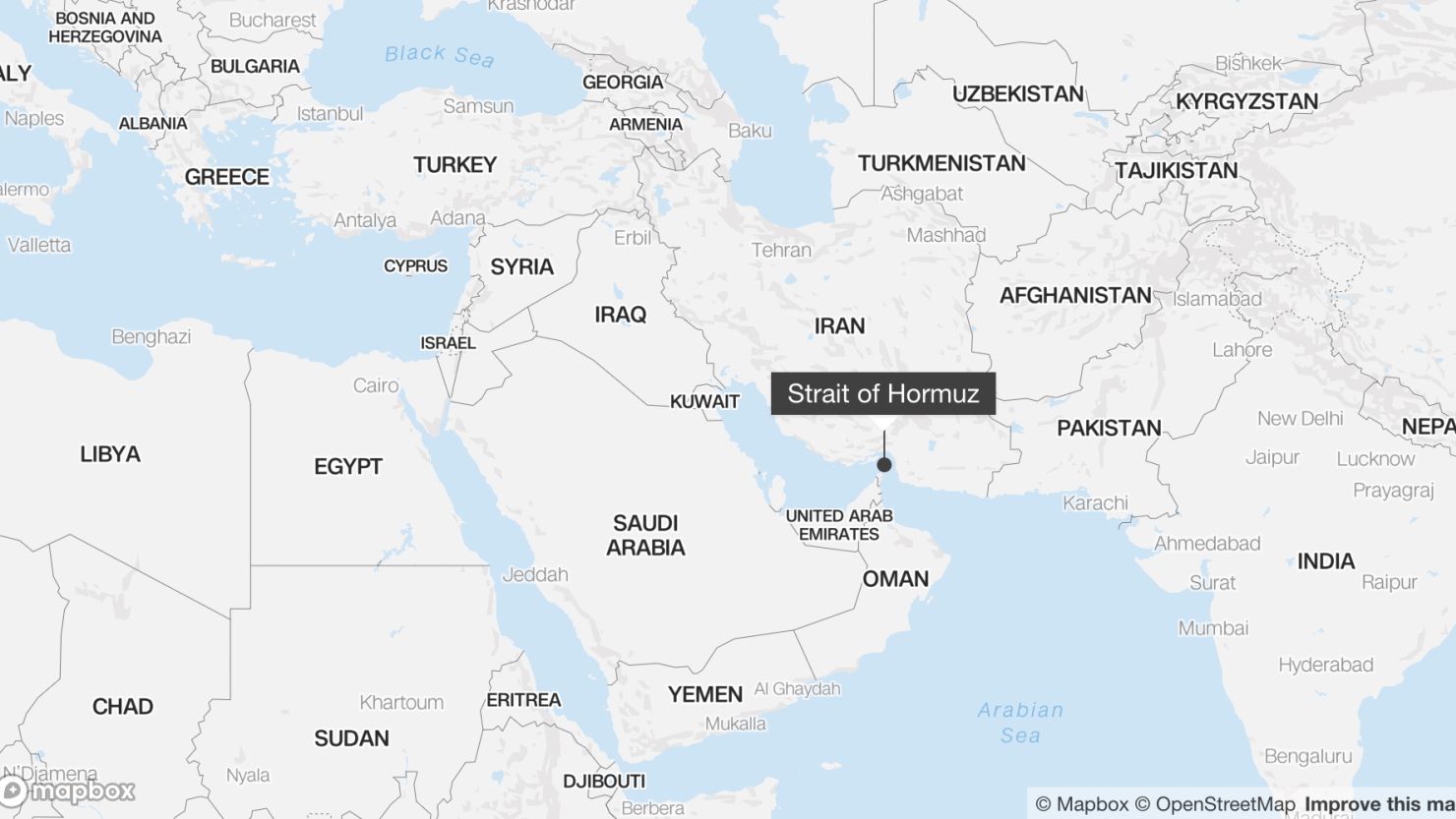
The global economy is currently holding its breath at the edge of a jagged cliff. On day 67 of the conflict that began with the February 2026 strikes on Tehran, the Strait of Hormuz has transformed from a vital maritime artery into a suffocating noose. While the headlines focus on the shaky ceasefire, the ground truth is far more grim. Iran has effectively weaponized 21 million barrels of daily oil flow, holding the industrial world hostage while the United States attempts a desperate counter-blockade that is bleeding Tehran’s remaining reserves dry.
This is not just another Middle Eastern skirmish. It is a fundamental rewiring of global trade that has already pushed Brent crude past $100 per barrel and is threatening to reach $200 before the summer heat hits the Gulf.
The Ghost Fleet and the Toll Booth
The strategy coming out of Tehran, now led by Mojtaba Khamenei and IRGC Commander Ahmad Vahidi, is a cold calculation of survival. They are not merely closing the Strait; they are attempting to nationalize it. In a move that has stunned maritime lawyers, Iran began demanding "transit tolls" from non-hostile nations. Ships from China, Iraq, and Pakistan continue to slip through, paying what essentially amounts to protection money to the IRGC.
This creates a two-tiered global market. If you are a "friendly" state, your energy costs remain manageable. If you are an ally of the West, you are forced to take the long way around Africa, adding 14 days and millions in fuel costs to every voyage. The IRGC is using drones, sea mines, and fast-attack boats to enforce this selective blockade. They don't need a massive navy to win. They only need to make the insurance premiums for Western tankers so astronomical that no sane board of directors will authorize the trip.
The American Counter Blockade
Washington’s response, initiated in mid-April, is equally aggressive. The U.S. Navy is now enforcing a counter-blockade, intercepting any vessel attempting to reach Iranian ports like Bandar Abbas or Kharg Island.
According to recent CENTCOM data, at least 49 commercial vessels have been turned back by American warships. The goal is simple: starve the Iranian regime of the hard currency it needs to maintain domestic order. With a prolonged internet shutdown and an economy in freefall, the Iranian leadership is facing a ticking clock of internal dissent. However, the U.S. is also fighting the clock. Every day the Strait remains "effectively closed" to the West, the domestic price of gasoline in the United States creeps higher, threatening the political stability of the administration during an election cycle.
Chokepoint Technology
The nature of this blockade is also a terrifying showcase of low-cost, high-impact military technology. Iran has deployed "mine-carrying dolphins" and swarms of autonomous underwater vehicles (AUVs) that are difficult for traditional sonar to track. These aren't the billion-dollar submarines of the Cold War. They are cheap, expendable, and lethal.
On May 1, the tanker M/T Eureka was hijacked off the coast of Yemen, likely by Houthi rebels acting in coordination with Tehran. This shows that the crisis has metastasized beyond the Strait itself, spilling into the Gulf of Aden. The IRGC has demonstrated that it can reach out and touch the global supply chain at multiple points, making a mockery of "freedom of navigation" operations.
The Economic Tsunami
The numbers are staggering. A sustained closure of the Strait is projected to result in cumulative global GDP losses exceeding $2 trillion within the first year.
- Japan and South Korea are the most exposed, with over 80% of their oil imports transiting through Hormuz and limited strategic reserves.
- The European Union is facing inflation rates not seen in decades, with energy costs driving a manufacturing exodus.
- India is surviving on a knife's edge, with only about 20 days of strategic oil reserves remaining.
The Nuclear Leverage
The most dangerous aspect of this standoff is the "Phase Two" trap. In recent Pakistan-mediated talks, Iran offered to discuss its nuclear program—but only after the U.S. lifts its naval blockade and guarantees no future strikes. This is a classic stall tactic. By linking the flow of oil to their nuclear ambitions, Tehran is using the global economy as a human shield for its centrifuge halls.
The U.S. remains opposed to this deal, correctly identifying it as an attempt by Vahidi to end the war on Tehran’s terms. But as the "ghost fleet" of Iranian-linked tankers continues to play cat-and-mouse with the U.S. Navy, the risk of a "hot" incident involving a major power’s vessel increases by the hour.
The Logistics of Desperation
For the average consumer, this isn't just about the price at the pump. It’s about the petrochemical feedstocks required for everything from smartphones to pharmaceuticals. If the Strait remains a war zone, the "just-in-time" delivery model that has defined the last thirty years of global commerce is dead.
Shipping companies are already scrambling to secure alternative routes, but there is no magic pipe that can replace 21 million barrels a day. The world is discovering, in the most painful way possible, that its entire prosperity rests on a two-mile-wide shipping lane that a few dozen IRGC speedboats can turn into a graveyard.
The ceasefire is a polite fiction. As long as the Strait is used as a diplomatic bargaining chip, the war is very much alive. The global economy isn't recovering; it is simply waiting for the next explosion to determine which way it falls.


