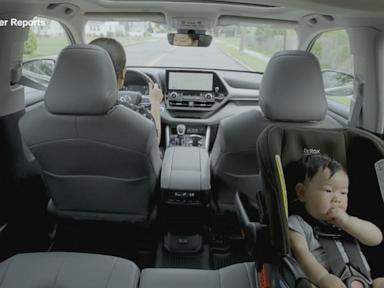
Every year in the United States, an average of 37 children lose their lives after being left inside overheating vehicles. This enduring tragedy persists not because the automotive industry lacks the technological capability to prevent it, but because a combination of regulatory foot-dragging, cost-cutting engineering, and a fundamental misunderstanding of human psychology has stalled effective solutions. While basic warning systems are slowly becoming standard, the advanced cabin-monitoring systems capable of detecting a child's heartbeat remain locked behind premium packages or trapped in legislative limbo. It is a fatal gap between what technology can do and what automakers are willing to install.
The narrative surrounding these deaths is often plagued by public shaming and moral outrage. Observers quickly label the parents as negligent, distracted, or unfit. Yet, data compiled over three decades reveals a far more unsettling reality. This happens to teachers, doctors, police officers, and engineers. It is a systemic failure of human biology interacting with flawed machine design, an intersection that the automotive industry has understood for years but has consistently failed to address with the urgency it demands.
The Unintended Consequence of the Airbag Mandate
To understand how the modern hot car crisis emerged, one must look back to the safety victories of the 1990s. During that decade, the federal government rightly mandated passenger-side airbags across all new vehicles to protect occupants during front-end collisions. The policy saved thousands of adult lives. However, the immense force of a deploying airbag proved lethal to infants and toddlers riding in the front passenger seat.
Public health campaigns and federal regulations reacted swiftly. They ordered that all child safety seats be moved to the rear of the vehicle, and further mandated that infants remain in rear-facing seats. This architectural shift solved one crisis while inadvertently triggering another. By moving the child to the back seat, particularly in a rear-facing position behind a high-backed driver's seat, the child was entirely removed from the driver’s peripheral vision.
Out of sight became, catastrophically, out of mind. Before the mid-1990s, pediatric vehicular hyperthermia deaths were exceedingly rare anomalies. After the rear-seat mandate, the numbers spiked dramatically, charting a steady, agonizing baseline of roughly three to four dozen fatalities every single summer. The safety ecosystem fixed the impact problem but created a visibility blind spot that remains unaddressed in millions of cars on the road today.
The Cognitive Autopilot That Blinds Parents
The human brain is prone to a specific, well-documented neurological glitch. Neuroscientists who study memory failures categorize these incidents under a phenomenon known as the failure of prospective memory. This is the brain mechanism responsible for remembering to execute an action in the future, such as stopping at the store on the way home or dropping an infant off at daycare.
The human brain relies on two primary structures to navigate daily travel. The prefrontal cortex and the hippocampus handle conscious, intentional planning. Meanwhile, the basal ganglia govern habit memory, allowing a driver to execute a familiar route on autopilot without consciously thinking about every turn. Under conditions of extreme sleep deprivation, high stress, or a subtle change in daily routine, the basal ganglia can override the conscious brain.
Consider a typical scenario. A parent who normally drives straight to work is tasked with dropping the child off at daycare instead. The child falls asleep in the back seat, completely silent. During the drive, a stressful work call occurs, or the driver encounters a road detour. The habit system takes complete control, guiding the vehicle directly to the workplace parking lot.
When the driver turns off the ignition, the brain creates a false memory. It falsely confirms that the daycare drop-off was successfully completed because the conscious brain intended to do it. The parent walks into the office, thoroughly convinced their child is safe, while the vehicle begins to absorb solar radiation. It is a terrifying biological vulnerability. It can happen to any human being possessing a brain configured with a habit loop.
The Cheap Illusion of Door Sequencing Software
Faced with rising public pressure and impending legislative mandates, global car manufacturers began introducing what they advertised as a solution. These systems are commonly known as rear-seat reminders. On the surface, they appear to solve the issue, but a closer examination of the engineering reveals a cheap software workaround designed to avoid spending money on actual hardware.
These systems rely entirely on door-sequencing logic. The car’s central computer tracks whether a rear door was opened and closed within ten minutes before the engine was started, or while the engine was running. If that condition is met, the vehicle assumes an occupant has been placed in the back. When the driver reaches their destination and turns off the ignition, the vehicle flashes a text alert on the dashboard and sounds a series of audible chimes.
This software patch is deeply flawed. It does not look for a child. It looks for a door movement. If a parent stops at a gas station midway through a commute, opens the rear door to retrieve a bag, and closes it, the logic loop can become corrupted depending on the manufacturer's specific programming.
More dangerously, door-logic systems are utterly useless in roughly one-quarter of all hot car fatalities. These are cases where a child gains access to an unlocked, parked vehicle on their own. Toddlers frequently wander outside, open a parked car door to play or look for a toy, and become trapped inside as the child-safety locks or heavy doors prevent their escape. Because no door was opened prior to an engine cycle, the door-sequencing system remains completely dormant. The car remains silent while a tragedy unfolds inside.
The Life Sensing Hardware Trapped by Corporate Budgets
True technological solutions have existed for years. The most effective among them is cabin occupant detection utilizing ultra-wideband millimeter-wave radar. These small sensors, which can be integrated discretely into the overhead headliner of a vehicle, emit low-power radio waves that map the entire interior cabin space.
This radar technology does not rely on visual confirmation or weight distribution. It is sophisticated enough to detect micro-movements, including the shallow rise and fall of a sleeping newborn’s chest wall. It can see through heavy winter blankets, diaper bags, and clothing. If a child is left inside, the radar detects the movement and triggers a escalating chain of responses. First, it alerts the owner via a smartphone application. If ignored, it flashes the hazard lights, sounds the horn, and can even instruct the vehicle's automated systems to roll down the windows slightly or activate the climate control system to pump fresh air into the cabin.
+-------------------------------------------------------------------+
|                     HOW INTERIOR RADAR SAVES LIVES                |
+-------------------------------------------------------------------+
| 1. Engine Off   --> Driver exits and locks the vehicle.           |
| 2. Scan Phase   --> Radar sensor sweeps cabin for micro-movements.|
| 3. Detection    --> System identifies an infant's respiration.    |
| 4. Escalation   --> Sends phone alert -> Horn sounds -> Windows   |
|                     crack open automatically.                     |
+-------------------------------------------------------------------+
The reason this technology is not present in every commuter sedan comes down to fractions of a dollar on the assembly line. Implementing door-sequencing logic costs an automaker virtually nothing because it utilizes existing door switches and software code. Installing a millimeter-wave radar system requires physical hardware, dedicated microprocessors, and additional wiring harnesses.
To a mass-market auto manufacturer producing two million vehicles a year, an extra fifteen dollars of hardware per vehicle represents a thirty-million-dollar subtraction from corporate profit margins. Consequently, the industry has commodified safety. True occupant detection is frequently relegated to luxury sport utility vehicles or hidden inside expensive, top-tier technology packages. Families purchasing entry-level compact cars or base-model family vans are left with inadequate door chimes that drivers rapidly tune out due to alarm fatigue.
How Federal Bureaucracy Diluted the Hot Cars Act
For over a decade, consumer advocacy groups and grieving families lobbied Washington to intervene. The culmination of this effort was supposed to be the Hot Cars Act, a piece of legislation aimed at mandating life-saving technology across all new passenger vehicles. When Congress finally passed the Infrastructure Investment and Jobs Act, the language of the hot car mandate was heavily targeted by automotive industry lobbyists.
The final statutory language instructed the Department of Transportation to issue a federal rule requiring all new passenger vehicles to be equipped with a system to alert the operator to check the rear seats after the vehicle engine is turned off. Crucially, the mandate failed to dictate how that alert must be achieved. The wording allowed for simple auditory and visual alerts based on door-activation history rather than requiring actual occupant-sensing technology.
The National Highway Traffic Safety Administration was tasked with finalizing these safety rules. Progress has been glacial. The agency has repeatedly missed deadlines to establish the final safety standard, citing the need for further study on tech reliability and potential consumer annoyance.
While regulators analyze data, the industry relies on a voluntary commitment made by major automakers to install basic door-logic systems. This voluntary agreement serves as a convenient shield. It allows companies to claim they are taking proactive steps for child safety while simultaneously avoiding the mandatory adoption of the costlier radar hardware that would actually solve the problem.
The Unequal Distribution of Vehicular Safety
The interior of a sealed vehicle parked in direct sunlight behaves exactly like a greenhouse. Shortwave solar radiation passes through the glass windows, striking the dark dashboard, seats, and carpeting. This energy is absorbed and re-radiated as longwave infrared radiation, which cannot escape back through the glass.
On an eighty-degree day, the internal atmosphere of a car can reach over one hundred degrees within ten minutes. A child's body heats up three to five times faster than an adult's body. Their respiratory and thermoregulatory systems are fragile, and once their core body temperature hits 104 degrees Fahrenheit, heat stroke begins. At 107 degrees, internal organs shut down and cellular death occurs.
This grim biological reality does not differentiate between economic classes, but the automotive market does. The current regulatory environment has created a two-tiered safety ecosystem. Affluent buyers driving high-end electric vehicles enjoy cabins monitored by sophisticated radar modules that guarantee an overlooked child will be detected. Lower-income families, who are more likely to buy base models or secondary market vehicles, are left unprotected or dependent on easily bypassed door chimes.
Safety should never be treated as an optional upgrade. The automotive industry routinely standardizes complex electronic stability controls, anti-lock brakes, and rearview cameras across all vehicle segments because federal mandates forced their hand. Until regulatory agencies stop accepting software compromises and demand genuine occupant detection across all price points, children will continue to pay the ultimate price for an easily solved engineering omission. The solutions are sitting on parts shelves, waiting for corporate willpower to match the reality of human biology.



