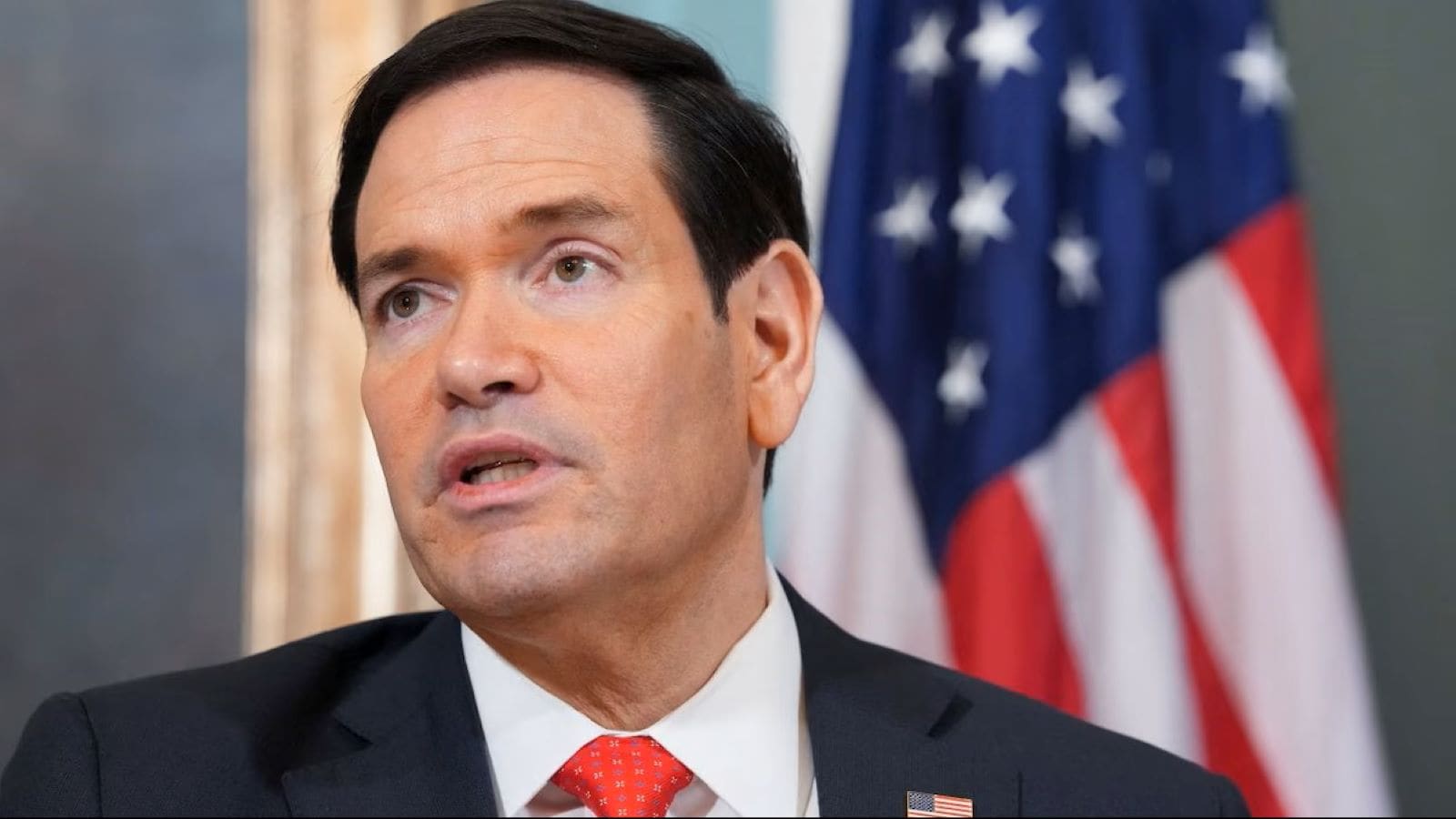
U.S. Secretary of State Marco Rubio told reporters in Mumbai on October 20, 2026, that Washington and New Delhi are "about as close as you can be without having an executed agreement" on an India-US trade deal, with an announcement expected soon. Do not book the celebration yet. Four weeks later, India's Commerce Secretary Rajesh Agrawal stood before business executives in New Delhi and delivered a colder assessment: the text is nearly finished, yet neither side can sign until Washington finishes building a new tariff architecture after the U.S. Supreme Court knocked the legal legs out from under its earlier emergency-powers duties.
That gap between diplomatic theater and customs-code reality is the real story behind the India-US trade deal. Politicians love percentages and finish-line metaphors. Trade lawyers and factory owners live in statutory authority, comparative duty spreads, and unresolved federal probes. In similar developments, take a look at: H-1B Registration Contraction by the Numbers: What Most Analysts Miss.
Why Finish-Line Talk Misreads the Negotiating Table
When senior officials say a trade pact is ninety-nine percent done, veterans on the trade beat know to ask which one percent holds the trapdoor. In bilateral negotiations spanning more than twenty months since February 2025, diplomats can agree on broad commitments—energy sourcing, aviation procurement, supply-chain cooperation—while leaving the commercial teeth of the deal suspended in midair.
Consider what happened earlier this year. In February 2026, Washington and New Delhi unveiled a joint framework for an interim trade pact built around an 18 percent U.S. reciprocal tariff on Indian-origin goods, alongside Indian pledges to buy up to $500 billion in U.S. energy products, aircraft and parts, precious metals, technology goods, and coking coal over five years. Days later, on February 20, 2026, the U.S. Supreme Court ruled 6–3 in Learning Resources, Inc. v. Trump that the International Emergency Economic Powers Act—the 1977 law known as IEEPA—does not authorize the president to impose tariffs. Investopedia has analyzed this important issue in great detail.
A trade concession negotiated against a tariff wall that the courts just demolished is like negotiating a discount off a sticker price that no longer exists.
Once the Supreme Court invalidated the IEEPA tariffs, the baseline shifted beneath both negotiating teams. Washington pivoted to other statutory authorities, starting with a temporary surcharge under Section 122 of the Trade Act of 1974 and launching Section 301 investigations into trading partners, including a probe into structural excess manufacturing capacity across sixteen economies that names India.
Agrawal put the bottleneck plainly in mid-November 2026. You cannot lock in preferential comparative advantages on paper when the underlying tariff grid across competing exporters has not settled. A deal signed in a legal vacuum risks locking India into commitments before exporters know whether rivals in Vietnam, Bangladesh, or Southeast Asia face higher or lower duties under the replacement rules.
The Hidden Arithmetic of Tariff Differentials
Headline tariff numbers rarely tell exporters what they actually pay at the U.S. port of entry. What matters on a balance sheet is relative tariff competitiveness—the spread between the duty an Indian shipper pays and the duty charged to a competing factory across the bay or across the ocean.
In labor-intensive sectors like textiles, apparel, and footwear, margins are razor-thin. A two- or three-percentage-point disadvantage against a rival supplier can swing an entire seasonal order from Tiruppur or Noida to another manufacturing hub. Even when bilateral goods exports to the United States jumped 21 percent year-on-year in August 2026 to $8.3 billion—rebounding sharply from the period when punitive duties reached as high as 50 percent over Russian oil purchases—that rebound reflected relief from extreme tariff pressure rather than a settled long-term regime.
How the Legal Ground Shifted in 2026
| Milestone | Date | Practical Impact on Trade Talks |
|---|---|---|
| Interim Framework Announced | February 2026 | Outlined an 18% U.S. reciprocal tariff path and Indian market-access and purchasing intentions. |
| Supreme Court IEEPA Ruling | February 20, 2026 | Struck down emergency-powers tariffs, forcing Washington onto alternative trade statutes. |
| Section 301 Excess Capacity Probe | Spring 2026 | Put India among sixteen economies under review for manufacturing overcapacity, creating signing uncertainty. |
| Rubio Mumbai Remarks | October 20, 2026 | Signaled high diplomatic momentum and oil-diversification progress, while legal and tariff details remained open. |
| Commerce Secretary FICCI Warning | November 18, 2026 | Confirmed text talks are nearly done, but formal signing awaits Washington's new tariff architecture. |
Trade officials on both sides also face a sequence problem with Section 301 proceedings. Investigative findings, public comment periods, U.S. Trade Representative hearings, and tariff determinations follow a statutory clock—roughly forty-five days after a probe report drops, as Indian officials have noted. Signing a trade pact before those findings land is like agreeing on the seating chart for a dinner before the kitchen decides what is on the menu.
Energy, Agriculture, and the Real Leverage Points
To understand why Rubio and Indian officials sound optimistic in public while moving cautiously on signatures in private, look at what sits inside the package. Trade agreements between large economies rarely turn on a single tariff line. They turn on linked leverage across energy, farm protection, digital rules, and geopolitical alignment.
Crude Oil and Energy Realpolitik
Energy is the clearest bridge between Washington's diplomatic push and New Delhi's economic security. During his October visit to India, Rubio pointed to progress on diversifying oil supplies and visited Reliance Industries' Jamnagar refinery complex in Gujarat. India is a price-sensitive energy importer whose external balances feel every spike in global crude and liquefied natural gas.
Buying more U.S. crude, liquefied natural gas, liquefied petroleum gas, and coking coal serves two purposes at once. It narrows the bilateral trade gap in a way that appeals to Washington's industrial and energy producers, and it feeds India's steel expansion and fuel diversification goals. Yet there is a hard commercial catch: refiners and steelmakers buy on delivered economics, grade compatibility, and freight costs, not diplomatic goodwill alone. If Middle East supply shocks or refinery configurations favor other grades on a given cargo, political pledges still have to survive procurement math.
Farm Sensitivities and Industrial Quotas
Agriculture has tripped up bilateral trade talks between Washington and New Delhi for decades, and 2025–2026 was no exception. In New Delhi, farm policy is not an abstract technical chapter; it touches hundreds of millions of livelihoods and domestic price stability.
Under the February 2026 framework, India signaled tariff reductions or eliminations on U.S. industrial goods and selected agricultural and food items—such as tree nuts, dried distillers' grains, red sorghum, fresh and processed fruits, soybean oil, and wine and spirits—while Indian officials emphasized in Parliament that sensitive areas and tariff-rate quotas remain calibrated to protect domestic growers and Minimum Support Price operations.
The Counter-Argument Nobody in Washington Wants to Hear
Here is the contrarian view that gets drowned out whenever diplomats talk about a $500 billion trade horizon: a slow, conditional deal may actually serve India better than a rushed headline signing.
Consider a hypothetical example. Suppose an Indian apparel exporter in Tiruppur signs long-term capacity expansion contracts in December based on an announced tariff rate, only for Washington's Section 301 review or statutory tariff adjustments three months later to alter duty rates on competing exporters or specific product lines. The exporter eats the margin compression or loses the buyer.
Holding back final signature until Washington's tariff architecture stabilizes—while keeping negotiations on customs facilitation, standards, and digital trade rules moving—protects Indian negotiators from giving away concessions before seeing the full U.S. duty map. Critics in Washington may call that foot-dragging. In trade law, waiting for statutory clarity before binding your own tariffs is basic risk management.
At the same time, New Delhi cannot afford endless drift either. India is negotiating and rolling out parallel commercial tracks—including the trade pact with the European Union, whose negotiations concluded in January 2026 with implementation targeted for early 2027—and global supply chains do not wait for diplomatic calendars. If talks drag on too long without binding rules, importers hedge by placing orders elsewhere.
Where the Gray Areas Still Sit
Even if Washington finishes its tariff rules and both capitals announce a first-tranche agreement, three gray areas will determine whether the India-US trade deal changes real trade flows or stays mostly aspirational:
- Non-tariff barriers and standards: Tariff cuts grab headlines, but testing rules, sanitary and phytosanitary checks, and conformity assessments often decide whether goods clear customs smoothly or sit in port demurrage.
- Digital trade and data rules: Frameworks covering cross-border digital commerce and non-discriminatory treatment sound neat in joint statements, yet enforcement often collides with domestic regulatory priorities on both sides.
- Five-year purchasing targets vs. binding mandates: Intentions to buy hundreds of billions of dollars in U.S. energy, aircraft, and industrial inputs over five years reflect commercial direction, not guaranteed invoices unless private and state buyers sign bankable contracts.
Watch the legal filings and federal notices out of Washington just as closely as the speeches in Mumbai and New Delhi. When the U.S. tariff architecture and Section 301 track move from uncertainty to published rules, the real test of the pact begins—not in what leaders promise to announce, but in what customs officers actually collect at the dock.