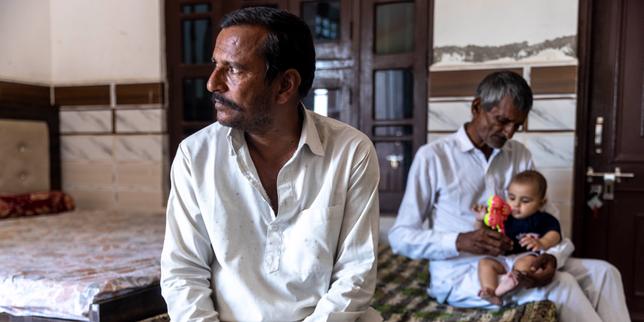
India is facing an unprecedented demographic deadlock where millions of young men are locked out of both the workforce and the marriage market. This dual exclusion is not a coincidence; it is a direct causal chain. In a society where economic stability is the absolute baseline for starting a family, India’s severe shortage of formal, quality jobs has created an army of involuntarily single men. They are stuck in a painful limbo. No job means no bride, which means no family. This crisis goes far beyond personal loneliness. It is a macroeconomic time bomb that threatens to sour India’s projected demographic dividend.
For decades, the standard narrative surrounding India’s economy focused on its massive, youthful population. The theory was simple: a young workforce would drive production, consumption, and savings, propelling the nation into hyper-growth.
The reality on the ground has broken away from that script.
The core issue is jobless growth. While India’s GDP numbers look impressive on paper, the growth is highly concentrated in capital-intensive sectors like technology, finance, and high-end services. These industries require specialized skills that the vast majority of Indian graduates do not possess. Meanwhile, the manufacturing sector, which historically absorbed low- and semi-skilled labor in developing economies, has failed to scale up sufficiently.
The numbers paint a bleak picture. According to data from the Centre for Monitoring Indian Economy (CMIE) and various labor force surveys, youth unemployment in the 20-24 age group has consistently hovered around 40% in recent years. For those with university degrees, the situation is often worse than for those with only primary education. The market is flooded with engineers and graduates competing for a minuscule pool of corporate openings, or worse, retreating into the gig economy or temporary manual labor.
The Traditional Marriage Contract Meets Modern Stagnation
To understand why unemployment translates so directly into forced bachelorhood, one must examine the mechanics of the Indian marriage market. Marriage in India is rarely just a romantic union. It functions as a highly structured socio-economic contract, usually orchestrated by families through arranged marriage networks, community channels, and digital matrimonial platforms.
In this system, a groom’s employment status is the primary metric of evaluation.
Families of prospective brides prioritize economic security above all else. A "good job" traditionally meant a government position (Sarkari Naukri) because of its ironclad stability, pensions, and perks. As those jobs dried up, secure corporate positions became the next best thing.
What happens when millions of men can only find irregular gig work, informal construction jobs, or low-paying retail gigs? They are instantly disqualified by prospective in-laws. In the hierarchy of the matrimonial market, an underemployed man is viewed as a financial liability.
This dynamic creates a profound cultural crisis. In rural and semi-urban India, adulthood is explicitly tied to marriage and parenthood. A man who cannot marry is often viewed as a social failure, stuck in a state of perpetual adolescence. He loses status in his community, his opinions carry less weight in local councils, and he faces constant, grueling social scrutiny.
The Hypergamy Filter
The problem is compounded by a shifting demographic and educational trend among women. Over the past two decades, female literacy and high school graduation rates in India have risen significantly. Even as female labor force participation remains stubbornly low for other structural reasons, families are increasingly reluctant to marry their educated daughters to men with lower educational credentials or unstable incomes.
This is the phenomenon of hypergamy, where women tend to marry men of equal or higher socio-economic status.
With women climbing educationally and men stagnating economically, the mismatch is widening. A young woman with a high school diploma or a college degree in a tier-2 or tier-3 city will rarely accept a groom who rides a delivery bike for twelve hours a day without health insurance or a predictable monthly income. The math simply does not work for the families involved.
Skewed Sex Ratios and the Geography of Despair
The economic barrier to marriage does not exist in a vacuum. It collides violently with a historical, man-made demographic imbalance: the skewed child sex ratio.
Decades of son preference, driven by cultural factors like the illegal but lingering practice of dowry and the perception of sons as old-age insurance, led to widespread female foeticide and gender-selective abortions. Although laws have tightened and attitudes are slowly shifting, the biological reality of past actions is hitting the marriage market right now.
In states like Haryana, Punjab, and parts of Uttar Pradesh and Rajasthan, there are severely fewer women than men in the marriageable age bracket.
State          Males per 1000 Females (Approx. Youth Cohort)
-----------------------------------------------------------
Haryana        1140
Punjab         1120
Uttar Pradesh  1080
This deficit means that even in a perfect economy with 100% employment, hundreds of thousands of men would still be left without partners. When you overlay this mathematical shortage with a brutal economic filter, the competition becomes cutthroat.
In some rural regions, the desperation has given rise to an informal, unregulated trade in brides. Families desperate to find wives for their sons resort to paying middlemen to bring women from economically distressed, distant states like West Bengal, Jharkhand, or Assam. These women, often referred to as "Molki" brides, frequently face severe language barriers, isolation, and exploitation, serving as a stark reminder of how deeply the social fabric tears when demographic imbalances go unchecked.
The Psychological Toll and the Rise of Discontent
Living as an involuntary bachelor in a society hyper-focused on family creates deep psychological scars. Loneliness, a sense of worthlessness, and a lack of purpose are widespread among this demographic of unmarriageable, unemployed young men.
They spend their days in a state of suspended animation. Many gather at village squares, local tea stalls, or coaching centers, endlessly preparing for government exams that offer a one-in-a-hundred chance of success. Others retreat into the digital world, consuming hours of cheap mobile data, scrolling through short-form videos and social media feeds that showcase a lifestyle completely out of their reach.
This mass of idle, frustrated, and single young men represents a major political and security risk.
Sociologists and security analysts have long noted that a high concentration of unmarried, unemployed males is a reliable predictor of social instability. Lacking the stabilizing responsibilities of a spouse and children, and harboring deep resentment toward an economy that has excluded them, these men are easily radicalized or mobilized.
They form the foot soldiers for political rallies, religious fringe groups, and aggressive online trolling campaigns. Hyper-nationalism and identity politics offer a potent antidote to their feelings of personal inadequacy. By joining a larger, powerful collective, they find the validation and sense of identity that both the job market and the marriage market have denied them.
The Failed Promise of the Gig Economy
For a few years, corporate leaders and policymakers pointed to the tech-driven gig economy as the ultimate safety valve for India's labor pressures. Ride-hailing apps, food delivery platforms, and quick-commerce startups promised flexible earning opportunities for millions of youth.
The illusion did not last long.
While gig work provides immediate survival cash, it does not offer a career trajectory, wage growth, or social security. More importantly for this crisis, it does not count as a "real job" in the eyes of a prospective bride's family. A delivery driver or a ride-share operator is viewed as a day laborer with a smartphone. The income is volatile, fluctuating wildly based on platform algorithms and fuel prices.
Consider a hypothetical example. A 26-year-old man in a suburb of Delhi holds a bachelor’s degree in commerce. Unable to find an office job, he turns to a food delivery platform. He earns 15,000 rupees a month after fuel costs. When his family approaches a matchmaker, they are told immediately that no family from their social stratum will accept a son whose income can disappear tomorrow if an app changes its incentive structure. He is deemed a financial risk, and his profile is discarded.
The gig economy has failed to bridge the status gap required to unlock the marriage market. It keeps young men fed, but it keeps them single.
The Manufacturing Missing Link
To solve both the employment and the marital crises, India must fix its structural economic asymmetry. The country skipped a vital step in standard economic development. It moved directly from an agriculture-dependent economy to a services-driven economy, missing the mass manufacturing phase that lifted millions out of poverty in East Asian economies.
Agriculture still employs over 40% of the Indian workforce, but it contributes less than 16% to the nation's GDP. This means millions of young men are underemployed on family farms, doing work that could easily be done by fewer people. They want out, but there is nowhere to go.
Sector         Share of Workforce (%)    Share of GDP (%)
---------------------------------------------------------
Agriculture    ~43%                      ~16%
Services       ~32%                      ~54%
Industry       ~25%                      ~30%
The service sector requires high levels of human capital. The IT sector cannot hire a rural high school graduate who speaks no English and has never used a spreadsheet. Small-scale manufacturing, textiles, footwear, and electronics assembly are the only sectors capable of absorbing this specific workforce at scale, providing the stable, predictable incomes that satisfy the traditional matrimonial checklist.
While initiatives like "Make in India" were launched to address this gap, bureaucratic hurdles, complex labor laws, and infrastructure bottlenecks have slowed the transformation. Until factories spring up across tier-2 and tier-3 cities to offer blue-collar stability, the bachelor crisis will continue to deepen.
Redefining Status in a Changing Economy
The solution cannot rely solely on macroeconomic shifts. It requires a profound cultural re-evaluation of what constitutes a valid livelihood.
As long as Indian society views stable, formal employment as the sole indicator of manhood and marital readiness, the pool of acceptable grooms will shrink. Families must begin to accept entrepreneurship, skilled trades, and non-traditional careers as viable foundations for a family. This change, however, is incredibly slow to manifest in a society deeply rooted in hierarchy and community perception.
The current trajectory points toward a fractured social landscape. India is rapidly becoming a nation of stark contrasts: a highly successful, urban, educated elite participating in the global knowledge economy, running parallel to a vast, restive population of young men disconnected from the promises of modern India, watching the world pass them by from the sidelines of empty village squares.