The Mockery That Sparked a Mass Resistance
When Chief Justice Surya Kant made a passing remark during a Supreme Court hearing comparing unemployed degree holders to parasites and cockroaches, the ruling establishment expected it to fade like any other judicial gaffe. It did not. Instead, it ignited the Cockroach Janta Party, a satirical digital protest that rapidly evolved into India’s most explosive youth uprising in decades. Driven by outrage over systemic paper leaks in national competitive examinations like the National Eligibility-cum-Entrance Test, tens of thousands of young demonstrators occupied central Delhi, demanding institutional accountability, job guarantees, and the immediate resignation of Union Education Minister Dharmendra Pradhan.
What began as an online meme account started by US-based graduate student Abhijeet Dipke quickly mutated into a nationwide street movement. Within weeks, the movement amassed over 25 million social media followers, outstripping the digital reach of Prime Minister Narendra Modi's Bharatiya Janata Party. The anger running through the veins of India’s youth is not merely about a single compromised exam. It is an indictment of an economy that promised a demographic dividend but delivered staggering youth unemployment, credential inflation, and a broken educational pipeline.
Anatomy of a Ruptured System
To understand why a satirical movement gained such fierce momentum, one must examine the mechanics of India's examination industrial complex. For millions of students from working-class and middle-class families, clearing standardized tests like the NEET is the only ticket out of intergenerational poverty. Families liquidate ancestral land, deplete life savings, and take high-interest private loans to send their children to coaching hubs like Kota in Rajasthan.
Yet the testing apparatus itself has crumbled under corruption and regulatory failure.
Data tracking national competitive tests reveals over 110 major exam paper leaks between 2004 and 2026, directly affecting more than 22 million applicants. More than half of these incidents led to total cancellations, forcing exhausted candidates to restart years of preparation. The vast majority of these breaches occurred under the current administration's watch, raising serious questions about central governance and oversight. When question papers for the medical entrance test leaked to private syndicates and were sold to high bidders, it demolished any lingering belief in state meritocracy.
The human toll of these structural failures is devastating. Dozens of candidate suicides have been linked to test cancellations and prolonged delays over the last several years. The pressure cooker environment of test preparation, coupled with official indifference, transformed private grief into collective fury.
Memes, Street Occupation, and Mass Repression
The tactical playbook of this youth movement diverges sharply from traditional Indian political protests. Previous major challenges to the government, such as the 2020-2021 farmers' movement or the 2019-2020 anti-citizenship law demonstrations, relied on established agrarian unions or community networks. The current student surge operates with a fluid, decentralized hierarchy that blends internet culture with uncompromising physical occupation.
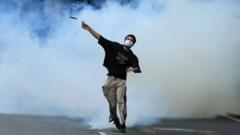
Protesters in Delhi reclaimed the slur directed at them. They wore masks depicting cockroaches, carried posters featuring Japanese manga symbols, and donned superhero costumes while sitting atop police barricades outside Parliament. When authorities attempted to suppress digital channels under security laws, the movement countered by shifting communication to decentralized groups and leveraging viral short-form video content.
When peace rallies turned toward Parliament and the Prime Minister’s official residence, state authorities deployed heavy-handed security tactics.
- Mass Detentions: Over a hundred student leaders and prominent organizers were rounded up by police forces in central Delhi.
- Forceful Dispersal: Water cannons, tear gas shells, and baton charges resulted in scores of injuries among young demonstrators.
- Service Disruptions: Metro stations across central Delhi were closed, and local mobile data networks were throttled to prevent further assembly.
- Hunger Strike Escalation: Renowned Ladakhi educator and activist Sonam Wangchuk joined the protest with a 20-day hunger strike, drawing additional thousands to the site before being forcibly hospitalized by police.
Rather than quelling the unrest, violent police crackdowns amplified public sympathy. Opposition figures, including Indian National Congress leader Rahul Gandhi and former Delhi Chief Minister Arvind Kejriwal, attempted to rally alongside the movement. Yet, many student protesters remain deeply skeptical of established political parties, rejecting attempts by opposition leaders to co-opt their cause.
The Broader Economic Tinderbox
Paper leaks are merely the trigger; the true driver of this unrest is an underlying economic crisis that official state metrics have long struggled to conceal. Independent economic reports indicate that nearly 40% of Indian graduates under the age of 25 are unemployed.
For a decade, the ruling administration promoted images of digital modernization, infrastructure expansion, and surging national economic metrics. However, job creation in formal sectors has failed to keep pace with the millions of young entrants entering the labor force every single year.
The private education market has expanded rapidly to fill the void left by underfunded public universities, turning higher education into a commercial commodity. Indian families currently spend more money on private coaching centers than the government allocates for its entire higher education budget. When the credentials bought through immense financial sacrifice yield neither fair examinations nor viable employment, the social contract snaps.
| Sector Factor | State Reality | Protester Demand |
|---|---|---|
| Exam Integrity | Over 110 paper leaks affecting 22M+ students | Fast-track prosecution courts and criminalization of leak syndicates |
| Youth Employment | Near 40% graduate unemployment under age 25 | Guaranteed public sector recruitment timelines and transparency |
| State Engagement | Initial denial followed by police force and account bans | Resignation of Education Minister Dharmendra Pradhan |
| Compensation | Minimal official acknowledgment | Direct financial restitution for families of candidates lost to suicide |
Government Countermeasures and Political Limits
Faced with escalating international media coverage and persistent street presence, the government shifted its strategy from total denial to partial engagement. Prime Minister Modi announced the creation of fast-track courts specifically designated to prosecute test-leak syndicates, alongside promises of anti-corruption legislation targeting testing agencies. Senior cabinet ministers opened rare direct discussions with student representatives in an effort to defuse the crisis.
However, these concessions stop short of addressing the movement's central demands.
The government continues to protect its education leadership from resignation, fearing that yielding to student pressure would signal political weakness. Furthermore, security agencies maintain intense surveillance around protest sites like Jantar Mantar, signaling that the state views organized student activism through a security lens rather than a democratic one.
The long-term vulnerability of the youth movement lies in its geographic and demographic reach. While it has dominated the national capital and resonated deeply across urban centers, its organizational capacity in rural heartlands remains untested. The ruling party's electoral machinery relies heavily on rural voter mobilization and social welfare distribution, areas where student-led satire has less structural weight.
If student organizers fail to bridge the divide between urban graduate frustration and rural youth underemployment, the government may succeed in isolating the movement to major metropolitan pockets. Yet, if the anger over compromised exams and dead-end job prospects spreads into small towns and agrarian districts, the political consequences for the administration will be severe. The spectacle of police batons striking young citizens demanding fair exams has exposed a fundamental fracture in the state's narrative of progress, proving that no amount of digital optics can indefinitely disguise a broken economic reality.