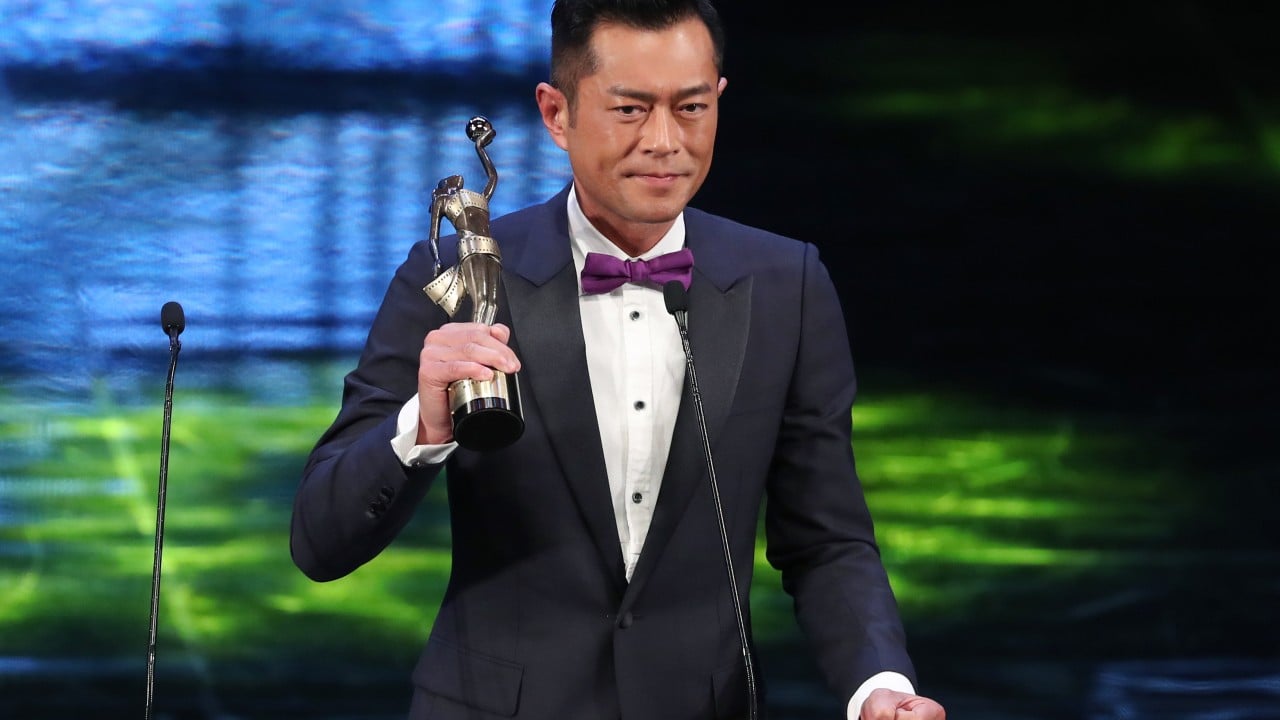
The writ filed at the Hong Kong High Court did not merely target a celebrity. It laid bare the fragile architecture underpinning an entire regional entertainment economy. When the British Virgin Islands-registered entity Sino Hero Ventures Limited hauled actor-director Louis Koo and his production banner, One Cool Film Production Limited, before the judiciary over an alleged unpaid debt soaring past HK$149 million, it sent a shockwave through the local creative sector.
At the center of this multi-million-dollar legal confrontation is a simple 2019 term loan facility agreement for HK$70 million. Originally slated for repayment in September 2020 with an initial 12 percent annual interest rate—escalating to 18 percent upon default—the debt metastasized over seven years. According to court documents, repeated deadline extensions bought time, but by early 2024, only HK$13.2 million had been cleared. A token payment of HK$700,000 extracted under intense pressure late last August failed to plug a financial chasm that now exceeds HK$149 million in combined principal and compounding interest.
To treat this lawsuit as an isolated corporate dispute is to miss the broader systemic decay. Louis Koo has long positioned himself as the savior of Hong Kong cinema. He acquired distressed post-production houses, bankrolled ambitious action blockbusters, and assumed the mantle of a one-man industrial stabilization fund when major institutional investors pulled back. Yet this high-stakes strategy of aggressive vertical integration and heavy private borrowing exposes the fundamental vulnerability of modern Asian filmmaking. When box office returns fluctuate wildly and institutional banks slam shut their credit windows, even the most revered icons must turn to offshore liquidity providers carrying punishing default terms.
The Anatomy of a Liquidity Crunch
Private credit arrangements in the entertainment industry operate on razor-thin margins of optimism. When production companies sign off on 12 percent baseline interest rates, they gamble entirely on a continuous pipeline of profitable theatrical releases. That math works brilliantly during a market boom. It becomes a death spiral during a structural downturn.
Consider the operational reality of running a mid-sized production studio in Hong Kong over the past half-decade. Local box office revenues have faced relentless headwinds, constrained by shifting regional consumer habits, tighter regulatory oversight on distribution into mainland markets, and escalating production overheads. Studios cannot simply scale down budgets without compromising the high-octane visual spectacle that regional audiences expect from Hong Kong action cinema. Consequently, producers find themselves trapped in a continuous cycle of debt rollover. They borrow to finish principal photography, borrow more to fund post-production and marketing, and rely on eventual distribution payouts to service the interest.
When those distribution payouts stall, the compounding interest clock does not stop. An initial HK$70 million injection taken out on the eve of a turbulent decade transforms into an albatross by 2026. The fact that One Cool Film managed to repay only a fraction of the principal over multiple years signals that the underlying cash flow from theatrical assets simply was not generating the necessary yield.
The Illusion of Star-Studded Solvency
Public perception of celebrity wealth often diverges wildly from corporate balance sheets. Fans look at a prolific actor who stars in half a dozen films a year, runs a massive talent management operation, and presides over a sprawling empire of special effects houses, assuming infinite liquidity. The reality of film production is entirely different. Cash is rarely parked in bank accounts; it is perpetually tied up in work-in-progress inventory, unreleased distribution rights, and overhead expenses.
When high-profile figures face acute cash shortages, the symptoms manifest in unexpected ways. Observers of the local entertainment scene noted peculiar shifts in recent months, including unexpected concert ventures that felt less like artistic expressions and more like desperate efforts to generate immediate box office liquidity. When a titan of the industry has to rely on hurried live performances to patch holes in a sinking financial vessel, it signals that the traditional funding models for regional cinema have completely broken down.
This lawsuit also highlights a troubling pattern of financial friction surrounding Koo's business ventures. Two years prior to the Sino Hero filing, a separate legal challenge emerged from a business partner alleging default on an HK$8.3 million loan tied to a fashion joint venture. While fashion and film occupy different commercial sectors, they share a reliance on discretionary consumer spending and rapid capital turnaround. When multiple high-value creditors lose patience simultaneously, it points away from bad luck and toward a systemic overextension of personal credit guarantees.
The Broader Fallout for Regional Production
The fallout from the One Cool Film litigation extends far beyond a single courtroom on Queensway. Hong Kong's film industry has long survived on a delicate ecosystem of independent financiers, syndicate backers, and wealthy patrons willing to absorb risk. If marquee production houses with heavy institutional footprints find themselves locked in litigation with offshore creditors, risk aversion will instantly ripple through the entire market.
Financiers do not care about prestige or cultural preservation. They care about enforceability and yield. When an offshore vehicle like Sino Hero Ventures decides to publicly trigger a high-court default action for nine figures, it sends an unmistakable signal to the shadow banking sector that backing Hong Kong film talent carries unacceptable downside exposure. Future productions will find credit harder to secure, interest rates even more punitive, and personal guarantees increasingly draconian.
Independent creators who lack Koo's industry dominance will feel the squeeze first. If the banks and private lenders pull back from the top tier of local production, the contraction will starve the entire talent pipeline of early-stage funding. Writers, directors, and technical crews dependent on studio slates will see projects canceled before cameras roll.
The romantic narrative of the lone hero stepping up to keep a fading cinematic golden age alive through sheer force of will has reached its financial limit. Balance sheets eventually demand a reckoning, regardless of how many box office hits bear a producer's name. As the high court prepares to untangle the web of loan agreements, extensions, and defaults, the verdict will do more than settle a debt. It marks the definitive end of an era where personal prestige could indefinitely outrun commercial reality.