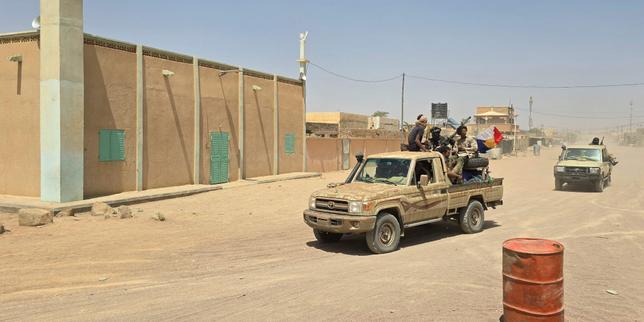
Fifty soldiers dead. Five Russian mercenaries down. A military base in central Mali overrun by the Group for the Support of Islam and Muslims (JNIM), an Al-Qaeda affiliate that treats state lines as mere suggestions. When the smoke cleared over the Dioura camp, the official tally offered a stark reality check to Bamako’s ruling junta. This was not a random skirmish on a forgotten frontier. It was a calculated, grinding structural collapse of a security architecture that traded Western partnership for Kremlin-backed paramilitaries, only to find that heavy artillery cannot replace local intelligence.
For years, military analysts watched the shifting sand of the Sahel with mounting dread. The exit of French counterterrorism forces under Operation Barkhane left a massive security vacuum. To fill it, the Malian junta turned inward and eastward, welcoming the Russian Africa Corps—formerly known as the Wagner Group—with open arms and empty promises of swift victory. That alliance was pitched as an iron-fisted cure for the insurgency. Instead, it has morphed into a bloody anchor dragging the national army deeper into tactical isolation.
The Anatomy of an Overrun Base
Central Mali has become a graveyard for conventional military logic. The recent assault on the base followed a familiar, terrifying script. JNIM fighters, intimately familiar with the terrain and backed by deep local intelligence networks, coordinated a multi-pronged strike that overwhelmed defenses before reinforcements could mobilize. Local elected officials whisper of death tolls far exceeding the conservative official figures, pointing to missing units and captured hardware that now fuel the insurgency's own logistics.
The presence of Russian paramilitaries inside these camps was supposed to serve as a psychological and tactical deterrent. It did not. The insurgents no longer view the Russians as an insurmountable threat; they view them as high-value targets whose elimination delivers a devastating psychological blow to the junta's propaganda machine. When foreign contractors trained in conventional warfare are dropped into the thorn-scrub and asymmetric ambush zones of the Sahel, their heavy-handed tactics often alienate the civilian population whose cooperation is the only genuine currency in counterinsurgency.
To understand why these bases fall with such regularity, one must examine the mechanics of intelligence gathering. Modern counterterrorism relies on population-centric security. If villagers trust the military, they report roadside bombs and troop movements. When military operations—frequently spearheaded by foreign mercenaries with zero cultural or linguistic fluency—result in widespread abuses, arbitrary detentions, and scorched-earth reprisals, the civilian calculus shifts overnight. Survival dictates silence, or worse, active collaboration with the jihadists.
The Geopolitical Mirage
Bamako’s strategic gamble was simple on paper. Sever ties with traditional Western allies, expel United Nations peacekeepers, and hire private security contractors who ask no questions about human rights or democratic transitions. Sovereignty was the primary catchphrase. Yet true sovereignty requires a functional monopoly on violence across national territory. By subcontracting internal security to Moscow, the junta has merely traded one form of dependency for another, while hemorrhaging territorial control.
The financial toll alone is staggering. Precious state revenues that should fund infrastructure, health, and basic governance are diverted to pay for Russian security guarantees and materiel. Meanwhile, the security perimeter shrinks. Convoys moving between northern strongholds and central hubs require massive combat escorts, turning routine resupply missions into high-stakes operations that frequently end in catastrophic ambushes.
Consider a hypothetical scenario often cited by defense analysts studying the region. If an army relies entirely on mechanized columns moving along predictable dirt tracks while ceding the surrounding countryside to insurgents, mobility becomes a trap. The more armor you deploy, the more vulnerable your supply lines become to improvised explosive devices and coordinated swarm attacks. The Russian deployment brought more firepower, but it failed to rewrite the fundamental math of asymmetrical warfare. Firepower without local buy-in is just noise in the desert.
The Myth of the Quick Fix
The junta's narrative relies heavily on the illusion of momentum. Every territorial sweep is broadcast as a historic triumph, while catastrophic losses like the one at Dioura are minimized or buried under waves of nationalist rhetoric. This information lockdown works in the short term to suppress dissent in the capital, but it blinds the command structure to systemic decay. You cannot fix a rotting foundation by painting the walls.
Neighboring states within the Alliance of Sahel States are watching these developments with growing anxiety. The spillover effect is real, and the economic stagnation caused by perpetual insecurity is hollowing out the region's future. As long as military strategies prioritize urban optics over rural reconciliation, the insurgency will continue to regenerate faster than it can be pruned.
The graveyard in central Mali grows wider by the week, fed by tactical stubbornness and the pursuit of geopolitical illusions. Until Bamako confronts the structural failures of its current security doctrine and rebuilds trust with the marginalized populations of the interior, the desert will remain a hostile theater where no amount of external muscle can buy permanent peace.