The courtroom doors at Westminster Magistrates' Court opened on a Friday morning to a familiar script of legal defiance, as Hekmat Omar Ali Hakim stood via video-link to enter a not guilty plea regarding charges tied to the Manchester synagogue attack. But beneath the procedural routine of a single defendant denying an allegation of failing to disclose terrorist information, lies a much darker narrative about the vulnerabilities exposed by the October 2025 atrocities at the Heaton Park Hebrew Congregation Synagogue.
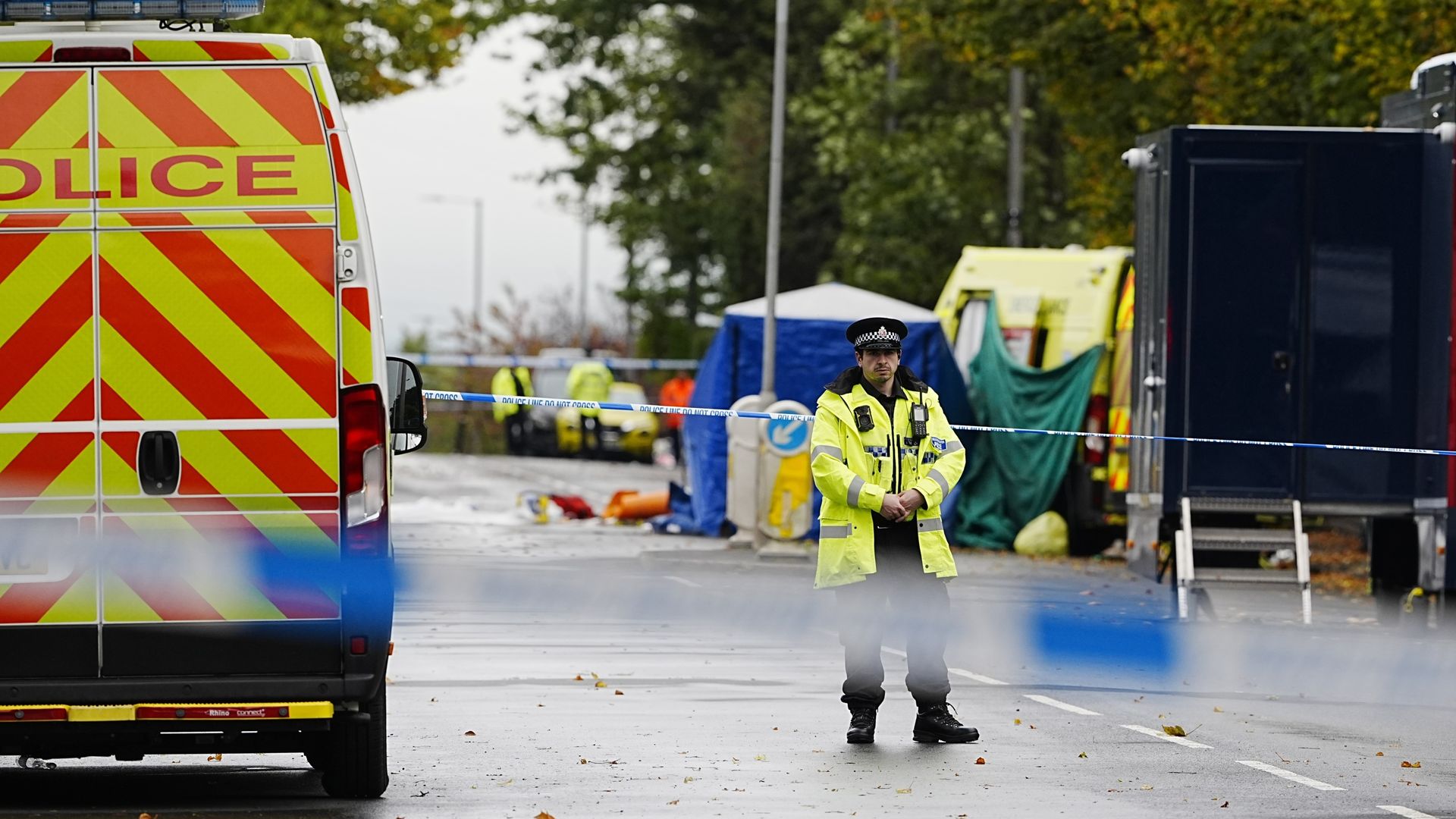
On Yom Kippur, the holiest day of the Jewish calendar, Jihad Al-Shamie drove a vehicle into the gates of the Crumpsall place of worship, donning a fake suicide vest and a knife that claimed the lives of worshippers Melvin Cravitz and Adrian Daulby. Three other men sustained serious injuries before armed police ended the assailant's rampage. Months later, the judicial machinery continues to grind through the network surrounding the killer. Yet, the official narrative of swift counter-terrorism justice obscures a series of missed opportunities that allowed radicalization to fester in plain sight across Greater Manchester.
The Anatomy of a Blind Spot
Police forces operate under mountains of digital data. Sometimes, the avalanche buries the warning signs.
Greater Manchester Police faced intense public scrutiny when it was revealed that officers had seized mobile devices belonging to Al-Shamie months before the synagogue attack. Arrested in February 2025 for breaching a non-molestation order and again in September 2025 on suspicion of rape, Al-Shamie sat on bail while his phones remained unexamined in police custody. When investigators finally unlocked those digital containers after his death, they uncovered a disturbing repository of extremist chats, shared violent fantasies, and reconnaissance plans targeting military sites.
Chief Constable Sir Stephen Watson issued a public apology acknowledging that the contents of those devices would have triggered immediate investigative action. An apology does not resurrect the dead. It highlights an institutional friction point: local criminal investigations and counter-terrorism intelligence units frequently operate in departmental silos. A suspect arrested for domestic or violent offenses who harbors jihadist ideologies can slip through the cracks simply because local workloads preclude deep-dive digital forensics.
Networks of Complicity and Silent Associates
The investigation expanded far beyond a single lone actor. Courts have begun dismantling the broader ecosystem that enabled the attack.
Earlier in the summer, Mohammad Asim Bashir received a life sentence with a minimum term of over sixteen years after admitting to the preparation of acts of terrorism. Court disclosures showed that Bashir and Al-Shamie had shared thousands of messages across encrypted chat groups, exalting violence, celebrating atrocities, and even conducting a ten-hour round trip to perform hostile reconnaissance at the UK Defence Academy in Shrivenham.
Now, the focus shifts to peripheral figures like Hakim, a forty-nine-year-old Iraqi national accused of keeping silent despite knowing or suspecting terror activities. Prosecutors allege that closed-circuit television footage and recorded conversations place Hakim alongside Al-Shamie at a local mosque, showing active support for the killer's worldview.
The legal threshold for a Section 38B charge under the Terrorism Act requires proving that an individual possessed information they knew or believed might be of material assistance in preventing an act of terrorism, yet failed to pass it to authorities without reasonable excuse. Proving what someone knew inside a tight-knit radical echo chamber remains notoriously difficult. Defense teams naturally push back against guilt by association, forcing prosecutors to reconstruct mental states from ambiguous text fragments and circumstantial proximity.
The Cost of Complacency in Local Communities
Radicalization does not occur in a vacuum. It festers in shared cars, back rooms of community spaces, and unregulated digital channels where social grievances morph into lethal ideology.
In Higher Broughton and Crumpsall, the aftermath left a community scarred not only by the grief of losing beloved community members like Cravitz and Daulby, but by the realization that neighbors watched the descent without sounding an alarm. Security analysts often point to the "leaking" of extremist intent—where individuals drop hints, display sudden behavioral shifts, or test radical ideas on their peers long before executing a strike. When associates choose silence, they grant implicit permission to violence.
The trial schedule stretches forward toward autumn. The Old Bailey will hear further arguments as the legal system attempts to assign accountability to every link in the chain. Every court appearance serves as a stark reminder that stopping modern terrorism requires more than armed response units at synagogue gates; it demands an uncompromising willingness to interrogate the institutional failures that allowed the plot to mature in the first place.