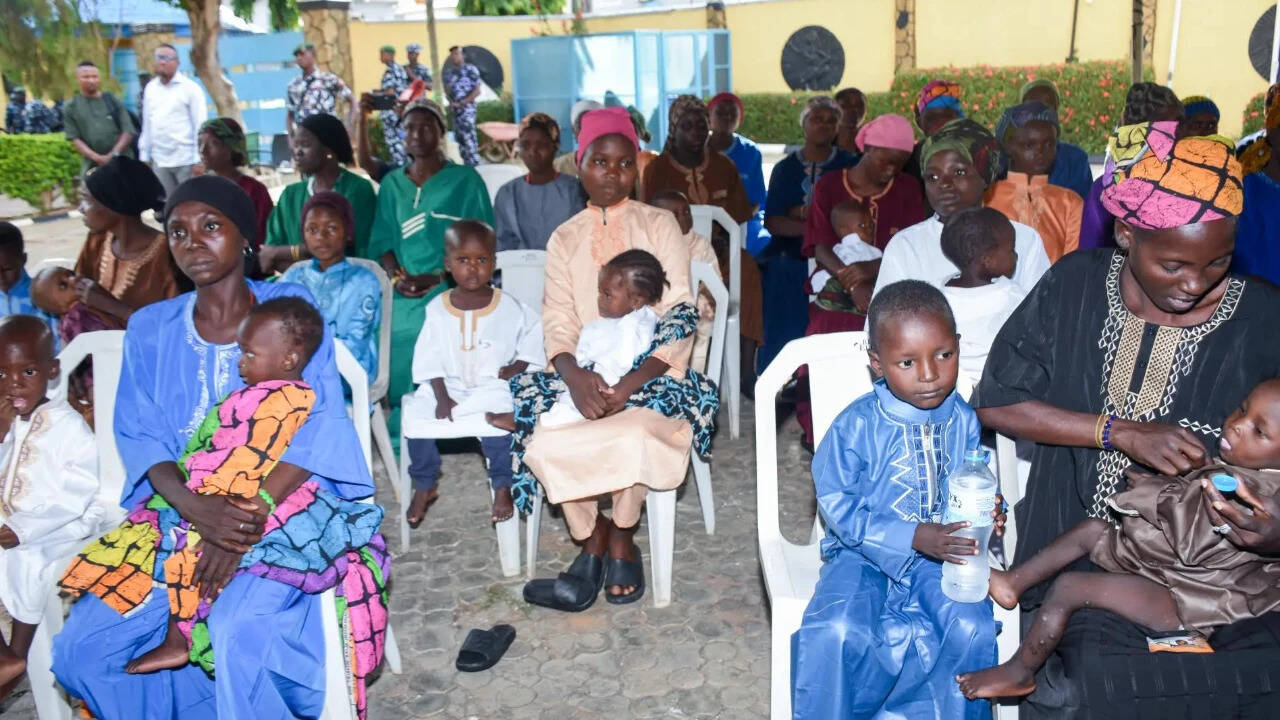
Six months in a forest hideout leaves scars that don't easily fade. For over 300 Nigerians, that nightmare finally ended when security forces executed what officials are calling the largest rescue operation of its kind.
The ordeal began back on February 3, when jihadi militants stormed the village of Woro. They didn't just raid the town; they tore it apart. More than 160 people were killed in the initial attack, and hundreds of others—mostly women and children—were dragged into the dense wilderness.
For half a year, these captives lived in absolute terror. They survived on scraps while hidden deep inside remote forest camps. But the story of their captivity isn't just about suffering. It's about an astonishing display of human resilience under impossible conditions.
Inside the Forest Hideouts
Imagine living outdoors for six months with armed militants watching your every move. That's the reality these hostages faced daily. Among the captives was a nurse named Amira Saliu, whose story has captured international attention.
Cut off from any medical supplies, Saliu faced a terrifying challenge while in the forest camp. Ten pregnant women went into labor during their captivity. With zero equipment, sterile tools, or medication, Saliu had to deliver all ten babies using just her bare hands.
"I had no choice," Saliu recounted after being brought to safety in Ilorin, Kwara State. Her resourcefulness kept newborns and mothers alive against impossible odds, turning a grim holding camp into a desperate survival ward.
The Operation That Secured Freedom
The turning point came when Nigerian forces finally located the forest network. President Bola Tinubu hailed the mission as the largest rescue operation ever mounted by the nation's security apparatus. Over 300 victims were safely extracted and brought out of the wilderness, receiving immediate medical checks and psychological support in Ilorin.
Security analysts point out that this raid highlights a deeply unsettling trend. Armed gangs and extremist factions are increasingly pushing south, targeting vulnerable rural communities that lack heavy security presence. Woro, a predominantly Muslim village, proved that no region is entirely safe from these sweeping incursions.
President Tinubu has responded by promising to ramp up military pay and accelerate recruitment to plug critical gaps in national defense. Critics argue that playing catch-up with reactive military strikes isn't enough to solve the crisis.
Why Reactive Measures Fall Short
Experts who track West African security dynamics argue that changing course requires more than just high-profile rescue missions. Sekinat Ojeniyi, an analyst with Africa Practice, notes that intelligence gathering must become the absolute top priority.
When security agencies only respond after villages are burned and hundreds are kidnapped, the damage is already done. Stopping these networks requires intercepting supply lines and dismantling financial backers before attacks happen.
The government faces immense pressure to prove that this massive rescue isn't just a one-off PR win, but the start of a permanent shift in strategy. Families across the region are watching closely, hoping their homes won't be next on the target list.
Right now, hundreds of survivors are beginning the long road to recovery. Their physical wounds will heal, but the trauma of those six months in the forest will take years to mend.
Check your local security updates and support humanitarian organizations working on the ground in West Africa to help displaced families rebuild their lives.


