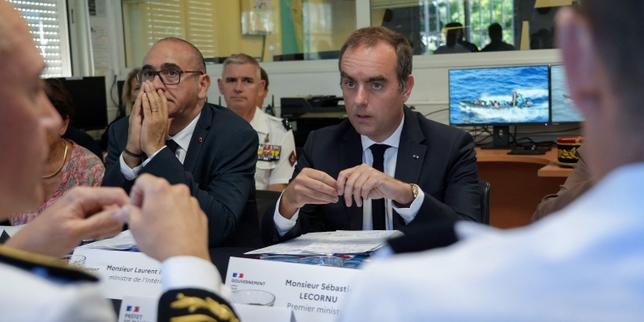
The French government is doubling down on hard power in the Indian Ocean, as Prime Minister Sébastien Lecornu rolls out a sweeping military and technological upgrade to seal the maritime borders of Mayotte. Years of mounting demographic pressure, infrastructural collapse following natural disasters, and sophisticated smuggling networks have pushed the archipelago to a breaking point. When executive leadership touches down on the tarmac to address an active state crisis, the rhetoric usually centers on firmness. This time, Paris is pairing speeches with high-altitude surveillance balloons, advanced radar installations, and an expanded fleet of interceptors. Yet behind the tactical deployment lies a stubborn operational reality that hardware alone cannot solve.
The Anatomy of a Maritime Blind Spot
Geographically isolated and economically privileged relative to its immediate neighbors, Mayotte remains a primary destination for migrants navigating perilous channels from the Comoros and, increasingly, from nations deep within the African Great Lakes region such as Burundi and the Democratic Republic of Congo. Traditional patrol methods have historically struggled against the sheer volume of kwassa-kwassas—the small, motorized fiberglass boats utilized by commercial smugglers.
State planners are responding by shifting toward high-end military assets. Plans are officially locked in to scale up the number of maritime interceptors from four units a decade ago to a projected thirteen or fourteen by 2028, with ten scheduled for active service before the end of the current operational window. Complementing these surface vessels are aerial sentinels: unmanned drones and captive balloons designed to track nighttime approaches across the channel. Furthermore, a specialized detachment of the Foreign Legion is slated for deployment on the strategic islet of M'tsamboro.
These numbers look imposing on a spreadsheet, but border enforcement in an archipelago is fundamentally an exercise in attrition. Smugglers constantly alter their routes, launching smaller payloads from decentralized points along hundreds of kilometers of coastline. Technology acts as a multiplier, but it requires continuous maintenance in a humid, corrosive marine climate where electronic optics fail with frustrating regularity.
Diplomatic Leverage and Regional Dependencies
Physical walls and radar scopes address only the symptoms of migration, prompting Paris to target the pipeline at its source. The administration has signaled an aggressive pivot toward conditional foreign aid, proposing to tie millions of euros in development assistance directly to the cooperation of sending and transit countries.
Negotiations target nations across East Africa and the island chain, demanding stricter domestic action against human traffickers and swift readmission protocols for citizens intercepted off the Mahoran coast. Under this framework, non-humanitarian state funding can be frozen if local authorities fail to clamp down on departure points.
Diplomats face a delicate balancing act. Heavy-handed conditionality risks alienating regional partners who view migration management through a domestic political lens of their own. Furthermore, intelligence reports presented to the state operational command indicate that criminal syndicates operating these routes frequently rely on local complicity within the island's own infrastructure. When corruption penetrates local administrative nodes, even the tightest naval blockade loses its protective value once arrivals touch dry land.
The Human and Structural Bottlenecks
While the security apparatus absorbs millions of euros in upgraded defense spending, the civilian population of Mayotte continues to grapple with the aftermath of past cyclones and chronic structural deficits. Access to clean drinking water remains an intermittent luxury, medical facilities operate under severe strain, and educational institutions are overwhelmed by surging enrollments.
Local labor unions and residents marching through the streets during executive visits are quick to point out that security crackdowns do little to lower the cost of living or mend broken schools. The tension between funding a militarized border and repairing a fractured social fabric defines the core political gamble facing Paris. Billions have been programmed for long-term reconstruction through 2031, but local skepticism runs deep as project deadlines slip and bureaucratic friction delays ground-level execution.
The state's strategy rests on a belief that absolute border control is a mandatory prerequisite for internal stability. Until the local economy stabilizes and regional wealth gaps narrow, the channel between the Comoros and Mayotte will remain one of the most heavily contested marine borders in the French republic.