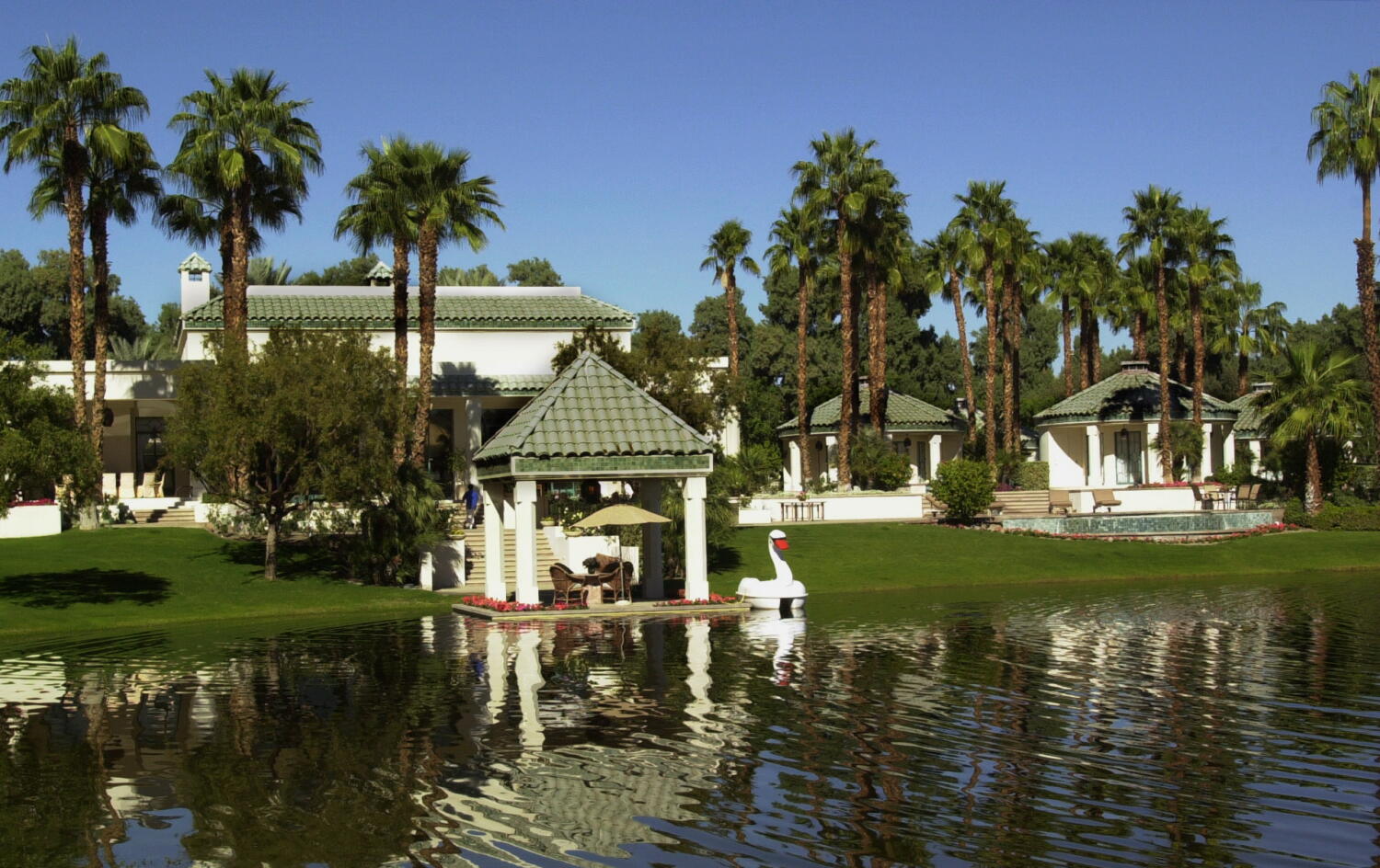
Properties tied to Hollywood royalty rarely stay quiet for long. When a legendary desert compound hits the market, real estate watchers and mid-century architecture nerds immediately sit up straight. Merv Griffin's sprawling Palm Desert estate isn't just another luxury listing with a steep price tag. It is a masterclass in celebrity real estate that blends Moroccan-inspired architecture with raw California desert landscape.
If you think this is just another standard celebrity mansion with an infinity pool and a tennis court, you're missing the entire point. This property tells a specific story about old-school Hollywood excess, design ambition, and how the entertainment elite actually lived when the cameras stopped rolling. If you liked this article, you should read: this related article.
Let's dive into what makes this compound worth talking about, why most people misunderstand its architectural value, and what buyers are actually paying for when they acquire a piece of television history.
The Story Behind the Design
Merv Griffin didn't just buy a house and paint the walls. He bought nearly 40 acres of raw land in the Coachella Valley back in the 1980s and built a sprawling equestrian-focused oasis from scratch. He hired renowned architect Willard Parkes and interior designer Waldo Fernandez to bring his vision to life. For another perspective on this story, check out the recent coverage from Variety.
The result? A massive compound that heavily leans into Moroccan aesthetics. Think massive arched doorways, hand-carved woodwork, terracotta tiles, and massive central courtyards designed to catch the desert breeze.
Most celebrities opt for sterile, glass-walled boxes that look like tech offices. Griffin took the opposite route. He wanted privacy, texture, and drama. The main residence spans around 5,400 square feet, but the real footprint includes multiple guest casitas, a private racetrack, equestrian facilities, and several lakes. Yes, artificial lakes in the middle of the desert. That level of ambition is rare even by modern celebrity standards.
Why This Estate Breaks the Mold
The luxury market is flooded with cookie-cutter mansions. You've seen them. White walls, endless grey hardwood, giant sliding glass doors, and zero personality. They could be in Miami, Austin, or Los Angeles.
Griffin's estate refuses to blend in.
- Total Isolation: Situated on nearly 39 acres, it offers a level of seclusion that modern infill properties in Palm Springs simply cannot match. You aren't looking at your neighbor's pool. You're looking at the Santa Rosa Mountains.
- Equestrian Roots: Griffin was a massive horse racing enthusiast. The property features a private racetrack and stables. Finding a desert property with working equestrian infrastructure is almost impossible today.
- Indoor-Outdoor Flow Done Right: Long before open-concept living became a marketing buzzword, this estate used courtyards and breezeways to force you outside. You live between the rooms as much as inside them.
The Reality of Owning a Desert Compound
Buying a historic celebrity estate sounds glamorous on Instagram. Reality is a bit different. Historic preservation paired with desert climate management takes serious capital.
Maintaining 39 acres in Southern California isn't cheap. Water rights, landscaping, climate control for massive open-air structures, and general upkeep require a dedicated grounds crew. Buyers looking at properties like this aren't just purchasing real estate. They're taking on a curation job. You become the steward of a cultural artifact.
Many buyers make the mistake of trying to modernize these spaces too aggressively. They strip out the terracotta, paint over the carved wood, and turn a soulful Moroccan sanctuary into a generic white-box hotel lobby. Don't do that. The value here lies entirely in the character. If you strip the character away, you're just paying for dirt and drywall.
What the Current Market Says
Properties of this magnitude occupy a very narrow slice of the real estate ecosystem. They don't sell overnight. They require a specific kind of buyer—someone who appreciates entertainment history, architectural pedigree, and absolute privacy.
When historical estates trade hands, the pricing reflects scarcity. You can build a new house tomorrow. You cannot recreate forty years of Hollywood lore, established mature landscaping, and custom architectural masonry overnight.
If you are tracking high-end desert real estate, keep an eye on how this listing evolves. It serves as a benchmark for how the market values legacy properties versus modern speculative builds.
Take a close look at the architectural details if you get the chance. Notice how the light hits the courtyards at dusk. That is the real luxury. Not the square footage, but the atmosphere.
Schedule a private viewing through a qualified luxury broker if you're a qualified buyer, or study the floor plans online if you're an architecture student looking to understand how to anchor a massive structure into an arid landscape without destroying its soul.