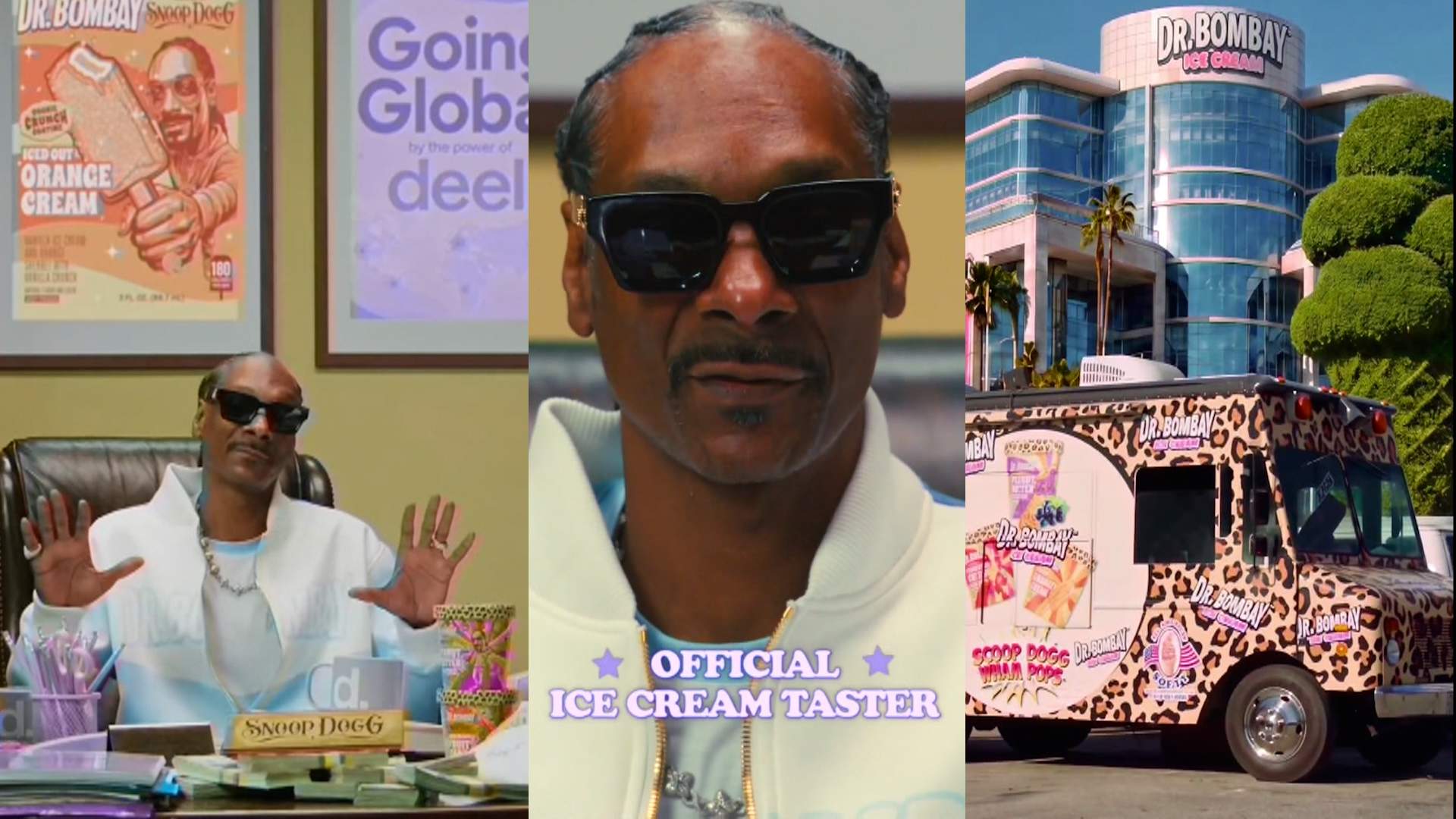
Snoop Dogg's ice cream brand, Dr. Bombay, is offering a three-month contract paying US$10,000 a month for an international ice cream taster. The position requires sampling frozen desserts, tracking global flavor trends, and providing product feedback, all while partnering with global payroll platform Deel to manage international compliance. On the surface, it reads like a whimsical lottery ticket cooked up by a legendary marketer. Dig beneath the viral headlines, however, and you find a masterclass in modern corporate positioning disguised as a dessert stunt.
We have watched celebrity consumer packaged goods brands multiply exponentially over the last decade. Every aging musician, retired athlete, and social media star now pitches tequila, sneakers, or pre-mixed cocktails. Most of these ventures fail quietly. They land on crowded supermarket shelves, burn through initial venture capital, and vanish into liquidation warehouses within eighteen months.
To survive the crowded consumer goods market, a brand needs more than a famous face stamped across the cardboard carton. It needs continuous, organic media oxygen.
The Mechanics of Manufactured Serendipity
When a corporation announces a job paying thirty grand total for three months of eating sugar, major news networks and lifestyle blogs pick up the slack for the marketing department. No traditional advertising campaign buys the sheer volume of earned media generated by a headline stating that a rap icon wants to pay you to consume dairy.
Look closer at the operational partner involved in this stunt. Deel does not sell ice cream. They sell global payroll, compliance software, and remote worker management tools. For a business-to-business software company that normally spends its marketing budget on dry whitepapers about cross-border tax laws and employment regulations, aligning with Snoop Dogg is an aggressive pivot toward cultural relevance.
By utilizing Deel’s infrastructure to handle applicants from anywhere on earth, the campaign proves a technical point. The software can handle complex, multi-jurisdictional hiring spikes without breaking a sweat. The ice cream is merely the prop. The software is the actual product being stress-tested in the public eye.
Stripping Away the Sugar Coating
Media outlets love a whimsical fairy tale. They frame these campaigns as a lucky break for an ordinary person with a sweet tooth. Realists understand that corporate entities do not hand out tens of thousands of dollars for casual snacking without expecting heavy returns on investment.
The successful applicant functions essentially as an influencer-in-residence. The job description mandates public-facing content creation, active social media documentation, and alignment with the brand's promotional schedule. You are not sitting alone in a dark room quietly pondering the butterfat content of vanilla bean. You are performing enthusiasm on camera. You are generating user-engaged metrics. You are a mobile billboard with a spoon.
This blurs the line between traditional employment and content creation partnerships. Brands realize that consumers ignore standard commercial spots. They skip pre-roll videos and tune out banner ads. However, they will happily share a bizarre job listing where a celebrity promises to review desserts. The recruitment process itself becomes the primary marketing vehicle.
The Economics of Celebrity Consumer Goods
Launching a food brand demands immense capital. Distribution slots in major grocery chains cost small fortunes in slotting fees. Supply chain logistics can crush margins overnight. For Dr. Bombay, founded alongside Snoop's son Cordell Broadus, staying relevant requires constant cultural chatter to maintain those crucial retail shelf spaces.
When retail buyers evaluate whether to keep a celebrity-backed product line, they look at velocity metrics and digital share of voice. A standard billboard campaign tells a buyer that a company bought ad space. A viral global job search tells a buyer that millions of consumers are actively talking about the brand name. That distinction dictates which products stay front-and-center in the freezer aisle and which ones get pushed down to the bottom shelf.
Consider the risk profile. Thirty thousand dollars for a three-month contract is pocket change compared to the multi-million dollar television ad campaigns of legacy food conglomerates. Yet, this single stunt yields higher engagement rates than a polished commercial spot costing ten times as much.
What the Fine Print Actually Entails
Applicants dreaming of an easy payday should examine the operational reality. Cross-border independent contractor agreements carry heavy tax implications. Winners residing outside the United States must navigate local self-employment taxes, currency conversion fluctuations, and strict reporting requirements.
Furthermore, the physical toll of consuming high-sugar, high-fat dairy products under professional constraints should not be underestimated. Industrial tasting requires acute sensory fatigue management. Palate burnout happens quickly when sugar intake spikes.
Yet, applicants line up by the hundreds of thousands. They submit their details, share the links on social feeds, and feed the very algorithm the parent company wants to dominate. The genius of the mechanism lies in its voluntary nature. People happily market a consumer goods enterprise for free, just for a tiny statistical chance at the golden ticket.
The Broader Industry Shift
We are witnessing the complete transformation of corporate human resources into entertainment media. Traditional job descriptions are dying. Companies now package routine marketing positions as lottery-style social media events.
Expect other major labels to copy this blueprint. Soon, every beverage startup and snack manufacturer will launch global searches for quirky positions designed entirely to manipulate trending topics lists. The boundary between employment and entertainment has officially dissolved.
The next time a headline declares a celebrity is offering an absurd salary for an impossible-sounding job, remember to look past the sugar. Behind the viral charm offensive lies a calculated corporate machinery optimized for attention extraction.