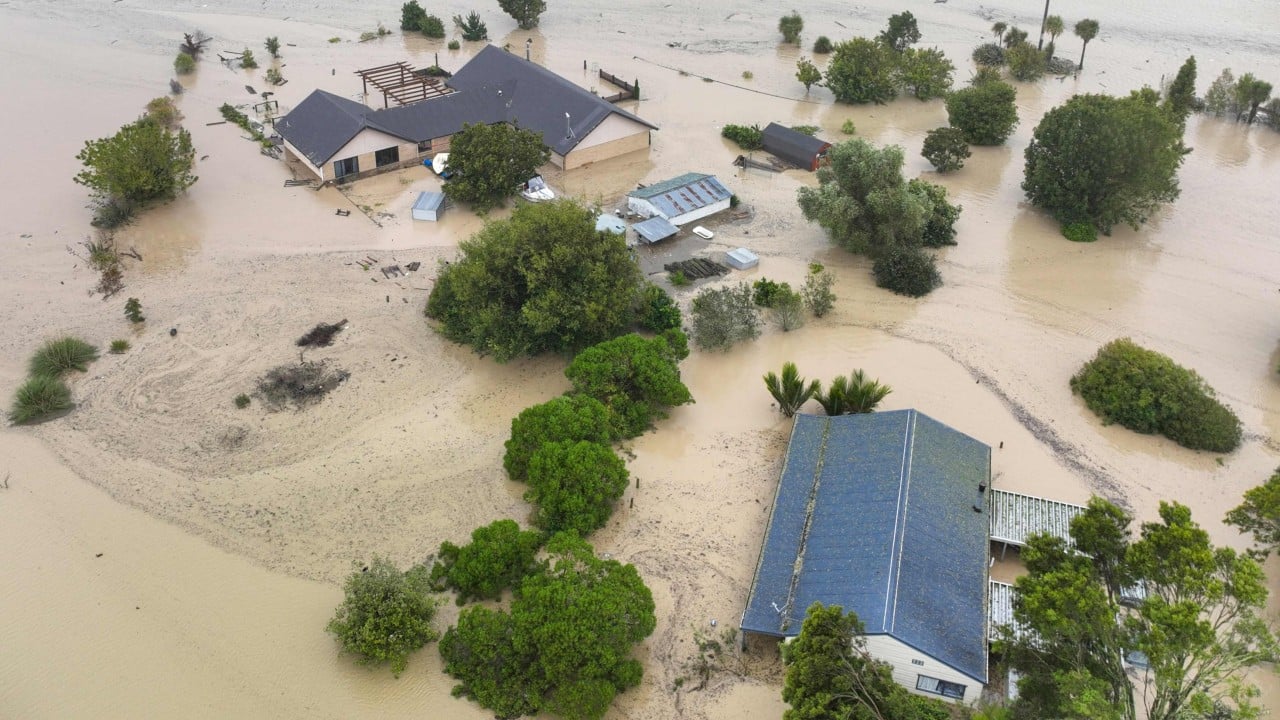
On paper, it looks like a classic real estate loophole. In a housing market as famously brutal as New Zealand’s, properties sitting in designated flood zones are currently selling at massive discounts, sometimes trading for $100,000 less than identical homes just a few streets away. Desperate first-time buyers and yield-chasing landlords are snapping them up. Fresh data from property consultancy Cotality shows that since January 2020, homes with the highest flood risk across the country have actually gained 26.1% in value, comfortably outperforming the 19.8% growth seen in completely unexposed properties.
Affordability wins today. Risk shapes tomorrow.
The immediate math is tempting, but the underlying reality is a financial trap door. Buyers believe they are outsmarting a rigid market by accepting a bit of localized water risk. They are wrong. The real danger to these properties is not a sudden influx of river water, but the quiet, permanent exit of the capital that sustains them.
The Mirage of the Climate Discount
Auckland’s median dwelling value hovers around $1.05 million, a figure that prices out a vast swath of the working population. When a home in a suburb like Mt Albert hits the market with a six-figure discount due to a flood overland flow path on its council record, it triggers a predictable behavioral response. Buyers see a calculable, manageable compromise.
The market is treating climate risk as a fixed, upfront transaction fee.
This pricing mechanism relies on the assumption that the risk remains static. It ignores the compounding nature of infrastructure decay and weather volatility. In the aftermath of the 2023 Anniversary Day floods and Cyclone Gabrielle, which caused billions in economic damage, logic suggested that vulnerable homes would see their values crater. Instead, the opposite occurred. The desperation for entry-level housing has artificially inflated the value of the most vulnerable stock on the market because it is the only stock left within financial reach.
The Invisible Mechanism of Insurance Retreat
A property’s value does not exist in a vacuum. It is anchored entirely to liquidity, and liquidity in the residential property market is dictated by trading banks.
Banks do not lend on uninsured assets.
Data from the Reserve Bank’s Financial Stability Report highlights that insurer retreat is no longer a theoretical projection for the mid-century. It is actively altering bank balance sheets. Major lenders like Westpac have begun integrating granular natural hazard data from insurers directly into consumer-facing platforms. Every property is now assigned a highly specific hazard score based on advanced catastrophe modeling.
When an insurer decides a risk profile crossed the line from profitable to volatile, they do not just raise the premium. They walk away.
This process of insurance retreat happens annually at policy renewal. An investor might secure a mortgage today based on a clean insurance certificate, only to find themselves uninsurable twelve months later. If a policy is dropped or heavily restricted with massive deductibles, the mortgage technically defaults. The property becomes impossible to refinance and completely untransactable on the open market.
The Rebuild Deficit
Even if a property retains its insurance policy, the standard "sum insured" model used by most private firms leaves a massive liability gap during a major regional disaster.
The Cost Surge Factor
When a severe weather event hits an isolated region, the localized cost of construction spikes dramatically. Material shortages and a sudden bottleneck in labor availability routinely drive rebuilding costs up by 40% or more overnight. A homeowner who meticulously calculated their rebuild cost at $500,000 based on standard square-meter rates suddenly finds the actual tender responses coming in at $750,000.
The Regulatory Trap
Post-flood reconstruction is rarely a simple matter of replacing drywall. Local councils frequently mandate updated foundation designs, extensive drainage upgrades, and costly overland flow path diversions before issuing a building consent. These mandatory resilience improvements are seldom fully covered under basic policies, leaving the property owner to find hundreds of thousands of dollars in cash just to restore their home to a habitable state.
The Policy Safety Net is Disappearing
Many current buyers are operating under the unwritten assumption that if things get bad enough, the state will step in. This expectation is rooted in the managed buyout schemes utilized in parts of Auckland and Hawke's Bay following the disasters of 2023.
The government has explicitly stated that these ad-hoc buyouts are not a permanent policy framework.
Taxpayers will not underwrite the risk profiles of private real estate investments indefinitely. As the state backs away from the role of the ultimate insurer of last resort, the financial buffer protecting these high-growth, high-risk suburbs disappears entirely. The current value outperformance of flood-prone homes is a classic market anomaly driven by short-term affordability pressures. It is a transfer of risk from institutional balance sheets to the balance sheets of the least financially resilient citizens in the country.