Xi Jinping’s latest diplomatic engagement with Pyongyang takes place against a backdrop of rapidly shifting military capabilities. Western intelligence reports and state-sanctioned media broadcasts from North Korea reveal an unprecedented influx of advanced naval assets and autonomous drone technology into the Hermit Kingdom’s arsenal. While surface-level analysis views this as a unified front against Western alliances, the reality is far more fractured. Pyongyang is rapidly modernizing its military framework, and this newfound technological independence is altering the balance of power in East Asia, creating a complex security calculation for Beijing.
The Secret Evolution of Pyongyang's Naval Strike Power
For decades, naval analysts dismissed the Korean People's Navy as a brown-water force. It was a collection of aging Soviet-era hulls and vulnerable patrol boats. That era has ended.
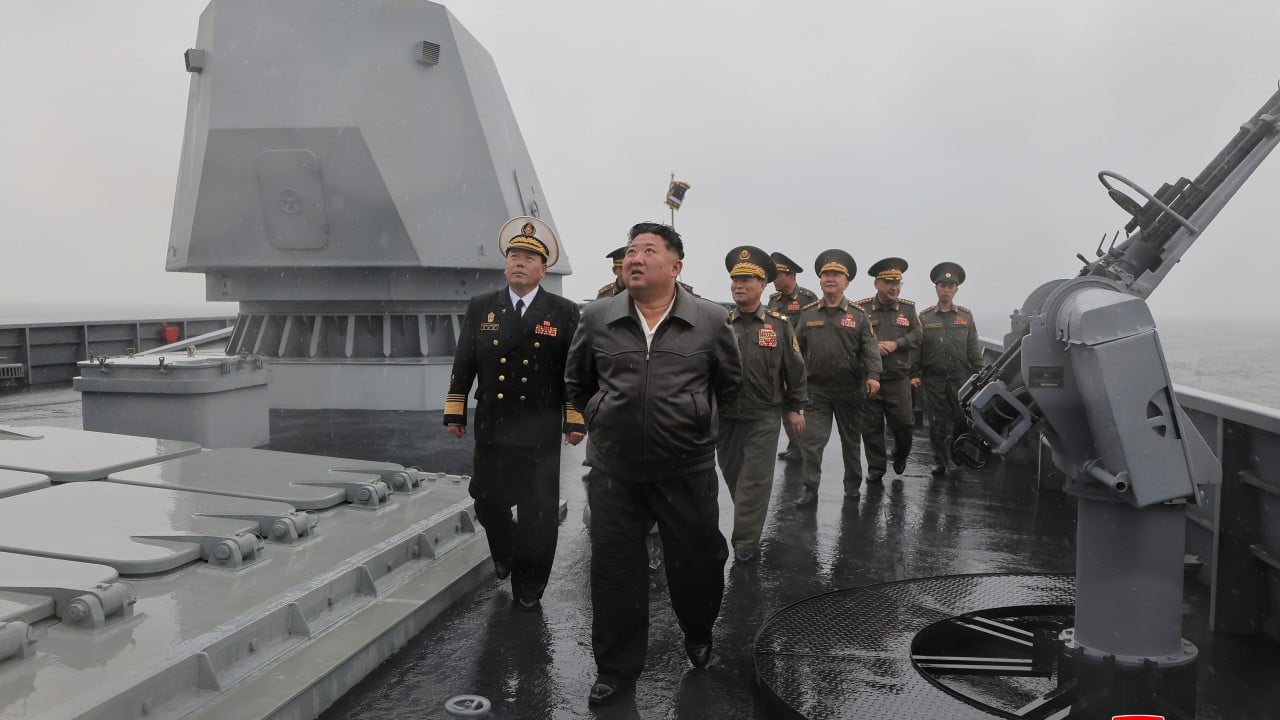
Pyongyang has systematically overhauled its shipyards, introducing automated production techniques and modern modular construction. The most striking manifestation of this shift is the deployment of new surface combatants equipped with low-observability hull designs. These vessels are designed to reduce radar cross-sections, allowing them to operate closer to disputed maritime borders without immediate detection.
More threatening than the hulls themselves are the weapons systems integrated into them. Western tracking data confirms the installation of long-range cruise missiles capable of carrying tactical nuclear warheads on these new corvettes and frigates. These are not unguided rockets. They utilize active radar homing and satellite-assisted navigation systems. By migrating their nuclear deterrent from static underground silos to highly mobile, stealth-vessel platforms, North Korea has complicated the preemptive strike calculations of its neighbors.
The industrial capacity required to build these ships suggests a highly organized domestic supply chain. High-strength steel production, precision CNC machining, and advanced marine propulsion systems are now operating within North Korean borders, defying over a decade of strict international sanctions.
Autonomous Flight and the Software Infiltration
The skies over the Korean Peninsula are changing just as fast as the waters. The defense ministry in Pyongyang recently showcased long-endurance unmanned aerial vehicles that bear a striking resemblance to American reconnaissance drones. Beneath the fiberglass composite shells lies a more significant development: sophisticated flight control software capable of autonomous navigation and target identification.
North Korea has pivoted toward algorithmic warfare. Its state laboratories are utilizing machine learning to process imagery captured by these drones, enabling automated threat detection without relying on constant communication links back to a central command station. This mitigates the effectiveness of electronic jamming, which has traditionally been the primary defense against North Korean incursions.
The Source of the Silicon
Sanctions were supposed to prevent this. High-performance microprocessors and field-programmable gate arrays are legally blocked from entering the country. Yet, a deep dive into global supply chains reveals how these restrictions fail.
North Korean procurement front companies, operating primarily through shifting logistics hubs in Southeast Asia, acquire dual-use commercial electronics. A chip designed for an automated agricultural drone or a high-end electric vehicle serves perfectly well as the brain of a loitering munition. By harvesting these components from commercial markets, Pyongyang bypasses the rigorous vetting applied to military-grade hardware.
Redefining the Skirmish Line
These autonomous systems change tactical reality on the ground. A swarm of low-cost, AI-driven drones can saturate airspace, overwhelming air defense batteries designed to intercept a small number of high-velocity missiles. This allows North Korea to project asymmetric power at a fraction of the cost of traditional air forces.
The Friction Behind the Alliance
Publicly, Beijing and Pyongyang project an image of absolute solidarity. The state dinners are lavish. The communiqués speak of unbreakable bonds.
The private reality is tense.
A technologically sophisticated, nuclear-armed North Korea is not entirely in China's strategic interest. Beijing desires stability above all else on its northeastern border. A volatile neighbor equipped with autonomous strike drones and stealth warships risks provoking a massive, permanent buildup of American and allied military assets in the region. Japan and South Korea are already accelerating their own missile defense programs and expanding trilateral intelligence sharing with Washington.
Furthermore, Pyongyang's technological leap reduces its economic and military dependence on China. When North Korea relied on Beijing for obsolete spare parts, China held immense leverage over Kim Jong Un's provocations. Now, with domestic manufacturing lines churning out advanced Guidance and Control systems, that leverage is eroding. Xi Jinping faces a partner that can act with increasing impunity, knowing that China cannot allow the regime to collapse without triggering a massive refugee crisis and a Western-aligned unified Korea on its border.
The Fragmented Sanctions Regime
The enforcement mechanism of the United Nations is effectively broken. Intelligence sharing reveals that maritime interdiction efforts have dropped significantly over the past twenty-four months.
[Sanctions Enforcement Efficiency: 2022-2026]
2022: High tracking efficiency, frequent vessel seizures.
2024: Moderate tracking, rising use of ship-to-ship transfers in dark waters.
2026: Low efficiency, widespread adoption of commercial dual-use supply chains.
Ship-to-ship transfers of refined petroleum and raw materials occur daily in the international waters of the East China Sea. Transponders are routinely turned off. Vessel names are painted over. The global financial system, despite its layers of compliance software, remains vulnerable to networks of shell companies utilizing decentralized digital assets to settle accounts for component acquisitions.
The Asymmetric Paradigm
This military modernization highlights a fundamental truth about modern conflict: capital-intensive defense strategies are highly vulnerable to low-cost, software-driven adaptation. The United States and its allies have spent billions developing advanced missile defense systems. North Korea has countered by spending a fraction of that amount on autonomous drones and mobile naval launch platforms designed to saturate those very systems.
The immediate challenge rests with regional commanders who must now alter their defensive postures. Surveillance networks must be recalibrated to detect smaller, low-altitude targets and stealthier maritime profiles. The time available for command structures to verify a threat and authorize a counter-response has shrunk from hours to mere minutes.
The focus of regional security can no longer rest solely on the size of North Korea's nuclear stockpile. The true threat lies in the sophisticated, decentralized systems built to deliver those weapons. This technological shift forces every power in the Pacific to rewrite their defensive playbooks.