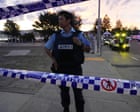
The debate over arming private community security details in New South Wales has exposed a raw nerve at the intersection of public safety, civil rights, and rising sectarian tension. During hearings before the royal commission into antisemitism and social cohesion, NSW Police Deputy Commissioner David Hudson firmly rejected proposals to allow the Community Security Group (CSG) to carry firearms at public events, arguing that such an exception would create dangerous perceptions of institutional favouritism. This high-stakes dispute forces a hard look at who bears the ultimate burden of protection when communal threat levels surge, and whether centralized state policing can adequately service minority groups without sacrificing trust across the wider social fabric.
The push to arm the CSG did not emerge in a vacuum. It follows years of heightened anxiety and specific tragedies, most notably the devastating terror attack at a Hanukkah celebration in Sydney. Community leaders and risk consultants appearing before the inquiry argued that traditional state police resources are stretched thin, leaving open-air gatherings and cultural events vulnerable during the critical minutes before armed backup can arrive. For many families within the Jewish community, visible and capable defense is no longer a theoretical preference. It is experienced as an urgent operational necessity for basic survival. Don't miss our earlier article on this related article.
Yet the police command views the request through a fundamentally different strategic lens. Deputy Commissioner Hudson articulated the institutional fear that granting firearm exemptions to a specific religious or ethnic community organization would fracture an already fragile social landscape. A state apparatus cannot easily parcel out the monopoly on violence. If one demographic secures state sanction to bear arms through private proxies, other groups will inevitably demand matching privileges. The result would be a fragmented security environment where private militias or factional guards slowly replace a universal civic police force.
This tension lays bare the structural limits of modern policing. State police operate under strict legal thresholds, accountability frameworks, and operational tempos that prioritize system-wide risk management over individual community anxieties. Police commanders maintain that security coordination must remain centralized. To bridge the gap, the force has pointed toward newly minted initiatives, including a dedicated Armed Response Command designed to provide 24-hour rapid responses and direct intelligence liaison with community guards. To read more about the history of this, The Guardian offers an in-depth summary.
Critics of the police position remain unconvinced by administrative promises. They point out that coordination centers and rapid response units are reactive measures deployed after a threat manifests, whereas localized guards provide an immediate, constant deterrent. When worshippers look at vacant street corners outside schools and synagogues, bureaucratic assurances about response times offer cold comfort against the backdrop of escalating global hostility.
The arguments from both sides contain heavy administrative weight, yet neither offers a clean solution to the underlying dilemma. Allowing private groups to carry lethal weapons invites severe legal liabilities, escalates potential collateral risks, and strains public equity. Denying them leaves vulnerable communities dependent on an overextended police force that cannot be stationed at every doorway.
The royal commission continues to weigh these competing imperatives against a backdrop of deepening public anxiety. Resolution will require more than administrative compromises or political posturing. It demands an honest reckoning with the price of public safety in a fractured society where the state monopoly on force struggles to provide universal reassurance