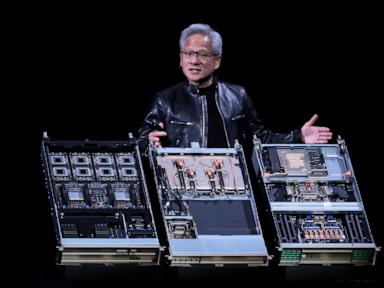
Nvidia wants to own the foundation of your next computer, not just the expensive graphics card tucked inside it. By unveiling the RTX Spark superchip at Computex, CEO Jensen Huang didn't just announce a new processor for premium Windows laptops; he launched a direct, existential assault on the traditional x86 computing architecture dominated by Intel and AMD for forty years. By fusing an advanced 20-core Arm-based CPU with a massive 6,144-core Blackwell GPU and up to 128GB of high-speed unified memory into a single system-on-a-chip, Nvidia is betting billions that local, autonomous AI agents will force users to abandon traditional computing models.
Microsoft tried this before. The first wave of Arm-based Copilot+ PCs launched in 2024 stumbled out of the gate, plagued by consumer indifference and a harsh public backlash over invasive features like Recall. Buyers realized that a 40-TOPS Neural Processing Unit (NPU) was essentially a marketing sticker in search of a killer app. Read more on a connected issue: this related article.
Nvidia is taking a completely different path. Instead of pitching modest battery savings or gimmicky background-blur tools, the company is deploying raw, unapologetic horsepower. The RTX Spark delivers a staggering 1 petaflop of AI performance. That is not a typo. It is enough computational muscle to run massive 120-billion-parameter large language models with a 1-million-token context window completely offline.
The Silicon Marriage of Nvidia and MediaTek
To understand why this chip is causing a panic in Silicon Valley, you have to look at the architectural plumbing. Nvidia did not build this alone. They partnered with Taiwanese mobile chip giant MediaTek to design a custom Arm CPU complex featuring 10 high-performance Cortex-X925 cores and 10 efficient Cortex-A725 cores. More journalism by Gizmodo delves into similar views on this issue.
Nvidia then connected this CPU to its Blackwell graphics architecture using its proprietary NVLink-C2C interconnect. This delivers an astonishing 600 GB/s of memory bandwidth.
+-------------------------------------------------------------+
|                     NVIDIA RTX SPARK                        |
|                                                             |
|  +-----------------------+       +-----------------------+  |
|  |     MediaTek Arm      |       |   Blackwell RTX GPU   |  |
|  |      20-Core CPU      |<=====>|   6,144 CUDA Cores    |  |
|  | (10x X925 / 10x A725) | NVLink|  (5th-Gen Tensor)     |  |
|  +-----------------------+       +-----------------------+  |
|              ^                               ^              |
|              |          Unified Bus          |              |
|              v                               v              |
|  +-------------------------------------------------------+  |
|  |             Up to 128GB LPDDR5X Memory                |  |
|  +-------------------------------------------------------+  |
+-------------------------------------------------------------+
The real magic lies in the unified memory. In a standard Windows laptop, the CPU and GPU live on separate islands. Data must constantly be copied back and forth across a narrow PCIe bottleneck. If you want to run a complex AI model, you are capped by the dedicated VRAM on your graphics card—typically 8GB or 16GB in a mobile form factor.
The RTX Spark obliterates this barrier. Because the CPU and GPU share a massive, unified pool of up to 128GB of LPDDR5X RAM, the graphics engine can instantly access ultra-large assets. This allows a 14-millimeter-thin laptop to ingest 90GB 3D scenes or run local enterprise-grade AI models that would instantly crash a standard PC.
Why Local Agents Change the Calculus
Tech executives love to talk about the "AI PC," but few have successfully explained why the average consumer should care. Jensen Huang's thesis is that computing is shifting from an application-driven model to an agentic one. You will no longer open an app, click a menu, and type a command. You will simply tell your computer what you want accomplished, and an autonomous local agent will execute the multi-step workflow across various software packages in the background.
To make this a reality, Nvidia and Microsoft are introducing OpenShell, a dedicated software runtime designed to securely execute local agents like OpenClaw or Hermes Agent.
This addresses the massive privacy hurdle that has stalled cloud-based AI adoption in corporate environments. Consider a hypothetical example: a corporate attorney needs an AI to analyze thousands of pages of highly confidential, pre-merger discovery documents, cross-reference them with internal emails, and draft a risk assessment. Sending that data to a third-party cloud provider is a compliance nightmare. Running a 120-billion-parameter model locally on an RTX Spark laptop keeps the entire operation contained within the physical device, shielded by native hardware security primitives.
This local-first approach also bypasses the recurring subscription fees and latency issues associated with cloud computing API calls. The intelligence becomes unmetered, running silently in the background while drawing minimal power from the efficient Arm architecture.
The Gaming and Creative Trap for Intel
For decades, Intel and AMD held a secure moat around two highly lucrative segments: hardcore gamers and professional creators. Arm-based laptops were dismissed as glorified Chromebooks, incapable of running heavy video editing software or AAA video games due to poor software emulation.
Nvidia is systematically dismantling that defense.
Creative Software Rearchitecture
Adobe is completely rewriting Photoshop and Premiere from the ground up to run natively on the RTX Spark. Instead of relying on slow translation layers, creative tools like Firefly-powered Generative Fill and Generative Extend will tap directly into the 6,144 CUDA cores. Early performance metrics indicate a 2x speed boost in rendering, coloring, and heavy multi-stream effects pipelines compared to current x86 architectures.
Native Arm Gaming
Historically, anti-cheat software has been the absolute death sentence for Windows on Arm gaming. Popular multiplayer titles refuse to run because their kernel-level security drivers cannot be easily emulated. Nvidia has spent years working behind the scenes with major anti-cheat providers to bring their software natively to Arm. Combined with AI-driven DLSS frame generation and Reflex technology, the RTX Spark delivers over 100 frames per second at 1440p resolution in demanding AAA titles.
The High-Stakes Reality Check
Despite the Euphoria surrounding the Computex launch, Nvidia faces a brutal uphill battle against decades of entrenched habits. The consumer PC ecosystem is notoriously resistant to rapid architectural shifts.
| Feature | Nvidia RTX Spark | Traditional x86 (Intel/AMD) |
|---|---|---|
| Architecture | Arm (TSMC 3nm) | x86 (Intel/TSMC) |
| Max Memory | 128GB Unified | Dynamic (Separate System/VRAM) |
| AI Performance | 1 Petaflop (Local LLM Focus) | 40-50 NPU TOPS (Basic Tasks) |
| Legacy Software | Requires Prism Emulation | Fully Native |
| Target Price | Ultra-Premium | Budget to Premium |
The primary risk is economic. Hardware of this caliber is not cheap to manufacture. Fusing a cutting-edge TSMC 3nm node processor with massive pools of high-speed unified memory means the initial wave of devices—such as the newly announced Microsoft Surface Laptop Ultra—will command eye-watering, premium prices. While creators and developers may gladly pay the tax, the broader consumer market remains deeply sensitive to price hikes.
Furthermore, Microsoft's track record with Arm translation layers is historically spotty. While the new Prism emulator handles standard productivity apps with minimal friction, corporate enterprises rely on thousands of deeply archaic, proprietary x86 software tools written decades ago. If a critical corporate accounting tool or legacy database client fails to run on an Arm-based Windows machine, the deployment stops dead in its tracks.
Nvidia is entering a arena where Qualcomm has spent years laying the groundwork, and where Apple has already proven that unified memory architectures can reshape consumer expectations. By bypassing the low-end commodity market and targeting the absolute pinnacle of performance, Nvidia is betting that sheer computational dominance will force the software ecosystem to bend to its will. If developers migrate en masse to support the immense local AI capabilities of the Spark chip, the traditional x86 processor socket will find itself permanently sidelined in the era of automated computing.