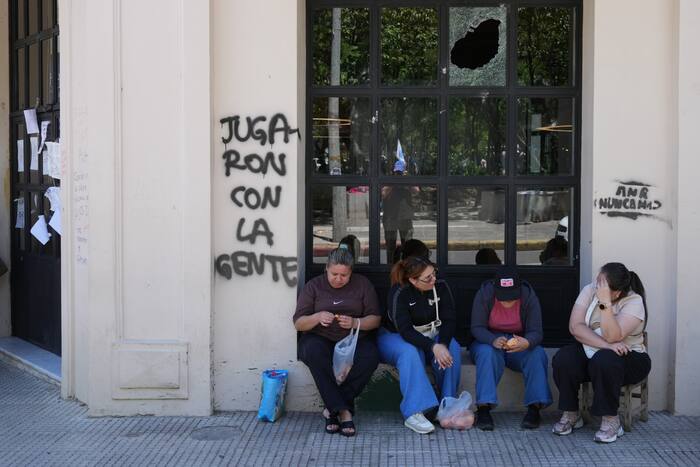
Public schoolteachers in Paraguay walked off the job in November 2026 to demand legal safeguards for their retirement savings after the seizure of Ueno Bank froze roughly three million retail accounts and placed more than $800 million in public and pension funds at risk. The strike followed the impeachment and removal of President Santiago Peña within days of the intervention.
Surface headlines treat the walkout as a routine labor clash sparked by a sudden bank failure. Anyone who has watched Latin American banking blow up over the past thirty years knows better. Bank collapses rarely come out of nowhere. They build quietly behind glossy consumer apps, friendly interest rates, and political favors until the math no longer works.
For Paraguayan educators, the crisis exposed a structural flaw that outlasts any single president or central bank chief. When retirement money sits inside institutions tied to political power, workers carry the downside risk even when politicians lose office.
How Ueno Bank Turned Shiny Tech Into a Solvency Trap
Digital banking looks modern from the outside. Under the hood, balance sheets still obey old rules.
Ueno Bank grew rapidly on the back of aggressive promotions, cash-back offers, and broad retail adoption. By the time regulators stepped in on November 3, 2026, Ueno accounted for roughly 9% of banking deposits and 8% of loans in Paraguay, locking out around three million customers overnight when its app, cards, and transfers went dark.
Two mechanics did the real damage:
- Related-party lending: Regulators and prosecutors alleged that Ueno extended large loans to companies linked to its own controlling group, Grupo Vázquez, beyond legal limits, with weak documentation and insufficient guarantees.
- Inflated capital: Inspectors found operating expenses booked as assets, concealing how thin the bank's actual capital cushion had become until adjustments pushed its solvency ratio below half the legal minimum.
That combination is a textbook recipe for trouble. When a bank lends heavily to affiliated firms and overstates its capital, losses accumulate inside the institution while outward growth masks the rot. Once confidence cracks, liquidity vanishes fast.
Consider a hypothetical example to see how related-party lending distorts risk. Suppose a regional lender holds $100 million in deposits and lends $25 million to a construction company owned by the bank's controlling shareholders. If that company stalls and cannot repay, the bank's owners have every incentive to roll over the loan or dress up the accounting rather than admit a loss. Ordinary depositors and pension contributors absorb the strain if the bank fails.
Why Teachers Hit the Streets Over Pension Funds
Teachers did not strike solely out of solidarity with locked-out retail customers. They struck because their retirement security sat directly in the line of fire.
Reports surrounding the crisis indicated that Ueno held roughly $800 million to $850 million in public and pension money, including around $355 million to $380 million tied to state pension entities and social security funds, with tens of thousands of retirees relying on the bank for payments. Lawmakers accused the ousted administration of allowing massive state pension deposits at Ueno beyond legal concentration limits, allegations Peña denied.
Union leader Silvio Piris pressed for the return of pension funds to be treated as a top priority. That demand makes practical sense for educators. A teacher's pension is not a discretionary brokerage bet; it is deferred wages earned over decades of classroom work.
When pension reserves get parked in a politically connected bank, two things go wrong at once. First, deposit concentration violates basic risk management: putting too much money in one institution turns a single bank's distress into a retirement emergency. Second, political proximity blurs accountability. Critics pointed to Peña's earlier equity stake in the holding group before his announced divestment and the appointment of former Ueno executive Carlos Carvallo to lead the central bank. Even when officials deny wrongdoing, perceived favoritism corrodes trust across the entire system.
The Ghost of Paraguay's Nineties Banking Crash
If this feels familiar to older Paraguayan savers, it should.
Between 1995 and 1998, Paraguay suffered a sweeping banking crisis in which more than a dozen banks and dozens of finance companies failed following interest-rate liberalization, weak supervision, insider lending, and unrecorded deposits. Back then, roughly half of social security deposits at the Instituto de Previsión Social sat in six at-risk banks, leaving pension funds effectively absorbing losses through recapitalizations.
History rarely repeats note for note, yet the pattern rhymes uncomfortably well. In both eras, rapid expansion and political ties collided with supervisory blind spots. And in both eras, the currency felt the shockwave: during the 2026 resolution, the guaraní dropped by more than 8% against the U.S. dollar while sovereign bond spreads widened.
There is an important difference, too. Deposit insurance frameworks and resolution tools have evolved since the 1990s. Authorities put the central bank's deposit guarantee cap around 228 million guaraníes—roughly $38,000 per depositor—which officials estimated covers the full balance of roughly 97% of retail customers.
Small savers get meaningful protection under a cap like that. Large institutional balances do not.
A $38,000 per-depositor guarantee protects a schoolteacher's checking account. It does not automatically shield hundreds of millions of dollars in pooled pension reserves. That gap sits right at the heart of the teachers' walkout.
What Arrests and Impeachment Cannot Fix on Their Own
Swift political and legal action followed the intervention. The Senate impeached and removed Peña on November 6, stripping his immunity ahead of criminal charges alongside arrests and indictments involving Carvallo and dozens of executives and associates tied to Ueno and Grupo Vázquez.
Arrests satisfy outrage. They do not fix balance sheets.
Prosecutors can pursue charges of breach of trust, criminal association, and financial misconduct, and central bank officials can promise staged payouts and asset transfers to receiving banks. Yet real recovery requires hard institutional plumbing that is far less dramatic than a courtroom arrest.
Consider the trade-offs policymakers face right now:
- Strict concentration caps vs. yield hunting: Tighter legal ceilings on how much pension money can sit in any single bank reduce failure risk, though they may force funds into lower-yielding or more conservative instruments.
- Central bank independence vs. executive reach: Cooling-off rules and merit-based appointments help insulate supervisors from political pressure, but enforcement only works if inspectors can act before capital erodes.
- Rapid payouts vs. fiscal discipline: Paying out trapped funds quickly calms streets and protects households, yet heavy state backing carries fiscal costs and moral hazard if poorly structured.
There is also a gray area no policy paper neatly resolves. Even with stronger rules, no financial system is immune to fraud or sudden shocks, and moving millions of accounts across banks during a crisis strains payment rails and tech infrastructure. Trust takes years to rebuild and weeks to lose.
For teachers in Paraguay, the lesson of the strike is straightforward: political shakeups change who sits in the palace, not whether retirement savings are legally ring-fenced from boardroom recklessness. Until pension rules enforce hard limits on single-bank exposure, independent supervision, and transparent asset custody, educators will keep having to fight for their own future after the damage is already done.