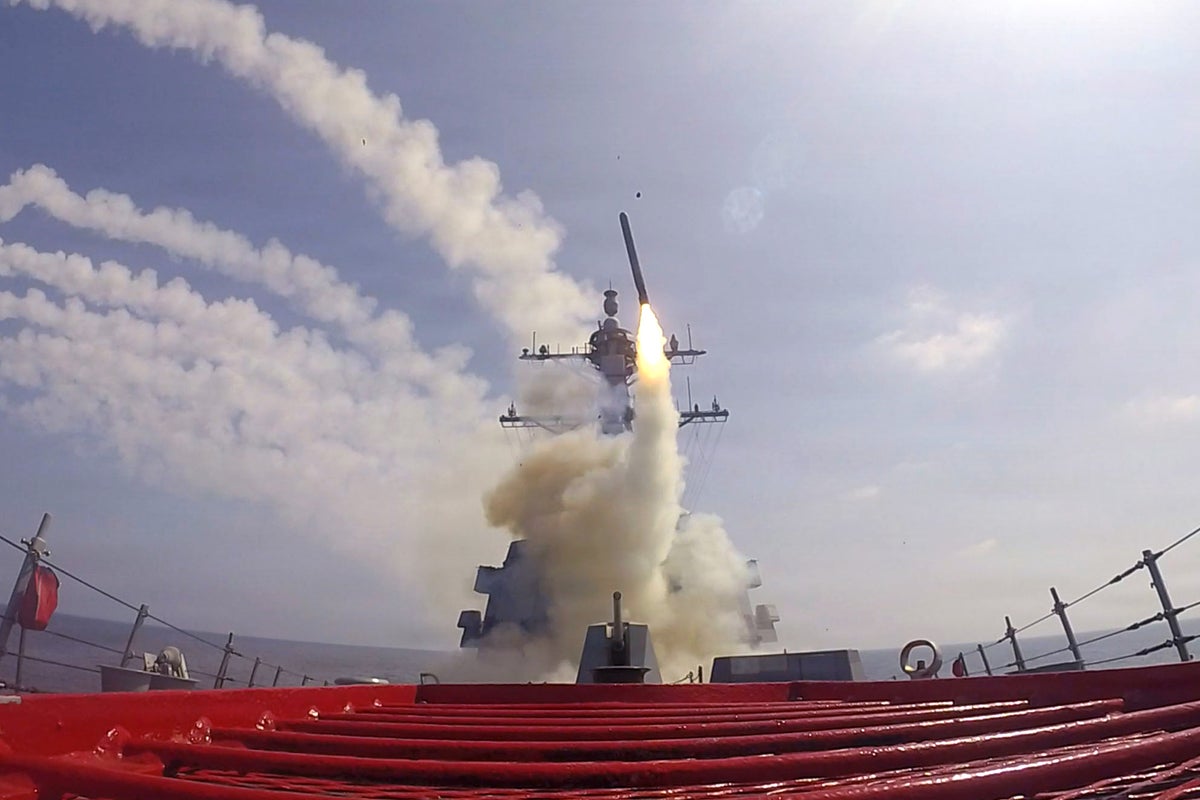
Six months of high-intensity combat against Iranian forces have exposed a structural vulnerability that Washington insiders whispered about for decades. The United States military is running out of specialized missiles. While President Donald Trump insists that the nation retains massive amounts of ammunition and points to expanding defense production lines, recent intelligence assessments tell a more complicated story. The issue is not an absolute absence of lead and explosives. Instead, the crisis centers on the alarming depletion of high-end precision guidance systems, complex air defense interceptors, and long-range strike assets that cannot be assembled overnight.
The Math of Modern Exhaustion
Modern high-technology warfare burns through capital assets at an unprecedented velocity. When engagement ranges stretch across hundreds of miles of airspace, infantry bullets and standard artillery shells matter very little. What matters are multi-million-dollar interceptors and cruise missiles.
Consider the operational strain placed on specific weapon classes during the campaign:
- Terminal High Altitude Area Defense (THAAD): Independent defense analyses indicate that inventories dropped by roughly eighty percent compared with pre-war baselines.
- Patriot Batteries: Interceptor stocks for advanced variants fell by nearly half as waves of asymmetric drone and ballistic threats saturated regional skies.
- Tactical Missiles: Global stockpiles of long-range surface-to-surface precision assets, including Army Tactical Missile Systems and newer strike variants, experienced near-total expenditure.
These numbers represent a fundamental structural mismatch between peacetime procurement schedules and wartime consumption rates. For years, the defense industrial base operated on a low-rate, specialized manufacturing model. Factories built dozens of missiles a month, not thousands. When a sustained campaign forced commands to expend years of production in a matter of weeks, the magazines emptied far faster than assembly lines could react.
Industrial Bottlenecks and Lead Times
The public debate often conflates raw manufacturing intent with immediate tactical reality. Administrative directives can mandate new factories, and executive pressure can force contractors to break ground on expanded facilities. Yet physics and specialized supply chains dictate a rigid timeline.
Take the production of a standard cruise missile or a complex interceptor. Microchips, rocket motors, specialized composite materials, and guidance sub-components rely on niche suppliers with single points of failure. Even with prioritized federal contracting, building a complex missile takes years from contract award to final delivery.
A hypothetical example illustrates the mechanical lag: if a factory requires specialized propellant valves from a sole-source vendor who needs twelve months just to scale raw chemical processing, throwing money at the final assembly plant will not accelerate the finished weapon by a single day. This reality explains the intense friction between Pentagon accountants, who track every serial number, and political leadership eager to project uninterrupted strength.
The Strategic Tradeoff Across Theaters
Magazine depth in the Middle East directly impacts global deterrence postures, particularly in the Western Pacific. Strategic planners view global military readiness as a zero-sum ledger. Every Patriot interceptor or long-range precision munition expended against regional missile threats represents a unit missing from contingency plans elsewhere.
China watches these burn rates with clinical precision. Beijing's military analysts evaluate how quickly American stockpiles degrade during a regional conflict, using those metrics to calculate the residual capacity of the United States to sustain a protracted maritime fight. By drawing down deep-strike inventories against secondary adversaries, Washington risks creating a dangerous window of vulnerability where deterrence capacity thins precisely when it needs to remain absolute.
The Information Battlefield
The intense reaction from the administration against leaked inventory assessments highlights how sensitive the munitions debate has become. Leaks detailing single-digit percentages remaining in specific asset classes do more than embarrass military leadership. They signal operational limits to adversaries who can time their actions to coincide with periods of lowest defensive density.
Threats of legal prosecution against internal sources reflect an administration attempting to regain narrative control over a defense establishment strained to its limits. Yet, shooting the messenger does not alter the physical count inside concrete bunkers across the globe.
The six-month mark of the conflict has forced a reckoning. The era of comfortable assumptions about short, clean technological wars is over, replaced by the grinding reality of industrial attrition where factory floors matter just as much as flight decks. Procurement reform and multi-year funding frameworks are now underway, but the gap between current depletion and future replenishment remains the defining challenge for American military strategy.