Washington is preparing to tighten export restrictions on Nvidia, and the pressure is coming from two directions at once. Domestic political scrutiny surrounding CEO Jensen Huang’s recent public missteps and business dealings in Asia has handed China hawks in Congress fresh ammunition, just as the US midterm election cycle turns anti-Beijing posture into cheap political currency. Together, these forces threaten to close the remaining loopholes that allow the chipmaker to sell modified artificial intelligence processors into the Chinese market.
For years, Nvidia walked a narrow wire. Every time the Bureau of Industry and Security drew a red line on compute density or interconnect bandwidth, Santa Clara engineers returned weeks later with a slightly detuned chip designed to sit just beneath the legal threshold. First came the A800 and H800. Then, after the October 2023 rule updates closed those doors, came the H20. Each iteration preserved billions in revenue while technically obeying the letter of US law. That era of regulatory cat-and-mouse is running out of runway.
Why Jensen Huang’s Margin for Error Just Vanished
Corporate diplomacy works best in quiet rooms. Lately, Nvidia has found itself in the glare of cameras and congressional hearing rooms instead.
When a company controls the hardware backbone of global artificial intelligence, its chief executive stops being a normal tech founder and becomes a de facto geopolitical actor. Every public statement, every trip to Taipei or Beijing, and every product roadmap tweak gets parsed by national security staffers in Washington for signs of divided loyalty. Recent controversies surrounding Huang’s rhetoric on global supply chains, questions over how restricted chips still surface in Chinese server farms, and growing frustration among lawmakers over Nvidia’s aggressive compliance workarounds have eroded the goodwill the company once enjoyed on Capitol Hill.
Lawmakers hate feeling outsmarted by corporate legal teams. When Commerce Department officials spent months drafting technical thresholds to slow Chinese military modernization, only to watch Nvidia roll out compliant alternatives within a single financial quarter, the reaction in Washington was predictable. Hawkish senators and House committee chairs began viewing Nvidia not as a strategic national champion, but as an obstacle to containment policy.
Huang’s personal brand—the leather jacket, the relentless evangelism for accelerated computing, the insistence that global markets should remain open—played well during the boom years of 2023 and 2024. In a sharper, more suspicious political climate, that same posture reads to critics as tone-deaf. If a CEO appears more eager to protect Chinese market share than to align with Washington’s long-term security goals, lawmakers stop giving the company the benefit of the doubt when drafting new rules.
The Midterm Election Trap for Semiconductor Policy
Election years distort policy. Nuance dies first.
As campaigns heat up ahead of the US midterms, neither party can afford to look soft on China. Voters in swing districts across Pennsylvania, Michigan, and Arizona may not know the difference between interconnect bandwidth and floating-point operations per second, yet they understand a simple campaign ad accusing an incumbent of letting American companies sell advanced AI hardware to Beijing. That dynamic creates an auction of toughness. Once one committee chair demands tighter controls on Nvidia’s China-specific chips, opponents feel compelled to demand even broader bans.
Consider how this plays out inside the executive branch. The Commerce Department normally balances two competing mandates: protecting national security and preserving the revenue base that funds American semiconductor research and development. Nvidia’s executives have argued for years that cutting them off from China simply hands that revenue to domestic Chinese rivals like Huawei, giving Beijing’s chip ecosystem the cash flow it needs to catch up.
That argument carries weight during off-cycle policy reviews. During an election cycle, it becomes politically radioactive. No administration wants to defend a policy that lets billions of dollars of AI accelerators ship to Shenzhen while challengers accuse the White House of funding a rival superpower’s tech sector.
The Regulatory Tools on the Table
If Washington decides to drop the hammer before voters head to the polls, officials do not need to pass sweeping new legislation. The existing export control architecture gives the executive branch several levers it can pull quickly:
- Lowering performance caps again. Regulators can tighten the total processing performance and performance density formulas specifically to capture chips like the H20, effectively outlawing Nvidia’s current China-compliant lineup without naming the company directly.
- Closing third-country transshipment channels. Smuggling networks have routinely routed restricted GPUs through shell companies in Southeast Asia and the Middle East. Washington can impose strict know-your-customer mandates and hardware tracking requirements on server builders and cloud providers globally.
- Restricting high-bandwidth memory exports. Even if a processor core is throttled, pairing it with advanced HBM chips makes it valuable for large-scale AI inference. Cutting off memory supplies starves the entire package.
- Expanding the Entity List. Adding dozens of Chinese cloud operators, AI startups, and shell distributors to trade blacklists forces US suppliers to seek licenses that are automatically denied.
The Technical Cat-and-Mouse Game Hits a Physical Wall
To understand why the next round of curbs could be fatal to Nvidia’s China business, look at the engineering constraints rather than the politics.
A modern AI accelerator relies on two primary ingredients to train and run massive neural networks: raw compute power and memory bandwidth. When Washington restricted the flagship H100, Nvidia kept the memory capacity and bandwidth relatively high on the H20 while slashing raw compute speeds. That trade-off worked because AI inference—running trained models to generate answers for users—depends heavily on moving data quickly out of memory rather than pure number-crunching muscle. Chinese tech giants bought H20 clusters in huge volumes because they remained superior to domestic alternatives for serving consumer AI applications.
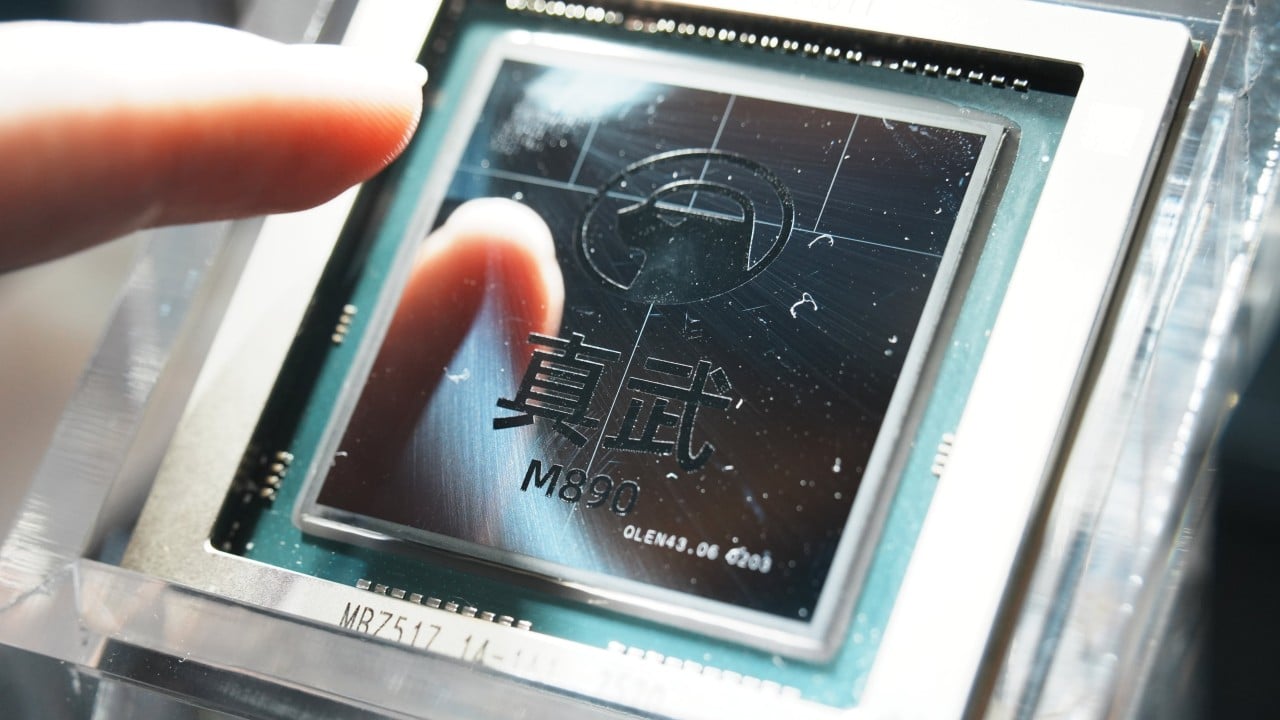
You cannot keep slicing a chip forever. If regulators lower the threshold one more time, Nvidia will be forced to strip out so much memory bandwidth and chip-to-chip interconnect speed that the resulting silicon becomes slower than Huawei’s Ascend 910B and 910C processors. At that point, the business case collapses entirely. Chinese buyers will not pay premium prices for crippled American hardware when local options deliver better performance per dollar without the risk of sudden US supply cutoffs.
What Nvidia’s Rivals and Customers Are Already Doing
Nobody in Shenzhen or Beijing is waiting around to see what Congress does next.
Chinese hyperscalers—including Alibaba, Tencent, and ByteDance—have spent the last two years quietly re-architecting their data centers to survive a total decoupling from American silicon. Running mixed clusters of Nvidia and domestic chips introduces massive software headaches, primarily because Nvidia’s CUDA software platform remains deeply entrenched among AI developers. Breaking that software lock-in requires rewriting millions of lines of low-level code and accepting lower hardware utilization rates in the short term.
Yet the threat of abrupt export bans has forced Chinese engineering teams to swallow those switching costs anyway. Every time Washington tightens the screws, Beijing responds with fresh state subsidies and procurement mandates requiring state-backed data centers to buy domestic chips. A hypothetical scenario illustrates the trap: imagine a major Chinese cloud provider planning a three-year server buildout. Even if Nvidia legally offers a compliant chip today, the cloud provider knows a single political scandal in Washington could ban spare parts, firmware updates, or follow-on orders six months later. Rational executives hedge that risk by shifting budgets toward domestic suppliers before the ban even arrives.
Meanwhile, Nvidia’s American competitors are watching closely. AMD faces the exact same regulatory ceiling with its China-specific MI300 variants, though it has far less existing market share to lose in the region. Custom silicon projects built by Google, Amazon, and Microsoft stay inside their own global data centers and rarely touch Chinese soil, insulating them from the direct hit to hardware sales that Nvidia absorbs.
The Unspoken Risk for Washington
There is a hard truth that gets lost in campaign speeches and congressional hearings: export controls are a depreciating asset.
In the short term, choking off Nvidia’s remaining sales to China inflicts real pain on Beijing’s AI ambitions. Training frontier models becomes slower, more expensive, and vastly more power-hungry when engineers have to stitch together thousands of less efficient domestic chips using inferior networking gear. Semiconductor fabrication plants inside China still struggle with yield rates on advanced nodes due to restrictions on extreme ultraviolet lithography machines from ASML.
Over a five-to-ten-year horizon, however, total denial removes the single biggest brake on Chinese semiconductor self-sufficiency. As long as Nvidia could sell into China, Chinese startups preferred buying Nvidia hardware, which starved local chip designers of customer feedback, bug reports, and commercial revenue. Total exclusion guarantees that every single yuan spent on AI infrastructure in China flows directly into the domestic ecosystem.
Washington knows this trade-off exists. Right now, political incentives overwhelmingly favor short-term containment over long-term market preservation. With midterm voters watching and Nvidia’s leadership under heightened scrutiny, policymakers see little upside in giving the world’s most valuable chipmaker another loophole to exploit.
For investors and supply chain managers, the signal is unmistakable. The revenue Nvidia still pulls from mainland China should no longer be treated as a durable growth engine—it is borrowed time, and the clock in Washington is ticking faster every week.