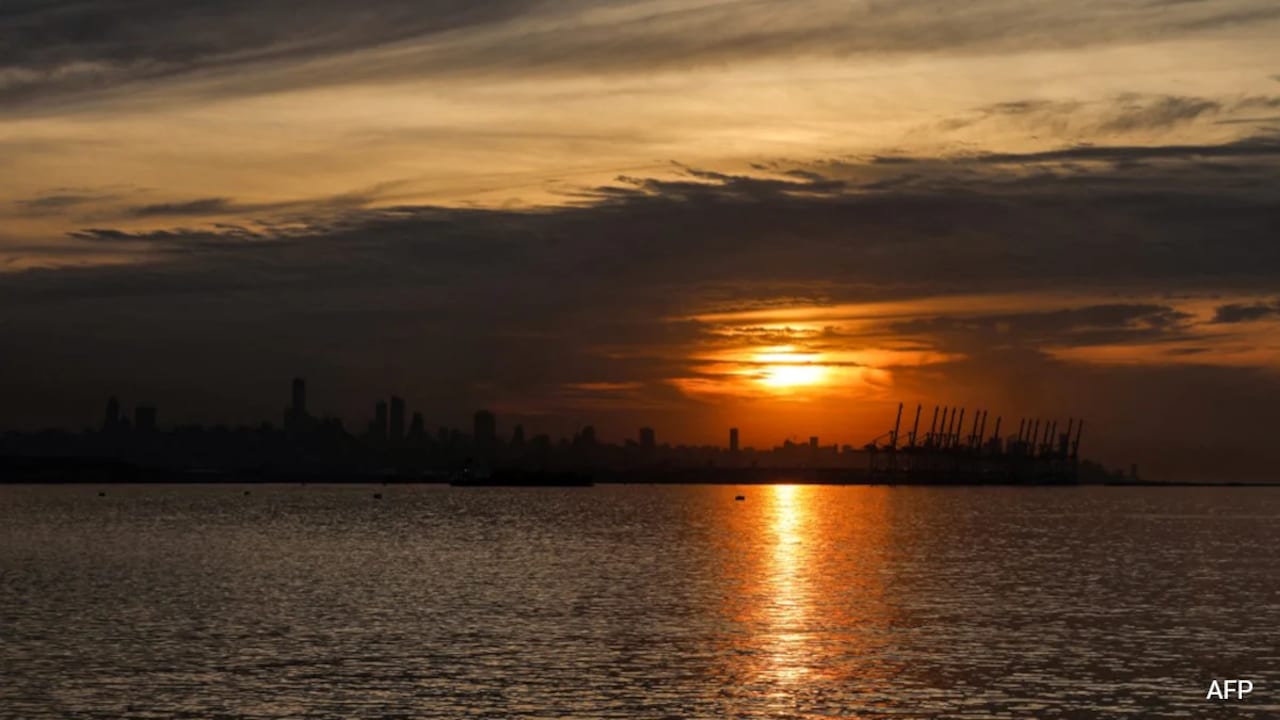
The United States military is expanding an installation in the port city of Bosaso, nestled along the Gulf of Aden in the semi-autonomous Somali region of Puntland. This move represents a major shift in Washington's Horn of Africa strategy. Far from a sudden secret venture, the deal was formalized when top United States special operations commanders signed an agreement with Puntland leadership to upgrade the existing facility.
This expansion directly addresses the escalating crisis in the Red Sea and the Bab al-Mandab Strait, where regional conflicts threaten a vital artery of global commerce. Yet, standard reports framing this as a routine counterterrorism upgrade miss the deeper geopolitical mechanics at play. Washington is exploiting internal Somali political fractures to secure a permanent, independent foothold right across the water from Yemen.
The Geography of Power
To understand why Washington wants a footprint in Bosaso, look at a nautical map. The port sits squarely on the southern coast of the Gulf of Aden, less than three hundred miles across the water from the Yemeni coastline. Millions of barrels of oil and cargo containers pass through the Bab al-Mandab chokepoint annually, connecting the Indian Ocean to the Suez Canal.
When regional instability and Houthi military actions began choking traffic through the Red Sea, the Pentagon found its traditional staging posts stretched thin. Djibouti, long the primary anchor for American forces in the Horn of Africa, commands a heavy price in rent and diplomatic friction. Securing a direct arrangement with Puntland offers the United States an alternative. It provides a facility outside the direct control of Mogadishu's central government, bypassing bureaucratic hurdles that typically slow down military deployment.
The Bosaso airfield is not starting from scratch. Years ago, the United Arab Emirates funded and developed infrastructure at the site to support local maritime police forces. These facilities included radar stations, hardened storage areas, and expanded runways capable of handling heavy transport aircraft. By stepping into this pre-developed footprint, American special operations forces and intelligence units inherit a ready-made logistics hub with minimal initial construction delay.
Bypassing Mogadishu
Washington has long maintained a dual-track policy in Somalia. While officially recognizing the federal government in Mogadishu, American commanders routinely cut deals with regional administrations when expediency demands it.
The agreement to expand the Bosaso base highlights this transactional approach. Puntland operates with a high degree of autonomy and has frequently clashed with Somalia's central federal authority over constitutional reforms and power-sharing. By negotiating directly with regional president Saeed Abdullahi Deni, United States Africa Command (AFRICOM) secured access without needing formal sign-off from the internationally backed central government.
This strategy carries inherent risks. Empowering regional entities outside federal channels deepens the fragmentation of an already fragile state. Somali officials in Mogadishu view foreign deals struck with breakaway or semi-autonomous regions as an infringement on national sovereignty. Yet, for military planners focused on immediate maritime security threats, long-term state-building takes a back seat to raw positioning.
The Shadow of Regional Alliances
The urgency behind the Bosaso expansion is tied directly to fears of expanding militant networks across the water and land borders. Intelligence assessments point to growing cooperation between regional insurgent factions and external actors.
The convergence of threats involves disparate groups sharing tactical drone expertise, weapons smuggling routes, and intelligence. While ISIS remnants maintain a persistent footprint in the rugged mountains of Puntland, the broader strategic nightmare for Washington is any coordination that links East African insurgencies with Red Sea maritime attackers. A well-positioned intelligence and surveillance hub in Bosaso gives AFRICOM the short-response capability needed to monitor these movements before they crystallize into operational threats.
Drones operated by United States forces have already increased reconnaissance flights over known militant strongholds in the interior hills. Upgrading the local airstrip transforms a minor regional outpost into an active staging ground for continuous overwatch.
Stripping Away the Secrets
Labeling the Bosaso expansion a "secret base" stretches journalistic reality. Satellite imagery has tracked construction and military hardware accumulation at the port for years. What has changed is the official acknowledgment and the scale of integration.
The American military footprint in Somalia is expanding because the Red Sea corridor has become too volatile to ignore. Washington is betting that local partnerships in places like Puntland offer the agility required to protect shipping lanes, even if it alienates the central government in Mogadishu and deepens domestic political fractures. The concrete barriers going up in Bosaso are built to last, signaling that the American military expects the crisis around the Gulf of Aden to define its mission profile for years to come.