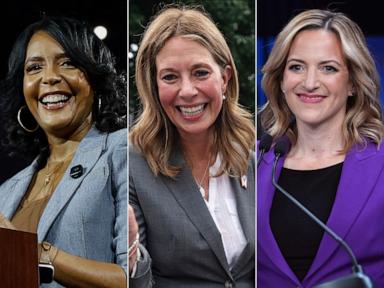
Democratic women are poised to shatter long-standing electoral records in midterm governor and House races not because of a sudden cultural awakening, but through a methodical, decade-long overhaul of candidate recruitment, small-dollar fundraising infrastructure, and primary strategy. While surface-level political coverage treats every surge in female nominees as an organic wave, the reality inside party headquarters is far more mechanical. Operatives have systematically dismantled the traditional gatekeeping networks that historically starved female challengers of early seed money and institutional backing.
To understand why Democratic women in midterm governor and House races are reaching unprecedented numbers on general election ballots, you have to follow the money before a single primary vote is cast. For decades, the standard political playbook dictated that viable candidates needed self-funding capability or deep ties to established corporate political action committees. Those networks overwhelmingly favored incumbent men or male challengers with traditional business and legal backgrounds. When women ran, they were routinely steered toward unwinnable sacrificial-lamb districts to prove their loyalty to the party apparatus before being considered for competitive seats.
That pipeline has been aggressively rewired.
The Death of the Traditional Gatekeeper
In the mid-2010s, a network of independent recruitment organizations and donor collectives decided to stop asking party chairs for permission. Groups like EMILY's List, Run for Something, and Higher Heights began operating as parallel party apparatuses. They identified prospective candidates years in advance, provided media training, connected them with compliance lawyers, and bundled early checks before the Democratic Congressional Campaign Committee or the Democratic Governors Association even began polling the districts.
Early money changes everything in a primary. When a female candidate posts a strong first-quarter fundraising report, institutional donors who previously sat on the sidelines suddenly view her as a safe investment rather than a novelty. This dynamic creates a self-reinforcing cycle that forces local party bosses to abandon their preferred hand-picked successors.
Consider how the candidate recruitment pipeline operates in open-seat primaries today. Historically, state legislators and local prosecutors—positions still disproportionately held by men—had the clearest path to federal office or gubernatorial mansions. Now, women with backgrounds in national security, healthcare administration, local school boards, and grassroots organizing are bypassing those traditional stepping stones entirely. They enter races with pre-built digital fundraising lists capable of generating millions of dollars from outside their home states, rendering local establishment endorsements far less potent than they were twenty years ago.
Why Gubernatorial Mansions Remain the Hardest Ceiling
Breaking into the House of Representatives is one thing; claiming the executive branch of a state is another beast entirely. Historically, American voters have demonstrated a stubborn reluctance to hand executive authority to women, even as they willingly send them to legislative bodies.
The psychological barrier is rooted in how voters perceive executive leadership. Legislators are seen as collaborators, negotiators, and advocates—traits that align comfortably with traditional gender expectations. Governors, by contrast, are viewed as commanders-in-chief of their states, responsible for deploying the National Guard, managing multibillion-dollar budgets, and making unilateral crisis decisions.
For years, female gubernatorial candidates faced a brutal double bind on the campaign trail. If they projected toughness and fiscal discipline, focus groups labeled them cold or unlikable. If they emphasized empathy and coalition-building, opponents painted them as weak on crime and unprepared for economic emergencies.
Recent electoral cycles have shown a deliberate strategic shift in how female contenders neutralize this bias. Instead of running away from traditional executive credentials, Democratic female gubernatorial candidates are leaning heavily into backgrounds that scream operational command. Former federal prosecutors, military veterans, state attorneys general, and secretaries of state are dominating Democratic primaries. When a candidate has already managed a statewide agency or prosecuted complex criminal syndicates, attacks questioning her toughness lose their bite.
The Lieutenant Governor Trap
Another structural shift involves how women are breaking out of the lieutenant governor trap. For decades, the number-two spot in state government was treated as a consolation prize—a way for a male gubernatorial nominee to balance the ticket geographically or demographically without surrendering real power. Very few women successfully used the lieutenant governor's office as a springboard to the top job.
That pattern is cracking because female lieutenant governors are no longer content to cut ribbons and preside over the state senate. They are carving out high-profile policy portfolios—overseeing broadband expansion, opioid task forces, or small business recovery—that give them tangible executive accomplishments to run on when the governor terms out.
The Suburban Realignment and the Primary Electorate
You cannot explain the rise of Democratic women without looking at who actually shows up to vote in Democratic primaries. Across nearly every competitive state and congressional district, women now make up a decisive majority of the Democratic primary electorate—often accounting for 55 to 60 percent of all ballots cast.
This demographic reality has fundamentally altered the calculus for primary voters. When suburban, college-educated women became the backbone of the modern Democratic coalition, their voting behavior shifted from passive support to active representation. In crowded primary fields featuring three or four qualified candidates, gender has increasingly functioned as a tie-breaker for voters frustrated by legislative gridlock.
There is a widespread perception among primary voters that women are more pragmatic, less ego-driven, and more focused on tangible kitchen-table issues like healthcare costs, public education, and reproductive freedom. Whether that perception holds up under the grueling realities of governing is a separate question, but as a voting motivation in a primary, it is an undeniable force.
The Structural Vulnerability Nobody Wants to Discuss
Despite the historic milestones and shattered records, treating this surge as an inevitable march toward parity ignores glaring vulnerabilities in the Democratic strategy. Recruiting record numbers of women to run is not the same thing as building durable governing majorities, and several structural flaws threaten to undermine these gains.
First, there is the crowded primary cannibalization problem. In several high-profile House and Senate primaries, multiple dynamic female candidates have entered the same race, splitting the progressive and female vote while a single moderate male candidate skates through with a plurality. Party leaders have largely refused to intervene in these multi-candidate pileups, fearing backlash from grassroots activists who despise top-down interference. As a result, some of the strongest female recruits never even make it to the general election ballot.
Second, geographic concentration remains a massive hurdle. The surge in Democratic women is heavily concentrated in coastal states, major metropolitan areas, and affluent suburbs. In rural districts and working-class industrial regions—areas Democrats desperately need to compete in to hold congressional majorities—the recruitment pipeline for women remains thin. Until the party can consistently recruit and fund female candidates who resonate with non-college-educated voters in agricultural and manufacturing counties, these historic numbers will remain geographically lopsided.
Third, the financial burden on female challengers remains disproportionately heavy. Studies of campaign finance data consistently show that while top-tier female candidates raise massive sums, they often have to work harder for every dollar, relying on a higher volume of small-dollar donations rather than max-out checks from wealthy institutional donors. Maintaining a small-dollar fundraising engine requires constant digital advertising expenditure, eating into the cash reserves needed for late-stage television ads and field operations in October.
The Republican Counter-Strategy
Republicans have not sat idly by while Democrats cornered the market on female representation. Recognizing the electoral potency of female candidates in suburban swing districts, GOP leadership—led by organizations like Winning For Women and the National Republican Congressional Committee—launched an aggressive counter-recruitment effort over the past several cycles.
By recruiting conservative women—many of them business owners, veterans, and mothers—to run in swing districts, Republicans have effectively neutralized the gender advantage Democrats once enjoyed in general elections. When a voter is presented with a choice between a Democratic woman and a Republican woman, gender ceases to be a differentiator, forcing the race back onto traditional partisan terrain: inflation, crime, taxes, and immigration.
This development has stripped away one of the easiest messaging shortcuts Democratic consultants relied on. Running a woman is no longer enough to automatically win over independent suburban women. Democratic female candidates now face opponents who can dismantle Democratic talking points on family policy and economic security from a female perspective, making general election races significantly more grueling and expensive.
How Redistricting Reshaped the Battlefield
Decennial redistricting always reshuffles the deck, and the resulting congressional maps have created both opportunities and traps for female candidates. In states where independent commissions drew the lines, newly created competitive districts with no incumbent immediately attracted top-tier female recruits from state legislatures.
Conversely, in states where partisan legislatures controlled the map-drawing process, aggressive gerrymandering eliminated several competitive swing seats entirely. This forced incumbent Democratic women into brutal member-versus-member primaries or pushed them into districts with steep partisan leans that are nearly impossible to flip in a midterm environment.
Midterm elections historically punish the party in power, creating a headwind that no amount of historic recruitment can fully overcome. When the national environment turns sour for the White House, voters tend to vote against the incumbent party regardless of the candidate's biography or historic significance. A wave election does not discriminate based on gender; it sweeps away vulnerable incumbents across the board.
The Post-Election Reality of Governing
Winning the nomination and surviving the general election is only the opening act. Once sworn into office, the historic class of Democratic women faces the harsh realities of institutional power inside Congress and state capitals.
In the House of Representatives, seniority still dictates committee assignments and gavel power. Even as women make up a larger share of the Democratic caucus, the top leadership posts and the most powerful committees—Ways and Means, Appropriations, Energy and Commerce—have historically been slow to turn over. Newer female members often find themselves relegated to lower-tier committees while waiting years for a seat at the table where actual legislation is drafted.
In governors' mansions, female executives frequently inherit divided governments, forced to negotiate budgets and judicial appointments with hostile, male-dominated state legislatures. Every policy failure, budget shortfall, or public health crisis is scrutinized through a harsher lens, with critics eager to frame normal executive friction as a failure of leadership.
The real test of this political movement will not be measured on election night by the number of glass ceilings shattered or records broken. It will be measured two and four years later, by whether these women can survive their first brutal reelection cycles, consolidate institutional power within their own party, and prove to skeptical swing voters that changing the face of leadership actually changes the results of government.