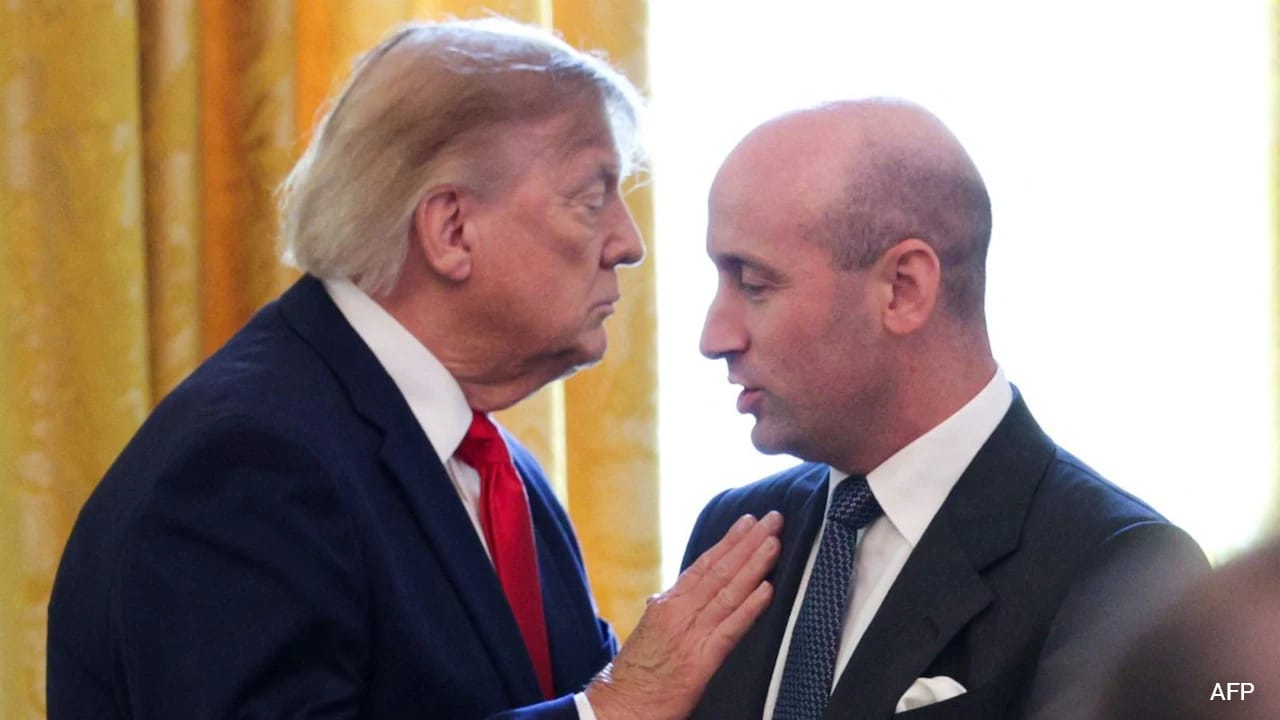
Reports detailing friction between the West Wing, First Lady Melania Trump, and top immigration officials highlight a recurring tension inside the administration over how aggressively to execute border and interior enforcement without crossing political or humanitarian lines. According to media reports referencing internal White House discussions, concerns raised by Melania Trump regarding the optics and human impact of certain enforcement operations prompted President Donald Trump to caution his immigration leadership against going too far.
That dynamic is neither new nor accidental. To understand why an administration built on uncompromising border rhetoric periodically hits the brakes on its own enforcement apparatus, you have to look beyond the daily cable news cycle and examine how competing power centers inside the White House operate.
The Anatomy of an Enforcement Backlash
In Washington, policy rarely fails because of a lack of intent. It fails when execution outpaces political tolerance.
Throughout both the first Trump term and subsequent enforcement drives, the central tension has never been whether to enforce immigration laws, but rather how visibly and aggressively those laws should be applied in the American interior. Hardline architects within the Department of Homeland Security and the White House policy shop consistently push for maximum deterrence. Their theory of the case is straightforward: high-profile raids, rapid deportations, and strict detention protocols send an unmistakable signal that discourages unauthorized entry before migrants ever reach the southern border.
Yet deterrence theory collides regularly with domestic political reality. When enforcement actions sweep up long-term residents without violent criminal records, separate families, or generate viral footage of chaotic workplace raids, the political fallout lands directly on the Oval Office.
Why Optics Matter Inside the West Wing
Seasoned political operatives know that public opinion on immigration is bifurcated. Polling across multiple election cycles consistently shows that a majority of American voters support securing the southern border and deporting individuals convicted of violent crimes. At the same time, that same electorate routinely sours on enforcement tactics perceived as indiscriminate or needlessly harsh.
This is where internal White House guardrails come into play. Unlike cabinet secretaries or agency directors whose performance is measured by arrest metrics and deportation numbers, the First Lady and senior political advisors view policy through a broader reputational lens.
- The Electoral Equation: Suburban voters and independent blocs often back border security in principle while recoiling from images of heavy-handed interior sweeps.
- The Media Narrative: A single viral video from a local enforcement operation can overshadow months of favorable border-crossing statistics.
- The Internal Check: When concerns reach the President from outside the traditional policy chain—particularly from family members or trusted confidants—they carry weight precisely because they lack a bureaucratic agenda.
Historical Precedent and the Limits of Maximum Pressure
Anyone who covered the 2018 family separation crisis recognizes the exact mechanics described in recent reporting. During that episode, DHS officials implemented a zero-tolerance prosecution policy along the southern border that resulted in thousands of children being separated from their parents.
For weeks, administration hardliners defended the policy as a necessary legal consequence of unauthorized entry. It was only after intense public outcry, bipartisan pushback on Capitol Hill, and private interventions from inside the President's inner circle—including Melania Trump, who famously traveled to a border facility in McAllen, Texas—that the administration reversed course via executive order.
The pattern established then has repeated itself in quieter ways ever since.
- Escalation: Agency leaders are given a broad mandate to increase enforcement numbers and demonstrate immediate results.
- Overreach: Field operations expand to hit aggressive targets, inevitably catching non-violent offenders, community fixtures, or sympathetic cases in the net.
- Correction: Reports of the fallout reach the White House, triggering a sudden recalibration where the President steps in to rein in the very officials he previously empowered.
The Bureaucratic Squeeze on Immigration Chiefs
Being the top immigration official in a Trump administration is arguably one of the most precarious jobs in federal government. The mandate is inherently contradictory. Officials are simultaneously expected to deliver historic deportation numbers while avoiding the exact kind of enforcement friction that makes headlines.
When an immigration chief pushes agents to maximize arrests, they risk triggering a White House rebuke for going too far. When they narrow enforcement priorities to focus strictly on national security threats and violent felons, they risk being accused by ideological allies of going soft or failing to fulfill campaign promises.
Consider a hypothetical scenario common to field operations. Imagine a regional enforcement director tasked with increasing monthly removal numbers by thirty percent. Because the pool of incarcerated violent offenders is finite and often requires complex coordination with local jails—many of which operate under sanctuary policies that restrict cooperation with federal agents—field officers turn to at-large arrests in communities and workplaces. Those sweeps yield higher numbers quickly, but they also guarantee emotional scenes, local press coverage, and congressional inquiries. Within days, what looked like an operational success on a DHS spreadsheet becomes a public relations headache in the West Wing.
The Structural Reality of Interior Enforcement
To evaluate whether reports of presidential pushback represent a genuine policy shift or merely a tactical pause, it helps to look at the structural constraints governing U.S. immigration enforcement. Rhetoric is unlimited; operational capacity is not.
Federal immigration agencies operate within strict physical, legal, and budgetary boundaries that no amount of executive enthusiasm can instantly erase.
Detention Bed Limits and Logistics
Every interior arrest requires downstream capacity. Immigration and Customs Enforcement cannot simply detain tens of thousands of additional individuals overnight without physical bed space, transportation logistics, and medical staffing. Congress appropriates funds for a specific number of detention beds, and expanding that capacity requires lengthy contracting processes or emergency reallocations that invite immediate legal challenges.
The Local Cooperation Bottleneck
Effective interior enforcement relies heavily on local law enforcement notifying federal authorities when an undocumented individual is booked into a county jail. In jurisdictions that refuse to honor federal detainers, agents are forced to conduct resource-intensive community operations. Those street-level arrests require multiple officers per target, carry higher safety risks, and generate far more public visibility than quiet transfers inside a correctional facility.
Diplomatic Friction on Removals
Arresting an individual is only the first step; deporting them requires a receiving country willing to accept the flight. Several nations routinely delay or refuse repatriation flights, creating backlogs in federal detention centers and forcing agencies to release individuals back into the United States under supervision while their cases languish in immigration court.
Competing Voices in the Policy Arena
Reports of Melania Trump expressing concern over enforcement tactics underscore how decentralized influence actually is inside the Trump orbit. Unlike traditional administrations where policy disputes are hashed out through formal National Security Council deputies meetings and interagency memos, decisions here frequently turn on direct, informal access to the President.
Critics of the administration argue that these episodes prove the underlying enforcement strategy is fundamentally flawed and overly reliant on shock-and-awe tactics that inevitably harm vulnerable people. From their perspective, a presidential reprimand does little to change a system designed to maximize removals regardless of community impact.
Conversely, immigration hawks contend that backing down in the face of bad press undermines deterrence. They argue that any sustained enforcement campaign will generate critical media coverage, and that flinching whenever controversial cases surface only encourages legal challenges and non-compliance.
What Actually Changes After a West Wing Warning
When a president pulls up an agency head for going too far, the immediate aftermath inside the bureaucracy is rarely a formal rewrite of federal regulations. Instead, the shift happens through subtle operational adjustments that experienced observers know to watch for.
- Target Prioritization: Field offices quietly receive updated guidance emphasizing criminal histories over civil immigration violations during routine sweeps.
- Sensitive Locations: Enforcement near schools, churches, and hospitals faces heightened supervisory sign-off requirements to prevent optics disasters.
- Media Posture: Press releases and ride-alongs with television crews are temporarily scaled back while operations continue out of the spotlight.
None of this means the broader enforcement agenda is abandoned. Rather, it reflects an ongoing calibration between ideological goals and political survival.
In Washington, policy memos set the direction, but human reactions set the boundaries. Until the structural contradictions between maximum deterrence and public tolerance are resolved, every immigration chief will continue walking the exact same tightrope—pushing hard enough to satisfy the mandate, until a single phone call from the residence reminds them where the line actually sits.


