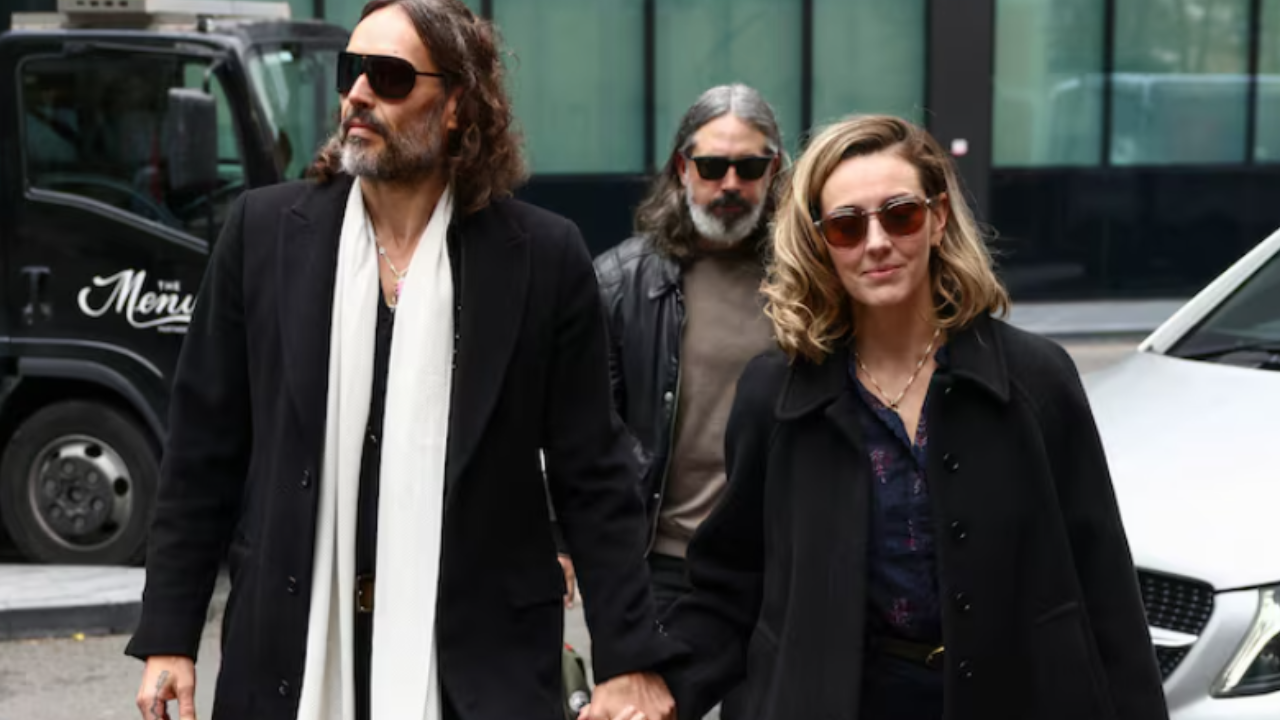
Twelve jurors in a British courtroom are currently weighing seven sexual offence charges against comedian and broadcaster Russell Brand, with deliberations set to resume on Wednesday morning after the panel retired without reaching a verdict. The case represents the culmination of a multi-year criminal investigation triggered by joint media reports in September 2023, forcing a legal reckoning over alleged conduct dating back to the height of Brand's mainstream television and radio career between 2006 and 2013. While the immediate focus rests on whether the prosecution has met the criminal threshold of proof beyond a reasonable doubt, the trial simultaneously exposes the structural failures of the entertainment executives, talent agencies, and broadcast networks that enabled unchecked celebrity power for decades.
Criminal trials involving historical sexual offences rarely hinge on forensic evidence. Almost never. Instead, they become rigorous examinations of memory, institutional culture, and credibility under intense cross-examination. Over the course of the proceedings, the jury has been tasked with evaluating testimonies from multiple complainants alongside digital communications, contemporaneous diary entries, and witness accounts from former production staff. Brand has consistently and vehemently denied all allegations, maintaining throughout the investigation and trial that every relationship he engaged in was entirely consensual.
The Mechanics of a Historical Sexual Offence Prosecution
To understand why the jury's task is so complex, you have to look at how the British legal system handles non-recent allegations. Unlike a standard criminal case where physical evidence is collected within hours of an incident, prosecutions stretching back more than a decade rely heavily on corroborative patterns and witness consistency.
Prosecutors in these trials typically argue a doctrine known in legal circles as similar fact evidence or cross-admissibility. The core premise is straightforward. If multiple individuals who do not know each other come forward independently and describe strikingly similar behaviors, grooming tactics, or environments, the likelihood of coordinated fabrication drops significantly. The prosecution asks the jury to view the seven charges not as isolated incidents in a vacuum, but as a continuous behavioral pattern enabled by Brand's immense professional leverage at the time.
The defense strategy in these cases is equally predictable, yet often devastatingly effective when executed by seasoned King's Counsel. Defense barristers attack the erosion of memory over time, highlighting minor inconsistencies between a witness's initial police statement, media interviews, and courtroom testimony. They scrutinize post-incident communications—text messages, emails, or continued friendly contact—to argue that the interactions were consensual encounters that were later reframed through a modern lens. In the UK, the judge instructs the jury that they must be "sure" of guilt before convicting on any single count. When a jury adjourns overnight and resumes deliberations on a Wednesday, it signals that they are methodically working through each of the seven counts individually rather than rushing to a blanket decision.
The Structural Enablers Behind the Curtain
Focusing exclusively on the defendant misses the larger institutional story that industry veterans have watched unfold for years. Russell Brand did not operate in a vacuum during his rise from a stand-up comic to a marquee presenter for the BBC, Channel 4, and major Hollywood studios. He was an asset. A lucrative, unpredictable, ratings-generating asset.
In the mid-2000s, the British broadcasting industry was locked in a desperate battle for youth demographics. Traditional television was losing ground to the early internet, and executives rewarded boundary-pushing shock value. Brand's entire public persona was built on hyper-sexuality, transgression, and the deliberate dismantling of broadcast standards. When a performer's brand is explicitly tied to breaking rules, corporate guardrails tend to quietly disappear.
Internal investigations conducted by broadcasters following the initial 2023 revelations painted a grim picture of institutional willful blindness. Junior production staff, runners, and researchers frequently operate on precarious freelance contracts in the television industry. Speaking up against the star of a flagship program isn't just a career risk; it is often professional suicide. When concerns were raised informally in green rooms or production offices, they were routinely dismissed as "just Russell being Russell."
Consider the financial incentives at play during that era:
- Production Companies: Independent production houses relied on retaining top talent to secure lucrative commissioning deals from major networks. Alienating a star meant losing the contract.
- Talent Agencies: Agencies took a standard percentage of every live tour, book deal, and film role, creating a direct financial disincentive to police a client's off-camera conduct.
- Broadcast Networks: Compliance departments were often structured to protect the network from regulatory fines by Ofcom rather than to protect vulnerable individuals interacting with on-air talent.
This ecosystem created a buffer zone around high-earning talent. By the time internal complaints reached senior management—if they ever did—they were treated as PR problems to be managed rather than potential criminal matters to be reported.
The Trial by Media Versus the Court of Law
The parallel timeline of this case highlights a growing friction in modern journalism and jurisprudence. The allegations against Brand first exploded into public consciousness not through a police press release, but through a coordinated investigative documentary by Channel 4's Dispatches and The Sunday Times. That reporting prompted the Metropolitan Police to encourage additional complainants to come forward, eventually leading to the formal charges currently before the court.
This sequence of events creates a massive headache for the justice system. Under the UK's strict Contempt of Court Act 1981, once criminal proceedings become active, media outlets are heavily restricted in what they can publish to avoid prejudicing the jury. Yet, by the time a high-profile suspect is arrested and charged, millions of people—including potential jurors—have already consumed hours of investigative television, podcast analyses, and social media commentary.
The defense inevitably argues that pre-trial publicity poisons the well, making a fair trial nearly impossible. Judges counter this by issuing strict directions to the jury to ignore everything they have read or heard outside the courtroom and to decide the case solely on the evidence presented from the witness box. Whether twelve ordinary citizens can completely compartmentalize years of cultural noise remains one of the great unresolved tensions of modern high-profile trials.
Furthermore, Brand's own pivot over the last several years adds another layer of complexity to the public narrative. Long before the criminal charges were filed, Brand transitioned from a mainstream Hollywood actor into an alternative media commentator with millions of subscribers across YouTube and Rumble. When the allegations surfaced, he framed them not as a reckoning for past behavior, but as a coordinated attack by legacy media and establishment institutions seeking to silence his political commentary.
That framing resonates deeply with his online audience, creating a bifurcated reality. Outside the courtroom, his supporters view the trial as political lawfare. Inside the courtroom, however, political ideology carries zero weight. The jury is not voting on Brand's podcasts, his views on pharmaceuticals, or his critique of mainstream journalism. They are examining specific, dated allegations of criminal conduct under the Sexual Offences Act 2003.
What Happens When Deliberations Resume
When the jury returns to the deliberation room on Wednesday morning, several distinct legal outcomes remain on the table. Because the indictment contains seven separate charges, the verdict does not have to be an all-or-nothing proposition.
Juries in multi-count sexual offence trials frequently return split verdicts. They may find the prosecution's evidence overwhelming on certain counts—perhaps those supported by contemporaneous text messages or third-party witnesses—while concluding that reasonable doubt lingers on others. Alternatively, if the panel remains deadlocked after extensive deliberation, the trial judge has the discretion to issue a majority direction, allowing the court to accept a verdict agreed upon by at least ten of the twelve jurors (10-2 or 11-1) rather than requiring complete unanimity.
If the jury cannot reach even a majority verdict on some or all counts, the judge would be forced to discharge them, resulting in a hung jury. At that point, the Crown Prosecution Service would have to decide whether to seek a retrial—a grueling prospect that requires complainants to endure the trauma of cross-examination all over again, often more than a year later.
Regardless of the specific verdicts read out by the jury foreman, the trial has already permanently altered the landscape of British entertainment. Broadcasters have overhauled their duty-of-care protocols, instituting anonymous whistleblowing hotlines, mandatory workplace behavior training, and strict on-set intimacy and welfare coordinators. Talent agencies can no longer claim ignorance when a client's behavior crosses legal boundaries.
The twelve citizens sitting in that deliberation room hold the immediate fate of one man in their hands, deciding whether the star of an era crossed the line from reckless celebrity into criminal predation. Yet the broader indictment has already been delivered against an entire industry that looked the other way while the cameras were rolling.