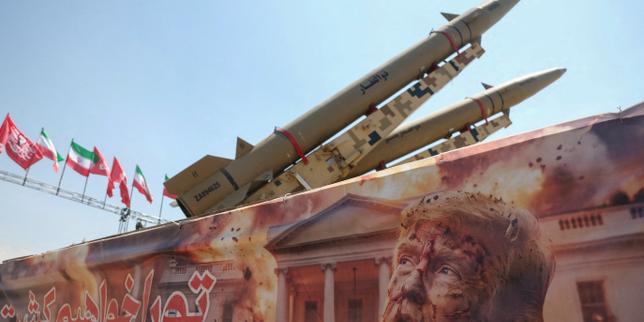
The missile strike that shattered the predawn silence at Tower 22 in Jordan marked a definitive rupture in the unwritten rules of engagement across the Middle East. When Tehran openly claimed responsibility for the drone and missile barrage targeting the American logistics support base, years of deniable proxy friction evaporated into the desert air.
For the past decade, Washington and Tehran maintained a dangerous yet predictable rhythm of calibrated escalation. Militias backed by the Islamic Revolutionary Guard Corps would strike logistics convoys or isolated outposts in Iraq and Syria. The Pentagon would respond with targeted retaliatory air raids on empty warehouses. Both sides communicated clearly that they wanted to avoid a full-scale regional conflagration.
Tower 22 broke that choreography.
The attack killed three American service members and wounded dozens more, crossing a hard threshold that policy planners in Washington had long dreaded. When fatalities occur on this scale, the political cost of inaction rises above the threshold of strategic restraint.
The Logistics Vulnerability No One Wanted to Admit
Military analysts often focus on high-profile assets like aircraft carriers and stealth fighters. Yet the strategic reality on the ground relies on unglamorous logistics hubs. Tower 22 sits near the Syrian and Iraqi borders, acting as a critical logistical node supporting the broader American advisory mission in the region.
These installations are inherently difficult to defend against modern aerial threats. Small, low-cost loitering munitions can exploit radar blind spots by mimicking civilian drone traffic or flying at extremely low altitudes.
The security architecture of these remote desert outposts was never designed to absorb sustained, coordinated swarm attacks backed by state-level guidance systems. For years, defense contractors promoted expensive multi-layered air defense batteries designed to intercept ballistic missiles and sophisticated cruise missiles. They were less prepared for thousands of dollars worth of commercial drone technology modified for explosive payloads.
This asymmetry defines modern conflict. A state actor can spend a fraction of a percent of a superpower's defense budget to inflict disproportionate casualties and force a massive strategic reevaluation.
The Anatomy of Iranian Deterrence Strategy
Tehran's decision to claim direct responsibility for the operation rather than hiding behind a regional proxy label signals a shift in how Iranian military leadership views its deterrence posture. Economic pressure from international sanctions combined with domestic political turbulence has created a leadership environment inside the Iranian establishment that favors aggressive forward defense.
By taking credit, the regime sought to project strength both domestically and to its regional network, often referred to as the Axis of Resistance. The message was clear. Tehran wanted regional capitals and Washington to understand that American troop presence in neighboring states remains vulnerable regardless of conventional military superiority.
This calculus contains a dangerous miscalculation risk. Escalation control requires both parties to share an understanding of where the red lines lie. If one side believes the other will always absorb blows to avoid a wider war, the aggressive actor will continue pushing boundaries until a catastrophic misfire triggers an uncontrollable chain reaction.
Regional Shockwaves and Diplomatic Fallout
The Jordanian government found itself in an uncomfortable diplomatic position immediately following the incident. Amman initially clarified that the attack occurred just across the border in Syrian territory before confirming the strike hit Tower 22 inside its own borders. Jordan relies heavily on American economic and military assistance, yet domestic public opinion regarding the Gaza conflict makes hosting foreign military installations a severe political liability for the Hashemite monarchy.
Neighboring states watched the aftermath with acute anxiety. Gulf capitals, having spent years attempting to de-escalate tensions with Tehran through diplomatic normalization channels, realized their economic development blueprints remain hostage to the whims of shadow-war dynamics. A regional war destroys tourism, halts foreign investment, and disrupts critical maritime trade corridors in the Red Sea and the Persian Gulf.
Diplomatic channels between Washington and Tehran via intermediaries like Oman and Qatar suddenly shifted from routine messaging to crisis management. Yet diplomacy requires a foundation of mutual trust, which was entirely absent. Every private warning delivered through a third-party diplomat was treated by the receiving side as a bluff.
The Cost of Strategic Ambiguity
For years, successive American administrations attempted to pivot away from the Middle East to focus on strategic competition with China in the Indo-Pacific region. Every time Washington tried to draw down its footprint, a new crisis pulled it back into the sand.
Leaving a residual force of a few thousand troops in isolated desert bases without adequate short-range air defense coverage created an untenable compromise. It offered enough exposure to draw enemy fire, but not enough combat power to deter determined adversaries.
The aftermath of the Jordan strike forced a brutal reckoning inside the national security apparatus. Policymakers faced two undesirable paths. They could either commit massive combat resources to permanently pacify the borderlands and secure every logistics node, or execute a chaotic withdrawal that would signal weakness to adversaries globally.
Neither option offered a clean victory. The reality of modern statecraft in fractured regions often involves managing unending crises rather than resolving them.
As military planners draw up retaliation plans and diplomats scramble to prevent the next escalation cycle, the fundamental vulnerability remains. As long as asymmetric actors can strike high-value targets with low-cost weapons and suffer minimal immediate consequence, the shadow war will cast an even darker shadow over global stability.
The desert winds shift quickly, carrying the echoes of decisions made in distant capitals, leaving the troops on the ground to bear the cost of strategic drift.