California lawmakers just brokered a high-stakes legislative compromise to rein in the explosive energy demands of artificial intelligence data centers, hoping to avert a catastrophic spike in residential utility bills. Behind the closed-door handshakes in Sacramento lies a harsher reality. The state's power grid is already buckling under the weight of hyperscale computing facilities, and the newly minted rules may prove too weak, too late, to stop ordinary ratepayers from footing a multi-billion-dollar infrastructure bill.
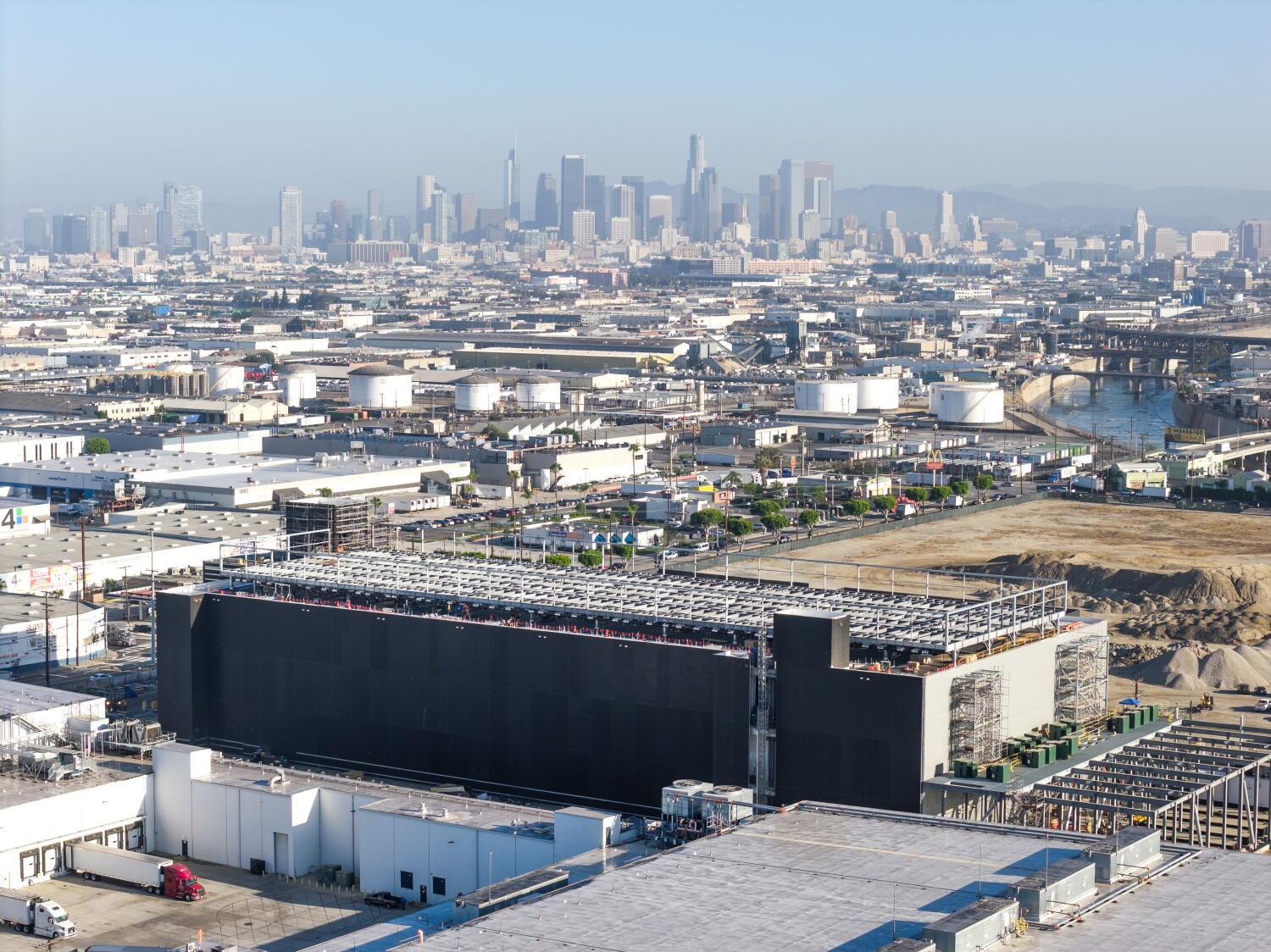
The digital gold rush has arrived, and it consumes megawatts the way past industrial booms consumed coal. Every time a consumer queries an automated chatbot or a major tech conglomerate trains a frontier language model, a server farm somewhere in the Central Valley or Silicon Valley draws continuous power equivalent to a small town. State projections show electricity consumption from these facilities doubling within a decade.
For years, utility companies welcomed the massive load growth, assuming that industrial giants would naturally pay their own way. Instead, the financial architecture of grid expansion has turned into a shell game.
The Cost-Shift Trap
Electrical grids operate on a principle of shared upkeep. When a new industrial facility hooks into the transmission lines, it requires staggering investments in transformers, substations, and high-voltage wiring. Under traditional regulatory frameworks, utilities build these upgrades and roll the capital expenditures into the general rate base.
Everyday residential and small business customers pick up a fraction of that tab through monthly utility bills. California already shoulders some of the steepest electricity rates in the nation, driven largely by wildfire mitigation expenses and rapid green-energy transitions. Superimposing massive artificial intelligence infrastructure onto this fragile ecosystem creates a dangerous mathematical collision.
The compromise hammered out by state legislators attempts to force data center operators to front more of their interconnection costs and contribute to local community benefits. Yet the tech lobby, armed with millions in political expenditures and legions of corporate compliance attorneys, successfully watered down the initial mandates. Provisions that would have imposed strict, binding caps on energy usage were swapped for vague reporting requirements and voluntary compliance targets.
Behind the Corporate Lobbying Shield
Big tech firms do not operate in a vacuum. Industry coalitions poured resources into Sacramento to fight off what they characterized as discriminatory targeting. Their primary argument rests on economic self-preservation. Tech representatives maintain that penalizing artificial intelligence infrastructure in California will merely drive capital and innovation to neighboring states with looser environmental restrictions.
This argument exploits a genuine anxiety among state leaders who are desperate to maintain California's status as the epicenter of global technology development. Governor Gavin Newsom and key legislative figures walked a precarious tightrope, balancing public fury over soaring utility bills against the existential fear of losing the crown jewel of the state economy.
Consider a hypothetical mid-sized data center complex requesting 100 megawatts of continuous capacity in a rural county. Under the newly minted framework, the developer must submit plans for zero-carbon backup generation—typically massive battery installations—instead of relying on traditional diesel generators. On paper, this protects local air quality. In practice, if the facility underutilizes its projected load or scales back operations unexpectedly, the financial safety nets protecting local ratepayers from stranded asset costs remain porous.
The Grid Reliability Illusion
Energy markets do not forgive wishful thinking. The California Independent System Operator has repeatedly warned that managing sudden load spikes from server farms requires an unprecedented expansion of generation capacity. Building that capacity takes years; deploying a rack of high-density graphics processing units takes weeks.
This temporal mismatch leaves a gaping vulnerability. While lawmakers celebrate legislative deals as monumental victories, electrons care very little about political compromises. If a heatwave blankets the state while data centers operate at full throttle to process continuous model training runs, the margin for error evaporates.
Mandating that facilities source energy from zero-carbon resources by 2030 sounds noble, but it assumes the underlying transmission infrastructure can physically deliver those electrons without causing systemic bottlenecks. When the grid hits its breaking point, mandatory demand-response programs kick in, forcing facilities to throttle back. Critical healthcare and government cloud infrastructure running inside these exact buildings complicate those emergency shutoffs, turning grid management into a high-stakes game of chicken.
Public sentiment has turned sharply against unchecked expansion. Polling data indicates that a vast majority of state residents view server farms not as engines of progress, but as parasitic drains on local resources that offer few local jobs relative to their massive physical and environmental footprint.
The legislative compromise in Sacramento represents an acknowledgment of the crisis, but it treats a structural hemorrhage with a bureaucratic bandage. As long as the financial upside of artificial intelligence remains privatized while the physical cost of powering it is socialized across millions of captive utility customers, the underlying conflict will only intensify.