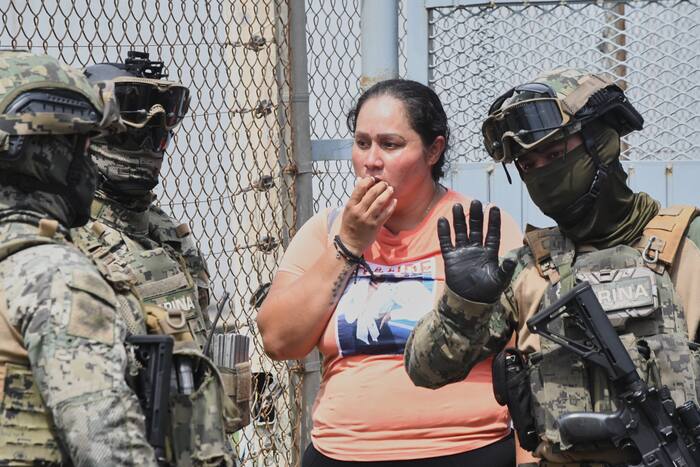
Ten bodies wrapped in bureaucratic silence do not tell the whole story of what happened inside the El Castillo Penitentiary in Mazatlán. When a riot erupts during family visiting hours, transforming a space meant for parental embraces and shared meals into a localized war zone that leaves nine inmates and a visitor dead, the institutional failure goes far beyond bad luck or a sudden clash of tempers. State officials in Sinaloa prefer to frame these tragedies as spontaneous outbursts of criminal friction. Anyone who has spent time tracking the structural rot inside Mexico's correctional facilities knows the truth is much darker and far more systemic.
The immediate arithmetic of the October violence is stark: 10 dead, 16 injured, firearms smuggled past guards, and an entire port city gripped by panic as relatives rushed the gates to find out if their children, spouses, or siblings survived. Yet focusing solely on the gunfire misses the machinery that makes such massacres inevitable. Mexican state prisons operate less as facilities for rehabilitation and more as proxy battlegrounds for the cartels that control the streets outside. When the Sinaloa Cartel fractures internally, the shockwaves shatter the fragile containment inside the prison walls, turning cell blocks into extensions of an active urban war.
The Anatomy of Institutional Decay
To understand why a riot like the one at El Castillo happens during visiting hours—when the stakes of civilian casualties should theoretically deter escalation—one must look at who actually runs the institutions. In many regional Mexican penitentiaries, nominal control by state wardens is an administrative fiction. True operational authority is often outsourced to dominant inmate factions or self-governing committees who control everything from commissary access to cell assignments.
Guard corruption and understaffing create an environment where contraband flows freely. Automatic weapons, communications equipment, and narcotics do not materialize inside a maximum-security perimeter by accident; they enter through systemic complicity. When rival underworld factions collide within the facility, the guards retreat or lock themselves in administrative pods, leaving inmates and visiting family members directly in the line of fire.
The timing of the Mazatlán riot arrives against a backdrop of intense geopolitical pressure. Mexico's federal administration faces unremitting demands from Washington to demonstrate decisive action against cartel networks. Yet sweeping street-level crackdowns and high-profile arrests only accelerate the influx of high-risk detainees into an already over-capacitated correctional system.
The Overcrowding Trap and Pretrial Limbo
Mexico houses hundreds of thousands of individuals across a fragmented network of federal and state facilities. A staggering percentage of these populations consist of pretrial detainees who have not been convicted of any crime, trapped in legal limbo for months or years due to backlogged courts and systemic judicial inefficiency.
When you pack thousands of stressed, economically desperate, and factionalized men into facilities built for a fraction of that number, the baseline human tolerance collapses. Inmates sleep in hallways, share square footage with sworn enemies, and rely on external patronage networks for basic survival. Under these conditions, a minor dispute over territory, extortion money, or personal slights can cascade into a full-scale riot within minutes.
The presence of civilians during the outbreak introduces a horrific human dimension that lays bare the total absence of safety protocols. When gunfire echoes through visitation courtyards, families are caught in the crossfire of a war they have no part in choosing. The loss of innocent life during these incidents exposes the hollow nature of official assurances regarding institutional security.
The Illusion of Control
State security forces eventually reestablished control at El Castillo, deploying National Guard troops and naval infantry to patrol the perimeter while grieving families wept outside the gates. Flashy military interventions outside prison walls offer a temporary illusion of order, but they do nothing to address the structural decay rotting the system from the inside out.
As long as corruption lubricates the prison gates, as long as overcrowding turns cells into powder kegs, and as long as the state treats correctional facilities as holding pens rather than areas requiring rigorous governance, these tragedies will repeat. The violence in Mazatlán is not an anomaly. It is the predictable outcome of a system built on neglect, waiting for the next spark to ignite.