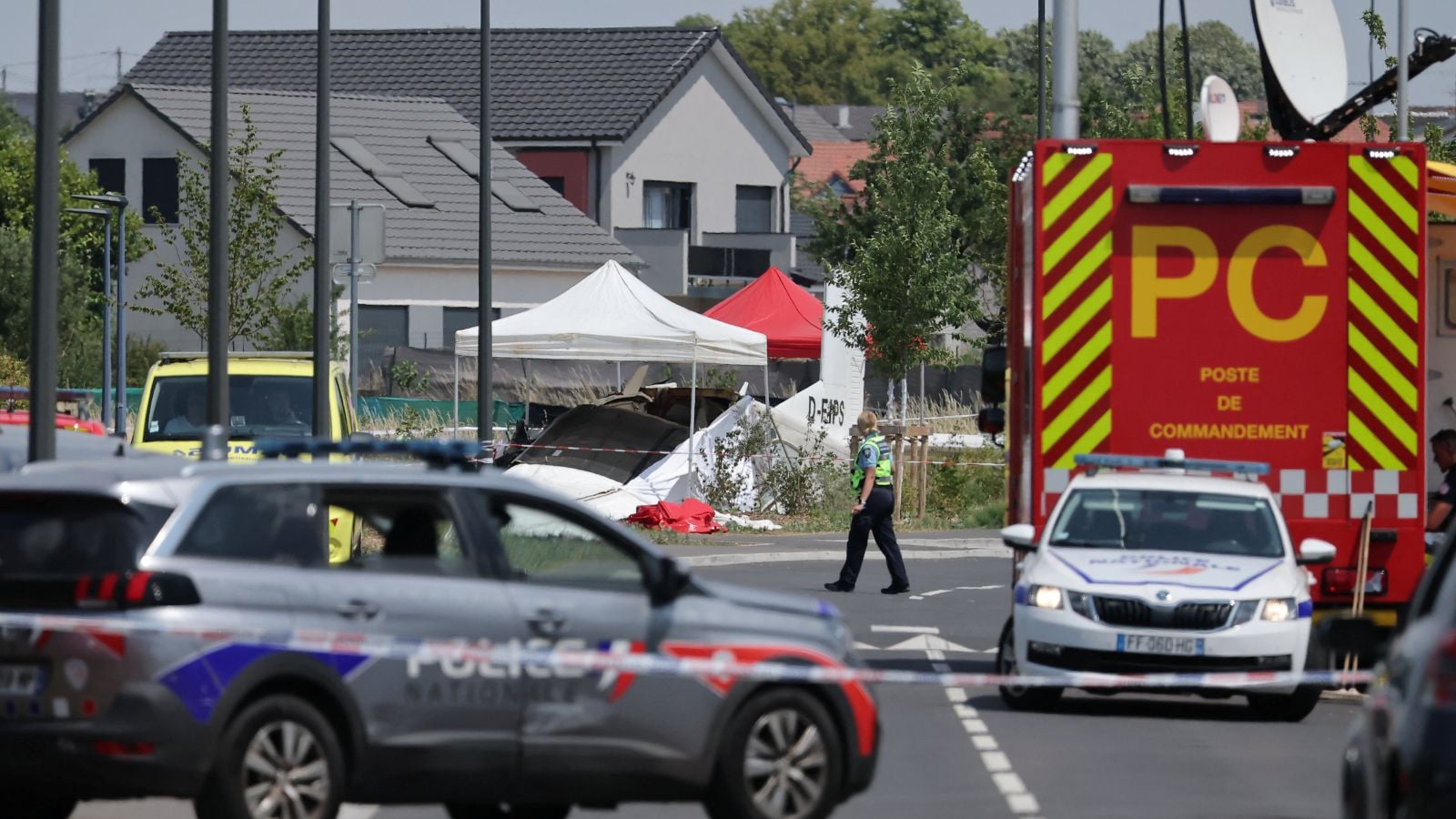
The plume of black smoke rising above the Nancy-Essey aerodrome on a scorching June morning did more than mark the site of France’s deadliest skydiving accident in three decades. It exposed a volatile intersection of aging airframes, club economics, and cross-border regulatory arbitrage that has quietly compromised the safety of general aviation drop zones across Europe.
When the German-registered Pilatus PC-6 Turbo Porter slammed almost vertically into a bicycle path in Tomblaine on June 28, 2026, it took eleven lives with it. Five instructors, a pilot, and five local nursing students who had booked a tandem jump to unwind during a oppressive heatwave were dead within seconds of their third takeoff of the day. The crash occurred in plain view of families standing by the runway, cell phones raised to capture what was supposed to be a celebratory weekend excursion.
Mainstream news outlets quickly moved on, treating the tragedy as an inexplicable, isolated mechanical horror. An engine stops, a wing dips, a plane falls. Yet for those who trace the invisible lines governing general aviation, the Tomblaine disaster was entirely predictable. Drop zones operate within a high-stress environment where aircraft are subjected to brutal, repetitive flight cycles that test the limits of both metallurgy and safety oversight. To understand why eleven people died near Nancy, one must look past the immediate debris field and examine the uncomfortable financial realities that dictate how jump planes are maintained and flown.
The Short Haul Trap
Commercial airliners are built for long, smooth cruises at high altitudes. Parachuting aircraft live a completely different life. They endure a relentless sequence of maximum-power climbs followed by rapid, low-throttle descents, repeating the cycle up to twenty times a day in peak season.
This type of operation introduces immense thermal shock and mechanical stress to single-engine turboprops like the Pilatus PC-6. During the ascent, the engine runs at its absolute thermal limits to get a heavy cabin of divers to 10,000 feet as quickly as possible. Once the jumpers clear the door, the pilot must drop the aircraft like a stone to minimize fuel consumption and prepare for the next paid rotation. The engine cools down instantly in the rush of cold air, creating rapid contractions in the turbine components. Over thousands of hours, this severe temperature cycling warps metal, stresses seals, and invites fatigue fractures that standard maintenance schedules can easily miss.
The aircraft involved in the Tomblaine crash, registered as D-FIPS, was an airframe manufactured in 1991. Thirty-five years is not an unusual age for a working general aviation plane, provided it undergoes rigorous, specialized oversight. But when a machine spends decades performing nothing but hard, vertical skydiving rotations, standard airworthiness metrics like total flight hours become deceptive. A plane with 5,000 hours of cross-country leisure flight is structurally pristine compared to a jump plane with the same logbook history but tens of thousands of violent thermal cycles under its belt.
Witnesses at Nancy-Essey reported hearing a sudden change in engine pitch, followed by what sounded like a complete power failure before the aircraft veered left and entered a steep, irreversible dive. In a single-engine aircraft during a steep climb-out, an engine failure is a catastrophic emergency that leaves zero margin for error. The airspeed bleeds off instantly. If the pilot attempts to turn back toward the runway without sufficient altitude, the aircraft will stall, drop a wing, and plunge straight down. This classic aerodynamic trap has claimed dozens of skydiving aircraft over the years, yet the industry remains structurally resistant to the reforms required to mitigate it.
The Gray Market of Club Charters
Skydiving in Europe is largely structured around non-profit clubs and small, specialized operators who struggle with narrow margins. Fuel prices are high, landing fees are rising, and the turbine engines required to pull ten people into the sky are staggeringly expensive to overhaul. A single Pratt & Whitney PT6A turbine overhaul can easily surpass one hundred thousand euros, a sum that can wipe out a small club's entire operating capital for years.
To survive, the industry relies heavily on a complex network of leased aircraft and cross-border registrations. The Tomblaine aircraft was registered in Germany but chartered for a specific weekend event by a French skydiving association. This arrangement is completely legal under European Union open-skies agreements, but it creates a dangerous fragmentation of regulatory oversight.
When a French club operates a German-registered aircraft, the primary responsibility for ensuring the plane’s airworthiness rests with Germany’s Federal Aviation Office, the Luftfahrt-Bundesamt, rather than France’s Direction Générale de l'Aviation Civile. Local French inspectors rarely perform ramp checks on foreign-registered club planes operating on temporary weekend charters. This allows systemic maintenance backlogs to migrate across borders undetected. An aircraft that might face intense scrutiny or grounding in its home jurisdiction can find a second life crisscrossing neighboring countries, stringing together weekend revenue loops to outrun the next major structural inspection deadline.
Furthermore, the legal distinction between commercial aviation and private club operations leaves paying passengers exposed to a lower tier of safety compliance. If you buy a ticket on a commercial regional airline in France, the operator must adhere to stringent Air Operator Certificate standards. These require redundant safety systems, independent maintenance audits, and rigorous pilot training programs. If you pay a skydiving club for a tandem experience, you are legally entering a private sport operation. The oversight drops significantly, even though the physical risks of the flight are exponentially higher.
The Vulnerability of the Single Engine
For decades, the Pilatus PC-6 has been celebrated as a masterpiece of short-takeoff-and-landing engineering. Its massive wingspan and utilitarian design allow it to lift heavy loads out of tiny, unpaved clearings. But its legendary reputation obscures a fundamental vulnerability built into its very core, which is the total reliance on a single powerplant.
When an engine quits on a twin-engine commercial transport, the pilot climbs on the remaining engine, declares an emergency, and lands safely at a diversion airport. When a single-engine turboprop loses power at 400 feet during a steep climb, the aircraft becomes a brick. The pilot has less than five seconds to lower the nose, establish a glide, and select a landing spot directly ahead.
Consider a hypothetical scenario where an aircraft of similar weight loses its turbine at low altitude over a built-up area. If the pilot attempts to stretch the glide to avoid a road or a building, the angle of attack increases, the airflow over the wings detaches, and a catastrophic aerodynamic stall occurs. The aircraft drops its nose and spins into the ground. This is precisely what eyewitness accounts and early flight tracking data suggest happened at Tomblaine. The aircraft veered, stalled, and fell almost directly onto a bicycle path just 250 meters beyond the runway threshold. It was a matter of sheer luck that it missed a nearby supermarket and a dense residential cluster by a few dozen meters.
The skydiving community has long resisted the transition to multi-engine aircraft, citing prohibitive procurement and operating costs. A twin-engine aircraft like the De Havilland Twin Otter is safer, but it burns double the fuel and requires twice the engine maintenance, making tandem jumps unaffordable for the average consumer. By choosing to fly in single-engine planes optimized exclusively for rapid ascent profiles, the skydiving industry has collectively accepted a structural single point of failure.
Accountability Beyond the Debris Field
The French Bureau of Enquiry and Analysis for Civil Aviation Safety has launched its technical investigation. Investigators will spend months disassembling the wreckage, examining fuel lines, and checking turbine blades for signs of metal fatigue or fuel starvation. They will issue a meticulous report detailing the exact mechanical sequence that led to the power loss.
But a mechanical diagnosis will not fix the underlying systemic rot. The real investigation needs to focus on the logbooks, the financial arrangements, and the regulatory blind spots that allowed an aging, heavily stressed airframe to transport first-time civilian jumpers over a residential zone without commercial-grade oversight.
We must ask hard questions about the training requirements for pilots operating these high-cycle jump flights. Skydiving pilots are often young aviators building flight hours as quickly and cheaply as possible to qualify for commercial airline jobs. They are paid minimal wages, if they are paid at all, and are thrust into a demanding flight environment that requires precise management of energy, weight, and balance. Managing a sudden engine failure on a heavily laden, high-drag turboprop at low altitude is a task that would challenge a veteran military test pilot. Expecting a low-hour pilot to execute the maneuver perfectly every time is a gamble the industry takes every single weekend.
The families who stood at the edge of the Nancy-Essey airfield were left to watch an unmitigated disaster unfold because the aviation industry has permitted a two-tier safety system to persist under the guise of sporting recreation. A group of healthcare workers, looking for a brief escape from the grinding stress of a national heatwave, stepped into an aviation ecosystem that prioritizes low operating costs and regulatory agility over absolute redundancy. Until European aviation regulators close the charter loopholes, unify cross-border maintenance tracking, and mandate commercial-grade oversight for aircraft carrying members of the public, the tragedy at Tomblaine will not be the last. The industry will continue its rapid rotations, crossing its fingers that the metal holds and the lone engine keeps spinning.