Tehran did not use shipping strikes in the Strait of Hormuz to sway the November 2026 United States midterm elections—it used them to price global fuel higher, assert toll authority over a vital waterway, and test Washington's tolerance for economic pain during an eight-month war.
Look closely at how that narrative got spun into electoral witchcraft. When headlines claim a foreign navy is tweaking its maritime tactics to swing American ballots, they usually skip the mechanics that actually move voters: crude benchmarks, freight insurance, pump prices, and the political math of war fatigue. By November 2026, the war that began with U.S.–Israeli strikes on Iran in late February had already upended global energy markets, kept Brent crude elevated well above pre-war norms, and strained diplomatic off-ramps. Treating every shift in Iranian naval pressure as a direct voting-booth lever mistakes a long-running coercive squeeze for a neat political trick.
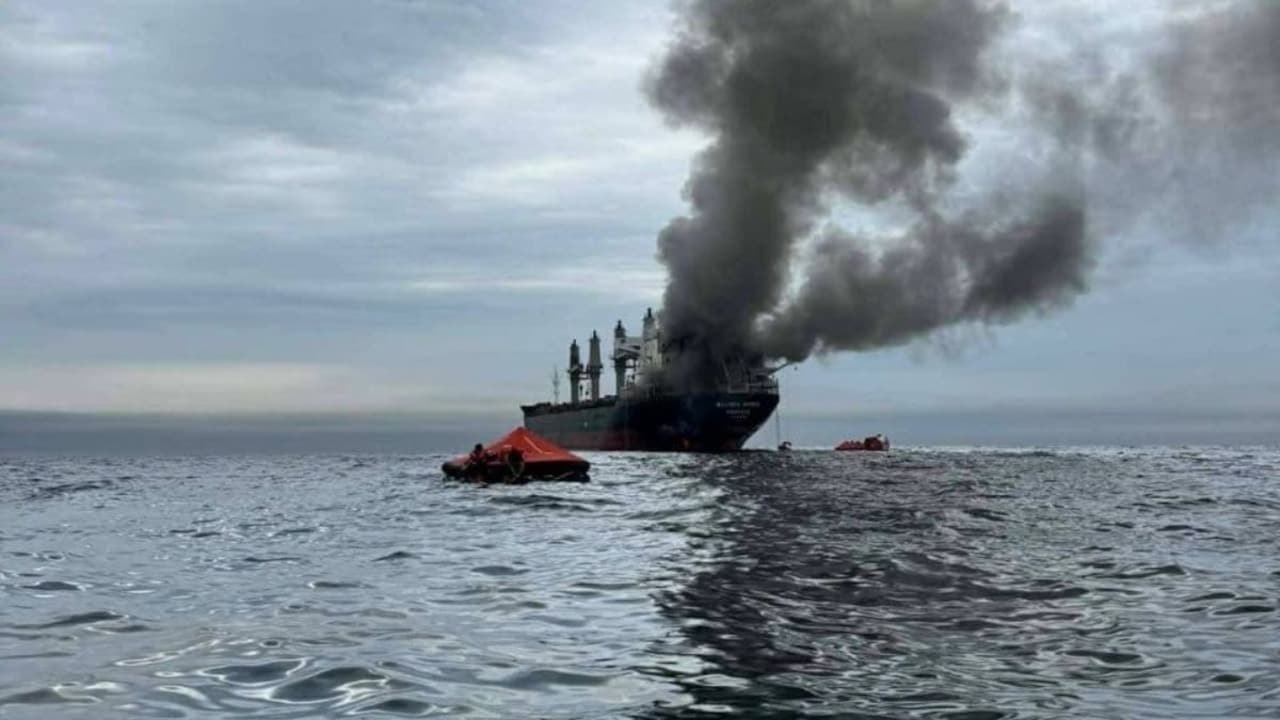
The reality on the water is messier and far more persistent. Since late February 2026, commercial shipping in the Strait of Hormuz has faced waves of projectiles, mine claims, drone threats, vessel seizures, and competing blockades. Roughly a quarter of the world's seaborne oil trade and a fifth of its liquefied natural gas normally pass through this narrow passage, alongside huge shares of seaborne urea and ammonia fertilizer. Even when partial flows recover—estimates by early autumn pointed to roughly 14 million barrels per day moving including offshore transfers in the Gulf of Oman—the margin of error remains razor thin. A single hit or unverified blast resets risk premiums across London, Singapore, and Houston within hours.
Why Election Narratives Oversimplify Naval Coercion
Political reporters love a clean storyline. A foreign adversary threatens merchant ships before a major vote, oil ticks up, and suddenly an entire election cycle looks like a referendum on maritime security.
That framing leaves out how energy shocks actually transmit into domestic politics. Voters rarely wake up and cast a ballot because an Islamic Revolutionary Guard Corps commander issued a warning about an unauthorized shipping lane. They react to sustained inflation, higher diesel and gasoline bills, squeezed household budgets, and the broader sense that a conflict has dragged on with no clear exit. If crude jumps on a Friday afternoon and cools by Tuesday, the market digests the volatility; if elevated energy costs linger for months across a war economy, the political cost accumulates slowly.
There is also a timing problem with treating shipping tactics as an election-specific plot. Maritime coercion in the Persian Gulf started right as hostilities erupted in late February 2026, not in autumn when campaign ads peaked. Traffic through the strait plunged near zero early in the conflict. Seafarers were killed and injured in the opening weeks and months, and commercial operators had to rethink routing, war-risk cover, and crew safety long before midterm campaign schedules hit full tilt.
"When an adversary squeezes a chokepoint for eight months, electoral timing is a secondary calculation—leverage over negotiations and regime survival comes first."
After the November 3 midterm elections passed with major Republican losses, Iranian officials quickly framed the outcome as proof that economic pressure tied to Hormuz had worn down American voters and strengthened Tehran's hand at the negotiating table. Note the direction of that claim. Tehran pointed to the result afterward to justify holding a harder line in talks, rather than proving that a last-minute tactical tweak flipped precincts. Analysts who confuse post-election spin with pre-election precision hand adversaries more strategic credit than the evidence supports.
How Asymmetric Tactics Work in Narrow Waters
Geography does half of Tehran's work before a single missile or mine is deployed. At its narrowest navigable point, the Strait of Hormuz funnels high-value commercial vessels through tight channels bordered by Iranian islands, coastlines, and shallow waters where radar clutter, patrol craft, and shore batteries complicate naval defense.
Conventional navies built for blue-water power projection face a stubborn asymmetry here. A multi-billion-dollar warship or escort formation has to stay alert against low-cost drones, fast attack craft, sea mines, and ambiguous maritime incidents while protecting slow-moving tankers or bulk carriers that cannot maneuver like destroyers. Even when U.S. forces strike Iranian targets along the strait, blockade Iranian ports, or declare southern lanes cleared and safe, commercial masters still weigh physical risk against legal and financial exposure.
Consider a hypothetical example involving a panamax bulk carrier or crude tanker approaching the strait. Suppose the ship's operator receives conflicting signals: U.S. naval advisories indicate a cleared southern corridor, while Iranian authorities warn vessels away from designated zones or demand coordination and transponders active. Even if no projectile hits the hull, the captain faces a dilemma. Deviating toward one side may invite interception or fines under Iranian rules; sticking to another route may trigger insurer warnings or draw scrutiny amid ongoing strikes and mine claims. Uncertainty itself acts as a tax on every barrel and ton of cargo.
Shifting Pressure Without Full Closure
Full, permanent closure of the Strait of Hormuz carries heavy costs for Iran as well. Tehran relies on maritime trade and regional relationships, and an all-out blockade invites overwhelming military retaliation alongside deep economic isolation.
Instead, pressure has often looked like calibrated friction and bureaucratic coercion:
- Selective targeting and blacklists: Tehran established the Persian Gulf Strait Authority and rolled out vessel blacklists warning non-compliant ships of fines, detention, or confiscation, even as many listed vessels kept moving.
- Transit fees and sovereignty claims: Iranian officials have pushed ideas around transit fees or permission requirements for passage, seeking de facto recognition of control over the waterway rather than relying solely on kinetic hits.
- Contested mine and strike reports: Reports of explosions, fires, and naval mines—often disputed between Iranian accounts, U.S. Central Command assessments, and maritime monitoring bodies—keep mariners off balance even when independent confirmation lags.
- Shuttle and bypass adaptations: Regional operators have leaned on feeder vessels, shuttle tankers, and offshore transfers in the Gulf of Oman to keep partial cargo flows moving under severe constraints.
None of these moves is a silver bullet for Tehran. Blacklists have not stopped every targeted ship, and mine assertions without hard proof often face skepticism from outside analysts. Yet their cumulative effect is real: they complicate insurance underwriting, stretch transit times, and turn routine commercial shipping into a high-stakes diplomatic chess match.
What Markets and Diplomats Miss About the Standoff
Observers who treat Hormuz solely as a U.S.–Iran military duel often miss the third force shaping every move: Gulf Arab states and global commodity buyers caught in the crossfire.
Neighbors across the Persian Gulf depend on those same waters for exports, imports, and desalination/energy stability, yet they do not want to become permanent punching bags in a broader confrontation. When attacks or regional spillover touch nearby infrastructure or shipping lanes, Gulf capitals face intense pressure to keep trade flowing while avoiding entanglement in an endless war. Diplomatic initiatives—from regional mediation efforts to temporary memoranda and stalled talks—repeatedly collide with mutual distrust and competing preconditions.
Global agriculture is another blind spot in coverage focused mainly on crude oil. Because the Persian Gulf supplies a huge share of global urea and ammonia fertilizer exports, prolonged shipping friction in Hormuz threatens planting cycles and food costs far beyond major oil-importing economies. High fuel prices grab front-page headlines immediately, while tight fertilizer supplies quietly compound inflation months later.
| Dimension | Election-Plot Framing | Chokepoint Coercion Reality |
|---|---|---|
| Primary goal | Swing U.S. voters right before ballots are cast | Extract negotiating leverage, assert maritime control, and raise war costs |
| Timeline | Concentrated around election dates | Continuous since late February 2026 across military and diplomatic phases |
| Core mechanism | Dramatic pre-vote maritime escalations | Ongoing friction, fee/permission demands, mine/strike claims, and insurance risk |
| Main blind spot | Treats voters as reacting directly to naval tactics | Underplays fuel inflation, Gulf state exposure, and fertilizer supply shocks |
There is also a hard truth about military escorts and air strikes. Escorts and targeted strikes can deter overt seizures and reopen specific corridors, yet no naval force can guarantee zero risk across dozens of miles of contested water every hour of the day. If commercial owners still fear a stray projectile, a covert mine, or a diplomatic breakdown the moment an escort leaves, shipping recovery remains fragile.
Reading the Next Phase Without the Noise
Cut through the posturing from both Washington and Tehran and look at what actually changes conditions on the water. Track verifiable maritime reporting from independent bodies, watch war-risk insurance behavior and shuttle-tanker volumes, and pay attention to whether talks produce enforceable rules that reject unilateral tolls while keeping commercial lanes open.
As long as both sides treat the waterway as a bargaining chip rather than a protected commons, every flare-up in the Strait of Hormuz will keep billing the rest of the world for a war nobody has figured out how to finish cleanly.



