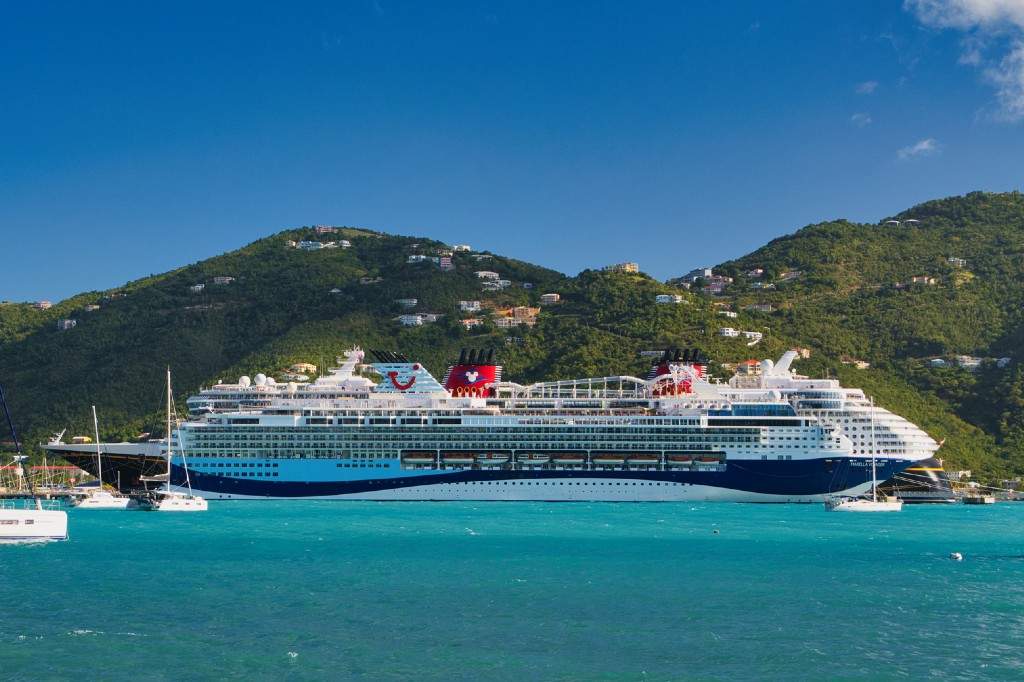
An explosion tore into a liquefied natural gas carrier in the Strait of Hormuz after Iranian officials reported the vessel struck a naval mine, immediately exposing the fragility of the world’s most critical maritime energy chokepoint. While initial wire dispatches treat the blast as another isolated maritime security incident, the underlying reality is far more volatile. A compromised LNG vessel in these narrow waters does not merely disrupt regional shipping schedules; it threatens a catastrophic thermal event alongside an instant price shock across Asian and European power grids.
For decades, maritime analysts have warned about the intersection of asymmetric naval warfare and super-chilled gas transport. Crude oil tankers absorb hull breaches with environmental spills and localized fires. LNG carriers operate under entirely different physical laws.
The Physics of a Compromised LNG Carrier
To understand why maritime insurers react with immediate panic to an LNG incident in the Strait of Hormuz, you have to look at the cargo itself. Liquefied natural gas is methane cooled to minus 162 degrees Celsius. At this temperature, the gas shrinks to one six-hundredth of its volume, allowing massive specialized tankers to haul enormous energy reserves across oceans.
Modern LNG carriers rely on intricate membrane containment systems or spherical Moss tanks insulated by layers of cryogenic foam, invar alloy, and stainless steel. A naval mine—whether a drifting contact device or a magnetically triggered limpet—is engineered to breach outer steel hulls below the waterline.
If an explosion penetrates both the double hull and the secondary cryogenic barrier, the liquid methane warms rapidly upon contact with ambient seawater and air. It does not explode inside the tank; methane requires a specific fuel-to-air ratio between 5 percent and 15 percent to ignite. Instead, the escaping liquid creates a rapid phase transition—a violent physical expansion as liquid turns instantly into gas—followed by a massive, dense vapor cloud that hugs the water surface.
Should a secondary spark from twisted metal, electrical shorts, or hot engine exhaust ignite that plume, the resulting pool fire burns at temperatures exceeding 1,300 degrees Celsius. Conventional maritime firefighting tugs cannot approach a cryogenic pool fire. They can only stand back and let the cargo burn itself out while radiating lethal heat over a kilometer away.
Why Wire Reports Miss the Strategic Context
Initial reporting from state agencies and wire services inevitably gets bogged down in diplomatic finger-pointing. Tehran attributes the blast to a stray mine, framing the incident as a hazardous maritime accident or the work of unnamed saboteurs. Western naval coalitions immediately scrutinize radar tracks, bathymetric drift patterns, and explosive residue to determine whether the munition was planted deliberately.
That attribution debate misses the operational reality on the water.
The Strait of Hormuz narrows to just 21 nautical miles at its tightest point, with inbound and outbound shipping lanes each measuring only two miles wide, separated by a two-mile buffer zone. Roughly one-fifth of the world’s petroleum liquids and a massive share of global LNG—predominantly exported from Qatar's massive North Field—must squeeze through this corridor.
- Asymmetric deterrence relies on ambiguity. Naval mines are the ultimate low-cost, high-impact weapon for irregular maritime forces. A single contact mine costing a few thousand dollars can halt commercial traffic worth billions.
- Attribution takes weeks, while markets move in milliseconds. By the time naval explosive ordnance disposal teams recover metallic fragments to identify a warhead's origin, futures markets in London, Singapore, and Tokyo have already priced in a prolonged blockade.
- Mine countermeasure operations are painfully slow. Sweeping a deep-water shipping lane requires specialized, non-magnetic vessels moving at a crawl, dragging acoustic and magnetic sleds while sonar drones scan the seabed.
Even when a vessel survives a mine strike without a catastrophic cargo ignition, the hull breach forces an immediate halt to transit. Salvage crews face a nightmare scenario: offloading volatile cryogenic cargo from a listing, damaged ship in hostile waters while naval forces maintain high-alert postures nearby.
The Silent Chokehold of War Risk Insurance
Missiles and mines make headlines, yet the true mechanism that shuts down the Strait of Hormuz is actuarial math. Commercial shipping companies do not operate based on geopolitical speeches; they operate based on coverage terms issued by underwriters in London’s Lloyd’s market.
Following any confirmed hull explosion in the Persian Gulf, the Joint War Committee re-evaluates the region's risk rating. Within hours, standard marine insurance policies become void for vessels entering the designated high-risk zone. Shipowners must then purchase Additional War Risk Premiums (AWRP) for every single transit.
Consider a hypothetical example to see how quickly the economics break down. Suppose an LNG carrier valued at $250 million normally pays a routine transit insurance fee of $35,000 to pass through Hormuz. Immediately following a mine strike on a peer vessel, underwriters can spike that single-voyage surcharge to 0.5 percent or even 1 percent of the hull's value. Suddenly, the operator faces an unbudgeted bill of $1.25 million to $2.5 million just to cross a 21-mile stretch of water—before factoring in the insured value of the cargo itself or crew hazard pay bonuses.
When premiums reach those levels, shipping stops without a single naval blockade being declared. Charterers invoke force majeure clauses. Captains drop anchor outside the Gulf of Oman, waiting for naval escorts or diplomatic de-escalation.
Global Energy Ripples From Asia to Europe
Unlike crude oil, which enjoys a network of strategic reserves and alternative pipeline routes across Saudi Arabia and the United Arab Emirates, seaborne LNG has virtually no bypass options in the Persian Gulf. Qatar, one of the top three LNG exporters globally alongside the United States and Australia, relies entirely on the Strait of Hormuz to get its gas to market.
A disruption here hits two major global buyers simultaneously, triggering a fierce bidding war on the spot market.
Asian Industrial Vulnerability
Roughly 75 to 80 percent of Qatari LNG heads east toward Japan, South Korea, China, and India. Utilities in Tokyo and Seoul operate on tight just-in-time inventory schedules because limited land area restricts massive onshore storage terminals. When a Hormuz transit delay threatens scheduled deliveries, Asian buyers immediately enter the spot market to buy up flexible cargoes from the US Gulf Coast or Australia, driving up regional benchmark prices like the Japan-Korea Marker (JKM).
European Grid Fragility
Following the severe curtailment of Russian pipeline gas, Europe permanently altered its energy architecture to rely on seaborne LNG imports. When Asian buyers bid aggressively for Atlantic basin LNG cargoes to replace delayed Persian Gulf shipments, European utilities are forced to match those prices to prevent tankers from diverting mid-ocean toward the Panama Canal or Cape of Good Hope. Title Transfer Facility (TTF) gas futures in Amsterdam spike in lockstep with Asian benchmarks, translating directly into higher electricity and heating costs for European households and manufacturers.
Historical Precedents and the Gray Zone of Maritime Conflict
Experienced maritime analysts recognize this exact pattern from the Tanker War of the 1980s and the limpet mine attacks near Fujairah in 2019. In 1988, the guided-missile frigate USS Samuel B. Roberts struck an Iranian M-08 contact mine in the central Persian Gulf, nearly breaking the warship in half and triggering Operation Praying Mantis. In May and June 2019, six commercial tankers suffered hull explosions just outside the Strait of Hormuz, sending war risk premiums soaring tenfold within days.
What makes the current strike on an LNG tanker fundamentally different from those historical episodes is the cargo profile and the tightness of global gas balances.
In 2019, the targeted vessels carried crude oil, methanol, and naphtha. The global oil market was well-supplied, cushioning the price shock. Today, global LNG liquefaction capacity runs near maximum utilization, with minimal spare output available to backfill a sudden loss of Qatari supply. Furthermore, LNG carriers are vastly more expensive, technologically complex, and scarce than standard crude tankers. Taking even two or three cryogenic carriers out of service for dry-dock repairs creates a multi-month bottleneck in global shipping capacity.
There is also an uncomfortable gray area regarding maritime rules of engagement. Naval forces patrolling the region—including the US Fifth Fleet and European coalition task forces—possess overwhelming conventional firepower. Yet conventional warships struggle to deter covert mine-laying operations conducted at night by small commercial dhows or semi-submersible craft indistinguishable from local fishing traffic.
The Structural Flaw Nobody Wants to Price In
Energy traders frequently treat maritime incidents in the Persian Gulf as temporary volatility events—buying the dip once headlines fade and tankers resume normal speed. That complacency ignores a structural vulnerability baked into global energy infrastructure.
The world spent the last decade building multi-billion-dollar regasification terminals in Europe and Asia while expanding liquefaction mega-projects in the Persian Gulf, all predicated on the assumption that a narrow, contested strait would remain permanently open to unescorted commercial traffic. No pipeline bypass exists for Qatari gas. No fleet of naval minesweepers is large enough to guarantee a 100 percent sterile seabed across hundreds of square miles of shipping lanes.
Every LNG carrier transiting the Strait of Hormuz is a floating cryogenic pressure vessel passing through a mine-capable chokepoint where a single underwater detonation can erase billions in market value before the smoke even clears the horizon.