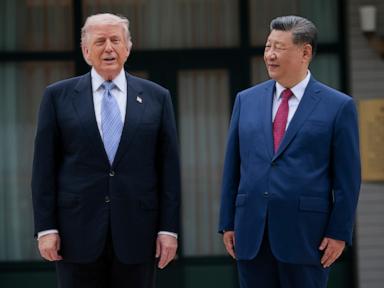
The diplomatic theater in Shenzhen carried all the predictable choreography. Red carpets unfurled, delegations exchanged scripted pleasantries, and financial markets briefly exhaled as another temporary trade truce limped across the finish line. Beneath the gloss of bilateral handshakes, the structural hostility governing the relationship between Washington and Beijing remains entirely unaltered.
President Donald Trump and Chinese leader Xi Jinping are managing a system built on mutual economic exhaustion rather than newfound trust. Every temporary extension on tariffs, every fragile agreement on artificial intelligence safety protocols, and every closed-door argument over Middle Eastern energy corridors highlights a grim reality. Neither capital possesses the political domestic luxury to back down, yet neither can afford the cataclysmic fallout of an unchecked commercial and technological rupture.
Tariffs no longer function merely as protectionist levers. They have evolved into permanent economic tollbooths.
When Treasury Secretary Scott Bessent and U.S. Trade Representative Jamieson Greer sit down with their Chinese counterparts, the math is brutally transparent. Beijing continues to hold a near-monopoly on the processing of critical rare earth elements—the microscopic vitamins required for everything from consumer smartphones to advanced military guidance systems. Meanwhile, Washington retains the capacity to tighten the financial screws on corporate access to Western capital markets.
Consider the mechanics of the current arrangement. China extended the suspension of a 24 percent retaliatory tariff on select American imports while keeping a baseline 10 percent levy intact, conditioning further agricultural purchases on Washington fulfilling older promises of mutual tariff rollbacks. This is not free trade recovery. It is trench warfare conducted by spreadsheet. American soybean farmers and industrial manufacturers are left guessing quarter by quarter whether political goodwill will survive the next domestic congressional hearing.
The digital domain presents an even steeper ascent toward friction. Artificial intelligence is no longer an abstract market sector; it is the primary theater of national security dominance.
While tech executives mingle at state dinners, intelligence agencies in both countries view advanced semiconductor supply chains as zero-sum territory. Proposals to establish communication channels for frontier AI model releases and incident reporting sound sensible on paper. They ignore the fundamental paranoia driving both superpowers. Beijing views American export controls as an explicit containment strategy designed to lock Chinese industry out of the twenty-first century. Washington views unmonitored Chinese algorithmic development as an existential threat to democratic infrastructure and military parity.
No amount of executive charm can bridge a gap where both sides believe that losing the technology race means forfeiting global sovereignty.
Geopolitics outside the bilateral corridor further scrambles the ledger. The shadow of the conflict involving Iran looms heavily over every negotiation table. Washington expects Beijing—as a primary consumer of Iranian petroleum—to exert coercive leverage over Tehran.
That expectation collides with China’s grand strategy. Beijing buys discounted oil to fuel its domestic economic engine and views Middle Eastern entanglements primarily through the lens of energy security and non-intervention. Asking Xi Jinping to actively destabilize a vital energy lifeline to appease American security demands is a diplomatic non-starter. The result is a persistent stalemate where peripheral conflicts are shoehorned into bilateral trade summits, muddying already complex economic talks with intractable regional wars.
Domestic politics in both nations act as an anchor on compromise. In Washington, any administration perceived as soft on Beijing invites immediate bipartisan retaliation from a Congress primed to weaponize oversight. In Beijing, economic slowdowns and property sector vulnerabilities leave the leadership with zero domestic appetite to appear capitulatory to foreign pressure.
Permanent crisis management has replaced permanent resolution. The leaders will continue to meet, temporary pauses will be stretched past their expiration dates, and executives will continue to plan around volatility rather than stability.
The structural divergence is widening. The markets should stop waiting for a grand bargain that addresses the core contradictions of the bilateral axis.
The two largest economies on Earth are locked in a permanent contest of endurance, where avoiding catastrophe is counted as a victory and genuine resolution remains entirely out of reach.