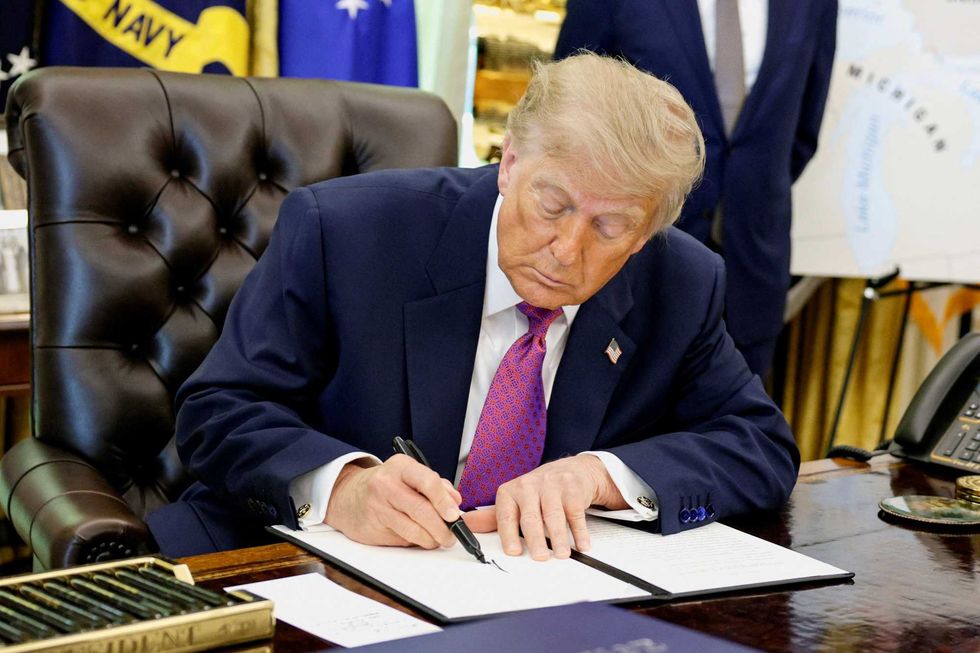
Texas was never supposed to be a competitive Senate map. When Republican firebrand Ken Paxton defeated long-serving incumbent John Cornyn in a brutal primary, party architects assumed the state's deep-red history would safely carry the nominee across the finish line. Instead, an unprecedented fundraising deficit has turned the Lone Star State into a frantic toss-up, forcing Donald Trump to headline emergency donor galas in Houston to rescue a sputtering campaign.
The math driving the panic is stark. Democratic challenger James Talarico has amassed a historic financial war chest, pulling in tens of millions of dollars and leaving Paxton gasping for cash. While national super PACs sit on hundreds of millions in reserves, traditional Republican donors have balked at opening their checkbooks for a nominee carrying significant personal and political baggage. This reluctance has transformed what should have been an easy defense into an expensive scramble that threatens the broader GOP majority in Washington.
The Primary Aftermath and Donor Alienation
The root of the current financial crisis traces directly back to the primary battlefield. Paxton ran an aggressive insurgency against Cornyn, relying heavily on a late endorsement from Trump to clear a crowded field. That victory fractured the state's donor class. Major business leaders and institutional contributors who had spent decades funding Cornyn's disciplined operation found themselves alienated by Paxton's populist style and ongoing legal controversies.
Consequently, individual donor metrics plummeted. Reports filed with the Federal Election Commission revealed that Paxton secured a fraction of the unique small-dollar and mid-tier donors that his predecessor routinely attracted at the same point in an election cycle.
"You break it, you own it," is how one prominent Texas GOP strategist privately summarized the sentiment among alienated bundlers.
Major donors are not just sitting out; they are actively redirecting their capital toward swing states they view as safer or more strategic investments, such as North Carolina and Georgia. Leaving Texas exposed to a well-funded Democratic challenge is viewed by many veteran operatives as an unforced error born of primary-season purges.
The Talarico Machine and Media Saturation
On the opposing side, James Talarico has executed a masterclass in modern campaign capitalization. By framing his bid around populist economic grievances and appealing to a broad coalition of moderate and progressive voters, the Democratic state representative has built an unprecedented fundraising apparatus.
Money in politics buys oxygen, and Talarico has used his financial advantage to blanket Texas media markets with unremitting advertising. In a state as vast and expensive to campaign in as Texas, media saturation dictates momentum. Without comparable funds, Paxton has struggled to mount an effective counter-offensive on the airwaves, forcing the campaign to rely on digital panic-alarms and appeals to out-of-state donors.
Independent expenditure groups have tried to plug the dike, but satellite spending can only substitute for a candidate's ground game and direct-mail infrastructure for so long. When the opponent outpaces the nominee by millions month after month, structural vulnerabilities multiply.
The National Stakes
The battle for control of the United States Senate rests heavily on this unexpected Texas showdown. With Republicans defending a narrow 53-seat majority, losing Texas would fundamentally upend the upper chamber's power dynamics. Party leaders in Washington recognize that a seat once considered locked down now requires emergency triage.
This reality explains the high-stakes intervention by Trump in Houston. Rallies and high-dollar dinners are designed to squeeze millions out of loyalists in a single evening, offering a temporary transfusion to a campaign bleeding cash. Yet, an evening of headlined fundraising cannot entirely replace a functional, broad-based quarterly intake.
The structural friction between the populist wing and the traditional establishment continues to complicate the path forward. As November approaches, the test will be whether last-minute infusions from presidential rallies can overcome a massive structural deficit in a state that has not sent a Democrat to the Senate in decades. The margin for error has evaporated entirely.