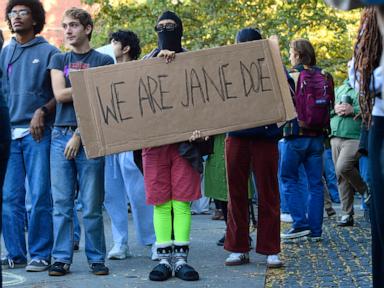
Campus sexual assault cases sit at a collision point between civil rights law, criminal justice, and institutional self-preservation. When a gang rape allegation at Cornell University exploded into public view—sparking student protests, faculty no-confidence pushes, a special prosecutor appointment, an outside review led by former Deputy Attorney General Sally Yates, and a civil lawsuit—it exposed a broken architecture that has failed students for decades.
Title IX was enacted in 1972 to ban sex discrimination in federally funded education programs. It was never written to function as a shadow criminal court prosecuting multi-defendant felony allegations in fraternity houses. Yet universities routinely get pulled into that exact role because criminal prosecutions are rare, investigations move slowly, and students demand immediate accountability on campus.
Why Campus Proceedings and Criminal Cases Collide
Watch any major campus scandal unfold and you will see the same confusion repeat itself. A student reports an assault, and two parallel tracks open up with different rules, different goals, and different definitions of success.
Criminal courts exist to punish offenses against the state and carry the threat of prison. Prosecutors must prove guilt beyond a reasonable doubt, a high threshold that filters out cases where physical evidence is thin, memories are fragmented by trauma or intoxication, or witnesses contradict one another. As criminology and psychology researchers have documented across large reviews of reported cases, only a fraction of reports lead to prosecution, and an even smaller share end in conviction.
Title IX operates under a civil rights framework focused on equal access to education. Under the restored 2020 Title IX regulations governing campus proceedings, colleges use a lower evidentiary threshold—typically a preponderance of the evidence, meaning more likely than not—and rely on live hearings with advisor-conducted cross-examination before sanctioning a student.
A campus hearing can end a student's education, career trajectory, or scholarship. It cannot send anyone to prison.
That mismatch creates a trap for everyone involved. Complainants often assume a police report and a campus complaint move as a coordinated machine. They do not. District attorneys and university compliance offices answer to different bosses, guard different files, and weigh different risks. When a prosecutor declines charges or moves quietly while a university opens an administrative inquiry, students can easily misunderstand where things stand.
Respondents face a different distortion. A campus finding of responsibility can leave a permanent mark on an academic record or trigger expulsion, even when criminal prosecutors never file charges. Accused students hire defense lawyers early, treating campus investigators like police detectives, while universities try to prove they followed federal procedure so they do not lose federal funding or face civil liability.
The Regulatory Whiplash Behind Every Campus Hearing
Anyone trying to understand campus sexual assault cases has to contend with constant rule changes in Washington. Title IX has become a political football, swinging between administrations and federal courts until neither students nor administrators can rely on a stable playbook.
The 2020 regulations introduced strict procedural mandates, including live hearings and cross-examination by advisors. The Biden administration issued sweeping 2024 rules that took effect in August 2024 before a federal court vacated them nationwide in January 2025, prompting the Department of Education to formally restore the 2020 framework in September 2026 with narrow adjustments.
What Rule Changes Mean on the Ground
Policy shifts sound technical on paper. In practice, they reshape every interview, evidence log, and hearing room on a college campus.
- Live hearings and cross-examination: Under the operative 2020 framework, formal grievance procedures at colleges rely on live hearings where advisors question parties and witnesses, rather than relying solely on a single administrator's investigation.
- Retroactive and jurisdictional confusion: Schools have had to sort out which version of the rules applies based on when alleged conduct occurred and what federal courts allow at any given moment.
- Informal resolutions: Many students avoid formal hearings altogether because live questioning and multi-month timelines are exhausting. Informal resolutions—such as no-contact orders, schedule changes, or voluntary transfers—can resolve immediate friction quickly, yet critics argue they sometimes let serious misconduct pass without formal discipline.
Consider a hypothetical example to see how procedural friction plays out. Imagine a sophomore reports being incapacitated by alcohol and substances at an off-campus or fraternity gathering involving multiple students. Even if campus officials want to act swiftly, they have to give formal written notice, share evidence, manage separate hearing rooms, and coordinate advisors while local law enforcement conducts its own review. Every step is designed to survive a lawsuit, not to feel intuitive to a distressed 19-year-old.
What High-Profile Cases Expose About Institutional Incentives
Major scandals rarely erupt over a single rule. They erupt when a university's public posture collides with how it actually handled a report behind closed doors.
In the Cornell case, public anger intensified not just because of the underlying allegation at a fraternity house, but because of questions about whether the criminal investigation had stalled or been misunderstood, whether leadership followed up sufficiently, and how Greek life oversight functioned. Once a story reaches that boiling point, universities reach for familiar crisis tools: freezing fraternity social events, announcing mandatory training, creating research centers, and hiring high-profile outside reviewers.
Why Crisis Responses Often Miss the Structural Root
Universities are complex bureaucracies built to protect reputation, endowment stability, and institutional autonomy. Those instincts are not unique to any single campus; they show up whenever elite institutions face scrutiny.
Temporary party bans and new workshops signal action to angry students, alumni, and lawmakers. They are far easier to announce than fixing slow investigative staffing, clarifying communication boundaries with local prosecutors, or confronting why group settings like fraternity houses repeatedly surface in severe misconduct allegations.
At the same time, fairness on campus cuts both ways. If a university bends its own procedures to appease protesters or politicians, accused students challenge the outcome in court for violating due process or federal rules. If a university enforces rigid procedures strictly, critics accuse administrators of coldness or indifference. A civil rights statute passed to stop sex discrimination in schools is forced to carry the moral weight of violent crime—and neither side trusts the referee.
Practical Takeaways for Students, Parents, and Institutions
Nobody enters a Title IX process wanting a masterclass in administrative law. Yet anyone navigating a report—whether as a complainant, a respondent, or a parent trying to help—needs concrete clarity rather than platitudes.
- Ask which rules govern the case immediately: Confirm whether the school is applying current Title IX procedures or another campus misconduct policy, and get the written procedural guide up front.
- Separate criminal reporting from campus reporting in your expectations: Filing with campus or local police starts a law enforcement track; filing with the Title IX office starts an administrative track. Do not assume updates in one automatically mean action in the other.
- Use an advisor who knows the terrain: Both complainants and respondents can bring an advisor—including an attorney—to meetings and hearings under campus procedures. Having someone who understands evidentiary rules and hearing mechanics matters far more than informal moral support alone.
- Document supportive measures in writing: Requests for housing changes, class adjustments, or no-contact orders should be put in writing so deadlines and accommodations are clear.
The Uncomfortable Reality Left Behind
Title IX can demand fair notice, impartial decision-makers, and educational accommodations. It cannot replace a functioning criminal justice system, nor can a college dean or hearing panel undo trauma or guarantee public trust with a press release.
Until lawmakers stop treating campus compliance offices as substitutes for real criminal justice reform—and universities stop treating crisis management as structural accountability—every high-profile case will keep reopening the exact same wound.


