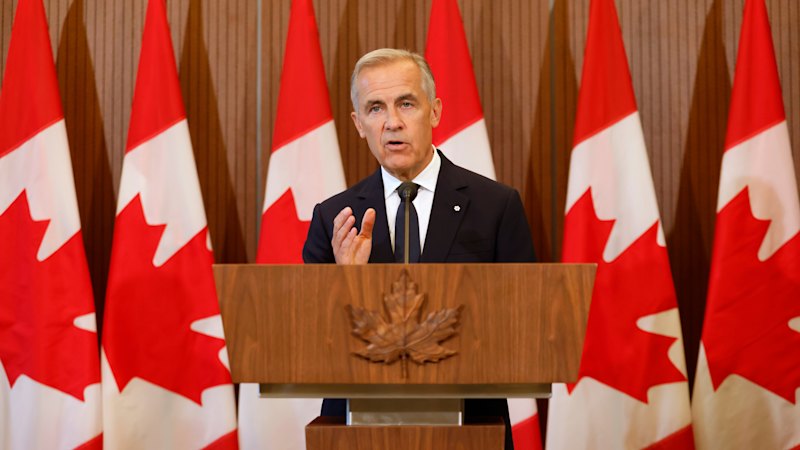
The economic architecture binding North America together has fractured beyond immediate repair. Prime Minister Mark Carney pulled Canadian negotiators from Washington, D.C., effectively ending high-stakes trade talks as a wave of 50 percent U.S. tariffs slammed into Canadian exports. Standing before reporters in Ottawa, Carney did not mince words about the state of affairs, characterizing the sudden collapse as a hostile economic strike.
We were attacked. Like you are at war when you get attacked.
This stark declaration marks a brutal turning point in modern diplomatic and commercial relations. What began as a series of aggressive protectionist maneuvers has escalated into an outright economic conflict, leaving supply chains scrambling and businesses caught in the crossfire.
The Eleventh-Hour Breakdown
For days, optimism had quietly circulated through diplomatic channels. A tentative framework appeared within reach, prompting the White House to temporarily hold off on massive punitive levies. Then came the midnight unraveling. According to Ottawa, U.S. negotiators introduced sweeping, eleventh-hour demands that fundamentally shifted the parameters of the agreement.
Three specific friction points torpedoed the negotiations at the finish line:
- Automotive carve-outs: Washington attempted to alter vehicle tariff exemptions, pulling protection away from medium and heavy-duty trucks built in Ontario assembly plants.
- Foreign policy handcuffs: American trade envoys pushed for clauses that would restrict Canada's sovereign right to negotiate independent trade agreements with other global partners.
- Cultural and regulatory sovereignty: Persistent disputes over domestic content rules and digital media laws resurfaced as non-negotiable sticking points.
By Friday evening, the compromises evaporated. The White House maintained that Canadian officials walked away from a finalized framework, while Ottawa countered that the terms on the table had been fundamentally poisoned by bad-faith additions designed to hollow out Canadian industry.
The Anatomy of Dollar-for-Dollar Retaliation
With diplomacy suspended, Canada has opted for a posture of hardline economic defense. Ottawa announced a structured retaliation plan set to hit American exporters. The response targets specific strategic pressure points across the United States, designed to maximize domestic political pain for American legislators while shielding vulnerable everyday consumers where possible, though collateral damage remains inevitable.
The upcoming levies will focus directly on several key sectors:
- Steel and aluminum derivatives
- Agricultural equipment and dairy products
- Consumer appliances and electronics
- Pulp, paper, and industrial alcohol
By matching American duties dollar for dollar, the Canadian government is attempting a high-risk balancing act. It must project enough economic deterrence to force Washington back to a serious negotiating table, all while managing domestic inflation pressures caused by retaliatory friction.
The Manufacturing Reality Check
The collapse hits the integrated continental manufacturing core harder than any abstract policy debate. Consider a hypothetical assembly plant in Ontario producing heavy-duty commercial utility trucks. Under the previous operational status quo, integrated supply chains allowed raw steel and specialized parts to flow back and forth across the border multiple times before a final vehicle rolled off the line.
Under a 50 percent tariff regime, that multi-step border cross becomes financially punitive. Margins evaporate instantly. Manufacturers are forced into a bitter choice: absorb unsustainable cost spikes or completely restructure their industrial footprint by moving capital and assembly lines south of the border.
U.S. Trade Representative representatives have signaled that Washington has no immediate plans to restart discussions, grouping Canada alongside China as the primary targets facing structural trade punishment. This hardline stance treats long-standing allies and geopolitical competitors with the same broad administrative brush.
The illusion of seamless cross-border commerce built over decades of regional integration is gone. Industries that spent a generation optimizing for a frictionless continental market must now learn to operate in an environment defined by sudden checkpoints, retaliatory friction, and structural hostility.