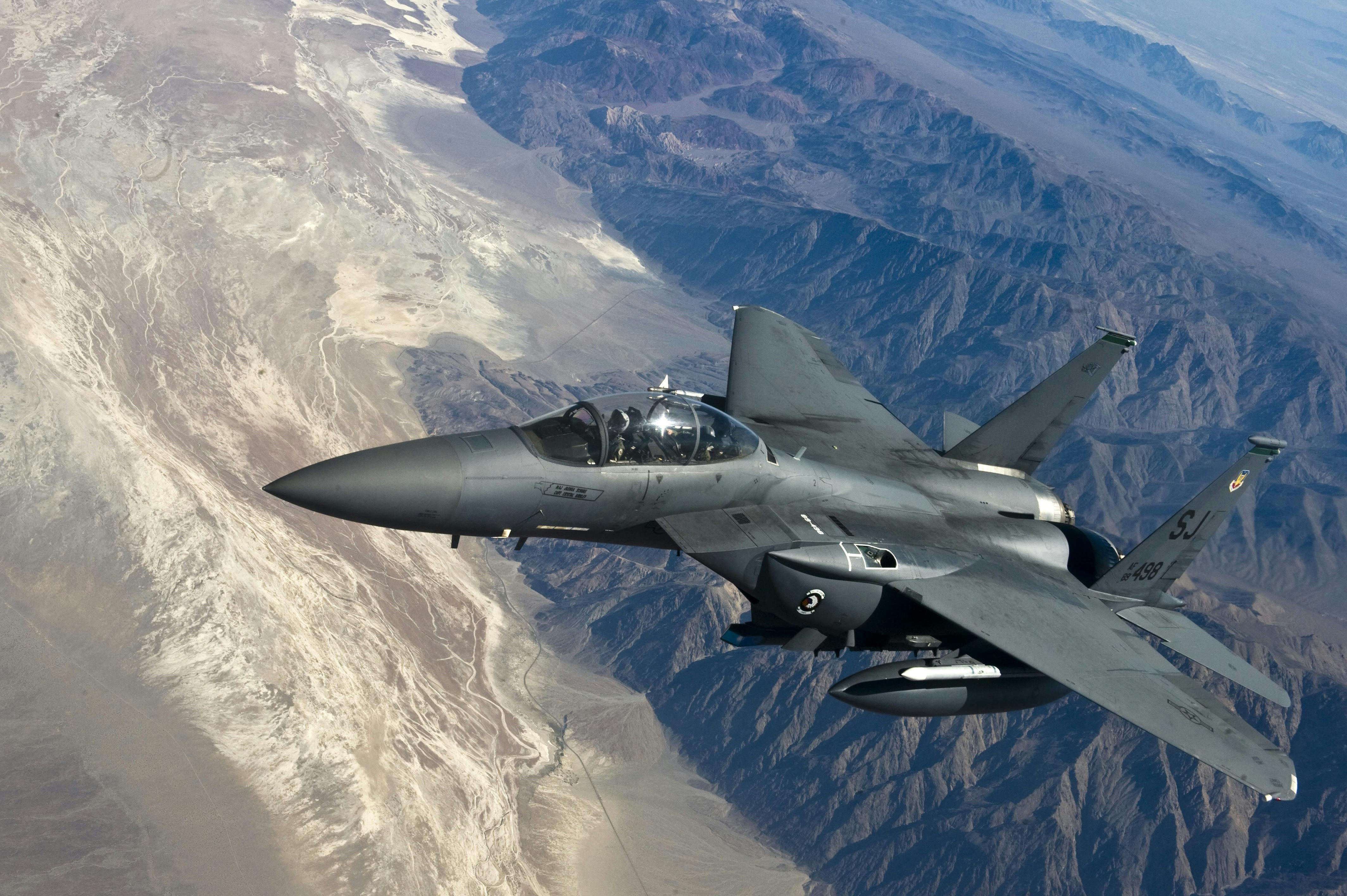
Tehran claims its air defense forces struck a United States Air Force F-16 fighter jet, forcing the aircraft into an emergency landing. United States Central Command flatly denies the incident ever happened, stating that all coalition aircraft are accounted for and operating normally.
Between those two irreconcilable statements lies the real story of modern conflict in the Middle East. When an adversary claims to have hit an American fourth-generation fighter and Washington responds with a categorical denial, the public is rarely witnessing a simple disagreement over facts. Instead, observers are looking at a calculated collision of military signaling, domestic political survival, and the brutal physics of modern aerial warfare.
To understand what actually happens when an Iranian air defense claim collides with a Centcom denial, you have to look past the press releases and examine the hardware, the geography, and the incentives driving both capitals.
The Mechanics of Modern Aerial Engagements
A fighter jet does not simply get grazed in the modern battlespace without leaving an unmistakable signature. The F-16 Fighting Falcon, even in its upgraded Block 50/52 or Block 70/72 configurations, is a single-engine multirole aircraft. That single Pratt & Whitney F100 or General Electric F110 engine is the ultimate vulnerability. Unlike twin-engine platforms such as the F-15E Strike Eagle or the F/A-18 Super Hornet, an F-16 taking catastrophic engine damage has zero redundancy.
If an Iranian surface-to-air missile system successfully engages an F-16, the physics are unforgiving. Modern SAM warheads—whether on Russian-built S-300PMU2 batteries, indigenous Bavar-373 systems, or Sevom Khordad road-mobile launchers—do not rely on kinetic impact. They utilize continuous-rod or high-explosive fragmentation warheads triggered by proximity fuses. When one detonates within lethal radius, thousands of high-velocity tungsten or steel fragments shred hydraulic lines, avionics bays, fuel cells, and turbine blades simultaneously.
An aircraft surviving a proximity detonation rarely limps away quietly. It trails smoke, dumps fuel, declares an in-flight emergency on international guard frequencies, and triggers an immediate, massive search-and-rescue mobilization across the entire theater.
The Digital Footprint of an Emergency Landing
In the Persian Gulf and surrounding airspace, secrecy around a crippled American fighter is nearly impossible to maintain. The region is one of the most densely monitored patches of sky on Earth. Commercial air traffic corridors run parallel to military transit routes. Civilian aviation enthusiasts, open-source intelligence analysts, and regional adversaries constantly monitor ADS-B transponders, unencrypted UHF/VHF guard channels, and air traffic control relays from Bahrain, Qatar, the United Arab Emirates, and Kuwait.
When an American tactical aircraft declares an emergency, a predictable chain reaction begins within seconds:
- Tanker Re-tasking: KC-135 Stratotankers or KC-46 Pegasus aircraft orbiting nearby immediately alter course to provide emergency fuel offload if the damaged jet is leaking.
- Rescue Alert: HH-60G Pave Hawk or HH-60W Jolly Green II combat search-and-rescue helicopters at regional bases spool up their engines, accompanied by HC-130J Combat King II refueling aircraft.
- Base Lockdown: The receiving airbase—whether Al Udeid in Qatar, Al Dhafra in the UAE, or Ali Al Salem in Kuwait—scrambles crash fire rescue trucks, shuts down commercial-adjacent runways, and arrests routine flight operations.
- Satellite and Commercial Imagery: Within hours, commercial synthetic aperture radar and optical satellites pass over regional runways, capturing any aircraft parked in an emergency containment area or towed into a hangar with visible structural damage.
None of these indicators occur in a vacuum. Hundreds of contractor personnel, local nationals, and allied military members work on these installations. Keeping a battle-damaged F-16 completely hidden in the smartphone era requires an operational security miracle that rarely survives contact with reality.
Why Tehran Issues Unverified Strike Claims
If the physical evidence of an F-16 strike is so difficult to fake and so easy for independent observers to verify, why does Tehran repeatedly make claims that Centcom can dismiss with a single sentence? The answer lies in asymmetric information warfare.
Iranian military leadership operates under an entirely different set of strategic constraints than the Pentagon. In Washington, an inaccurate public claim from Centcom destroys institutional credibility with Congress, the press corps, and allied defense ministries. In Tehran, military communications serve an immediate domestic and regional deterrence function where the perception of capability often outweighs verifiable truth.
Consider the internal pressures facing the Islamic Revolutionary Guard Corps and the regular Artesh air defense command. Every time Israeli or American forces operate near Iranian borders, strike proxy infrastructure in Iraq, Syria, or Yemen, or demonstrate overwhelming electronic warfare dominance, Tehran faces a credibility crisis at home. Hardline factions demand visible retaliation. Regional proxies—from Hezbollah in Lebanon to the Houthis in Yemen and militias in Iraq—watch closely to see if their primary patron can actually impose costs on the United States.
Announcing that an Iranian radar locked onto an American fighter and forced it out of the sky achieves three immediate goals for Tehran:
- Domestic Morale: It projects strength to a domestic audience conditioned to view Iran’s integrated air defense network as an impenetrable shield.
- Deterrence Signaling: Even if Pentagon planners know no jet was hit, a public claim forces American commanders to double-check their electronic order of battle, verify whether any Iranian mobile radar emitted unexpectedly, and assess if a new frequency-hopping technique was tested.
- Proxy Reassurance: It sends a message to allied militias across the region that American air supremacy is contested, encouraging them to maintain pressure on US ground installations.
The Anatomy of a Centcom Denial
On the other side of the ledger, a Centcom denial is a carefully calibrated instrument, though it is not without its own institutional blind spots. When Central Command states that no US F-16 was struck or forced into an emergency landing, the statement is vetted through operational security officers, legal advisors, and the Combined Air Operations Center.
The US military has a strict doctrine regarding battle damage and aircraft losses. Hiding a combat hit on a manned fighter carries catastrophic political risk in the United States. If a pilot is injured, if a jet is sitting in a hangar in Dhahran or Doha with shrapnel holes in the fuselage, and the Pentagon denies it, the eventual leak will trigger congressional investigations and devastate public trust. Historically, when US aircraft have been hit, damaged, or lost—from the 2019 shootdown of an RQ-4 Global Hawk drone over the Strait of Hormuz to various F-15E and F-16 mechanical emergencies—Washington has acknowledged the incident within hours, even while disputing the exact coordinates or circumstances.
However, seasoned defense analysts always read military denials with a magnifying glass. Language matters. There is a vast operational gray area between "a missile physically struck an F-16" and "an F-16 aborted its mission due to an electronic threat."
The Gray Zone Between a Hit and an Abort
In modern electronic warfare, a fighter jet does not need to be hit by shrapnel to be forced off its mission profile. Look at what happens during a high-intensity electronic engagement:
- Radar Lock and Threat Warning: An F-16’s Radar Warning Receiver detects a target-tracking radar locking onto the aircraft. The pilot executes high-G defensive maneuvers, deploys chaff and flares, and activates towed decoys or internal jamming pods.
- Fuel Burn and Diversion: Violent defensive maneuvering at low or medium altitude burns massive amounts of fuel in seconds. If the aircraft was already near its bingo fuel state—the minimum fuel required to return safely to base—a sudden threat reaction can force the pilot to abort the mission and divert to the nearest friendly runway.
- System Glitches: High-powered directed-energy or electronic jamming systems can occasionally trigger transient avionics faults, forcing a precautionary landing at an alternate airfield.
To a radar operator sitting in a command bunker inside Iran, watching an American aircraft abruptly break off its flight path, dive rapidly to break radar lock, drop altitude below the radar horizon, and divert toward a nearby airbase looks remarkably like a successful engagement. In the fog of electronic combat, an operator seeing a target vanish from a scope after a missile launch or radar lock can genuinely believe they scored a hit.
Meanwhile, from Centcom’s perspective, the aircraft landed safely with zero battle damage, meaning the Iranian claim is factually false. Both sides walk away from the same radar data telling entirely different stories.
Historical Precedents in the Gulf Skies
This dynamic is hardly new. The skies over the Persian Gulf and Levant have served as a laboratory for contested narratives for decades.
In June 2019, when Iran shot down a US Navy RQ-4A Global Hawk surveillance drone, Tehran immediately released debris coordinates and claimed the aircraft had violated Iranian territorial airspace. Centcom confirmed the loss of the aircraft quickly—because hiding a missing $130 million unmanned platform was impossible—but released flight track data showing the drone was operating in international airspace over the Strait of Hormuz.
Years earlier, in November 2012, Iranian Su-25 Frogfoot attack aircraft fired cannon rounds at an unarmed US MQ-1 Predator drone conducting routine surveillance in international airspace east of Kuwait. The Iranian pilots missed. The Pentagon initially kept the incident quiet for several days while reviewing diplomatic options, eventually confirming the engagement only after details began circulating in defense circles. Notice the difference: the US delayed disclosure of a missed shot, whereas actual hits or losses forced immediate transparency.
Even during the 2020 Iranian ballistic missile strike on Al Asad Airbase in Iraq, initial Pentagon statements suggested minimal impact and zero casualties. Over the following weeks, as medical evaluations progressed, the number of US service members diagnosed with traumatic brain injuries climbed past one hundred. That episode proved two enduring truths about military reporting: initial assessments in the immediate aftermath of an incident are frequently incomplete, and physical reality eventually overrides early talking points.
How to Read Contested Military Claims
When evaluating breaking reports of an F-16 emergency landing or an unverified air defense strike, experienced national security observers rely on a strict verification checklist rather than taking either government’s initial statement at face value.
| Verification Indicator | What It Proves | Where Analysts Look |
|---|---|---|
| NOTAMs (Notices to Airmen) | Sudden airspace closures or runway restrictions around military bases | International aviation databases (FAA, ICAO) |
| Tanker Orbit Shifts | Unusual refueling patterns indicating an aircraft staying airborne to burn fuel or troubleshoot | Open-source ADS-B flight tracking networks |
| Debris or Gun-Camera Video | Physical proof of missile launch, proximity detonation, or recovered components | State media broadcasts (IRIB, Tasnim, Fars) |
| Diplomatic Summons | Formal protests lodged through the Swiss Embassy in Tehran (which represents US interests) | Official foreign ministry readouts |
| Squadron Maintenance Tempo | Grounding of specific tail numbers or sudden arrival of depot-level repair teams | Spotter networks around regional airfields |
Look closely at the third row of that table: visual evidence. Whenever Iranian air defense forces have genuinely struck a Western asset, Tehran has wasted zero time parading physical proof before television cameras. When they captured the RQ-170 Sentinel stealth drone in 2011, they displayed it intact on state television. When they downed the Global Hawk in 2019, they fished the wreckage out of the Gulf and arranged it on tables for international journalists.
The complete absence of radar track recordings, electro-optical targeting pod footage, or recovered debris following a claimed strike on a manned US fighter is the single loudest signal in the room. Air defense batteries record every engagement. If an Iranian battery had actually put a missile near an F-16, the telemetry and thermal imaging from the launcher would have been broadcast across state media within the hour.
The Strategic Cost of Constant Brinkmanship
Whether an F-16 took shrapnel, dodged a radar lock, or simply flew a routine patrol uninterrupted, the recurring cycle of strike claims and denials highlights a dangerous reality in the Middle East. American and Iranian forces are operating in tightly compressed airspace with shrinking reaction times.
Every time US tactical aviation operates near the Iranian coast or along contested borders in Iraq and Syria, pilots fly inside the engagement envelopes of sophisticated surface-to-air systems. At Mach 0.9, the distance between international airspace and a territorial boundary is measured in seconds. A misread transponder code, an aggressive radar illumination, or an overzealous battery commander operating under decentralized rules of engagement can turn a routine patrol into an irreversible escalation before diplomats in Washington or Tehran even pick up the phone.
In that environment, information becomes ammunition. Tehran uses unverified strike claims to project parity against a technologically superior adversary, hoping to deter further pressure without triggering a full-scale war. Washington uses blunt denials to project invulnerability, maintain alliance cohesion, and deny Tehran a propaganda victory.
The public is left caught between two competing information machines, trying to separate psychological operations from kinetic reality. Until independent satellite imagery, aviation telemetry, or physical wreckage surfaces to contradict the Pentagon’s ledger, the battle over the F-16 remains exactly what most clashes in the Persian Gulf have become: a war fought on radar screens and press wires rather than in the wreckage of a downed jet.