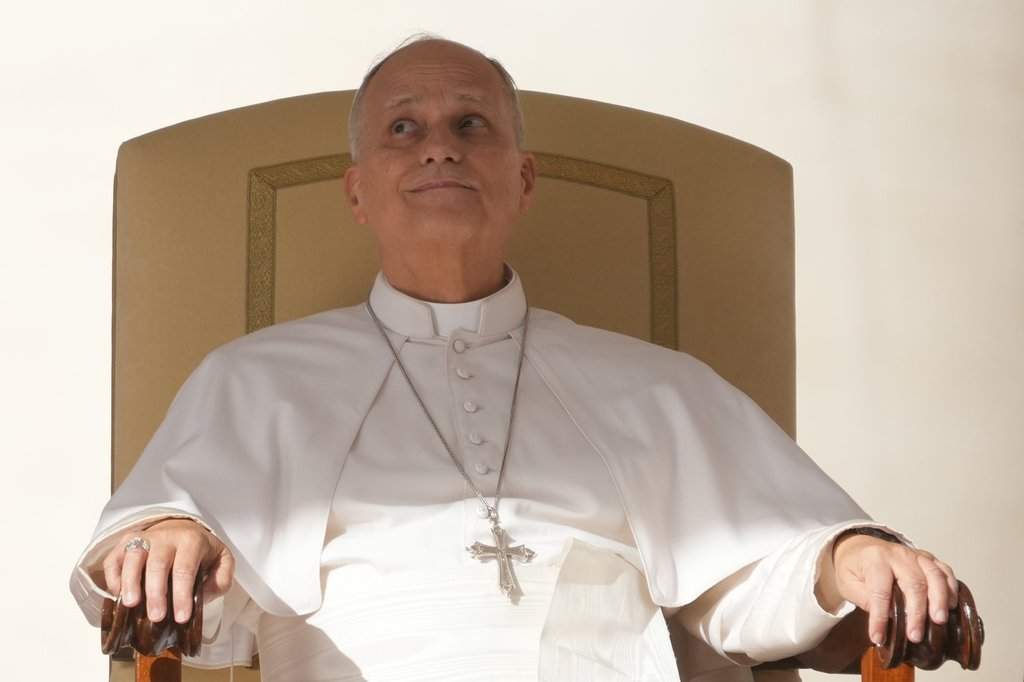
When the Holy See released a terse medical bulletin confirming that Pope Leo XIV required no further therapy following the surgical extraction of a localized pulmonary adenocarcinoma, international media treated it as a routine administrative victory. The 71-year-old pontiff had undergone a successful lower lobectomy of his right lung at Rome's Gemelli Hospital. Within days, he was walking the corridors, eating normally, and waving to crowds.
Yet the official narrative of effortless recovery masks a starker reality about the precarious intersection of modern oncology and the absolute monarchy of Vatican City. Behind the clinical reassurances lies a complex web of diagnostic precision, hurried decision-making, and the quiet vulnerability of a global spiritual leader confronting a disease that typically carries a heavy systemic burden. For an alternative perspective, see: this related article.
The tumor was discovered entirely by chance during a routine annual medical examination. For a man maintaining an exhausting international travel schedule—overseeing multiple apostolic journeys across continents and keeping a brisk pace since his election—the discovery of a pulmonary nodule acted as an immediate operational shock. Modern thoracic surgery relies heavily on advanced robotic bronchoscopy and high-resolution imaging to stage such anomalies before an incision is ever made. In Pope Leo's case, the lesion was identified early enough to be classified as localized, meaning the cancerous cells had not metastasized into regional lymph nodes or distant organs.
This early detection prevented what could have been a debilitating, multi-modal treatment protocol involving systemic chemotherapy or targeted radiation. Instead, lead thoracic surgeon Dr. Stefano Margaritora executed a ninety-minute procedure that removed the affected lower lobe entirely. The medical team opted for aggressive surgical removal over watchful waiting precisely because the patient's baseline physical fitness allowed for it. At seventy-one, Pope Leo is relatively young for a modern pontiff, a demographic reality that heavily influenced the clinical calculus. Similar coverage on this trend has been shared by Medical News Today.
Critics of institutional transparency often point out how the Vatican manages health crises. Historically, papal medical bulletins were shrouded in obfuscation, medical euphemisms, and prolonged silence. Pope Leo's administration broke sharply with that precedent. By openly naming adenocarcinoma—the most frequent subtype of non-small cell lung cancer—the Vatican allowed for an unprecedented public dialogue regarding preventive screenings.
To understand why this specific diagnosis carries such weight, one must examine the epidemiology of lung cancer in non-smokers. While tobacco use remains the primary driver for pulmonary malignancies, a significant percentage of adenocarcinoma cases occur in individuals with no history of smoking. Environmental exposure, localized air pollution, historical second-hand smoke exposure, and specific genetic predispositions frequently form the background etiology for these presentations. Medical analysts note that had the nodule been located higher in the upper lobes or central airways, it might have produced early warning symptoms like a persistent cough or hemoptysis, but lower peripheral nodules often remain silent until advanced stages.
The pope's swift return to public duties, including an intensive 12-day tour through Uruguay, Argentina, and Peru, was framed by Vatican communications as proof of total invulnerability. During an airborne press conference on the return flight to Rome, Leo dismissed notions that his mortality had altered his long-term agenda. He projected an image of endurance, telling reporters that his stamina is a divine gift.
However, medical professionals urge caution against interpreting an aggressive travel itinerary as a complete return to physiological baseline. The removal of an entire lung lobe permanently alters pulmonary reserve. While human adaptation to a diminished pulmonary bed can be remarkably efficient—especially in active individuals—patients frequently experience reduced maximum exercise capacity under stress. The sheer physical demand of managing multiple public engagements a day across high-altitude regions like Peru requires extraordinary cardiopulmonary compensation.
The absence of adjuvant chemotherapy or radiation does not mean the patient is completely free of long-term oncological surveillance. Standard post-surgical protocols for stage I adenocarcinoma require serial computed tomography scans every six months for the first two years, followed by annual screenings to monitor for local recurrence or new primary lesions. The Vatican's insistence that no further treatment is required is technically accurate regarding active therapy, but it elides the reality of lifelong oncological vigilance.
Pope Leo's ordeal serves as a high-profile case study in the power of early diagnostic imaging. Millions of individuals skip annual physical examinations due to time constraints or asymptomatic complacency. The pontiff's experience demonstrates that even individuals feeling in peak physical condition can harbor aggressive malignancies.
The machinery of the Holy See will continue to project an aura of divine resilience, wrapping the pontiff's recovery in the traditional language of spiritual strength and endurance. Beneath that rhetorical armor, biological reality persists. A missing pulmonary lobe cannot be replaced by faith alone, and the long-term trajectory of the pontificate will depend as much on the unglamorous cadence of oncological follow-ups as it does on international diplomacy.