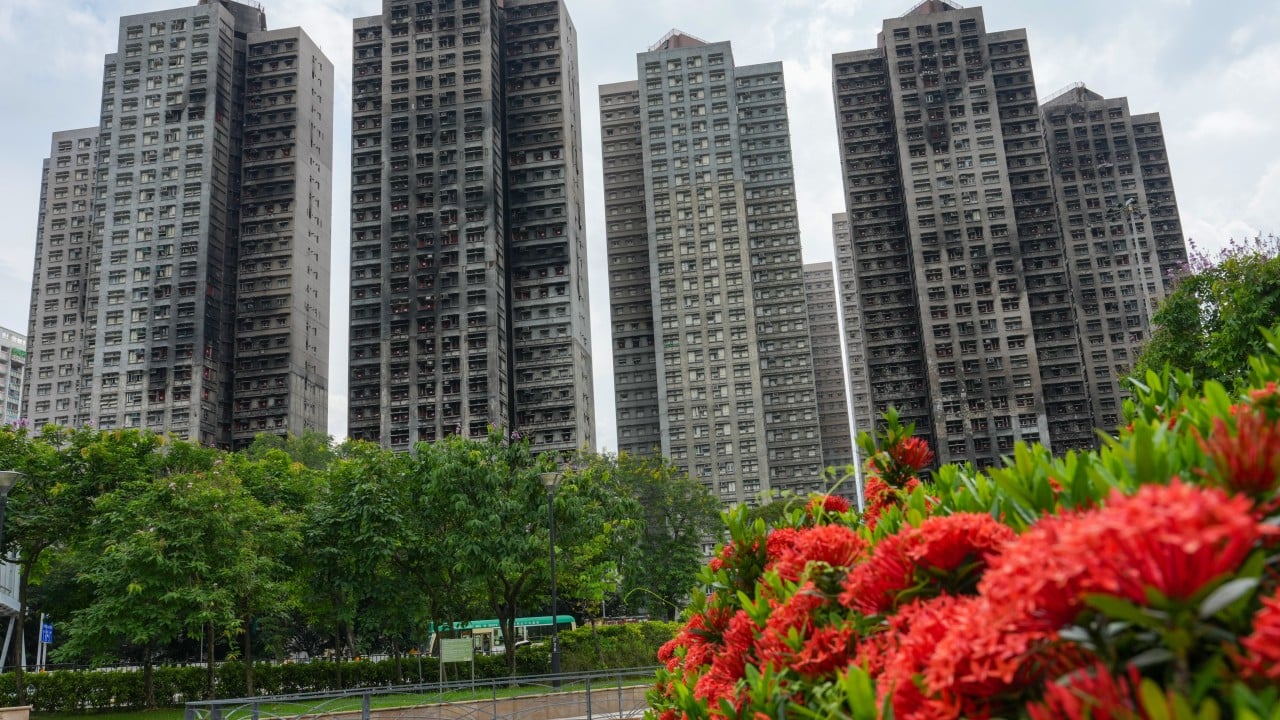
Why have 90 percent of Wang Fuk Court residents signed the government's buy-back letters despite deep reservations about being rushed into a permanent relocation? The answer lies not in widespread satisfaction, but in a state of financial entrapment. Following the devastating late 2025 blaze in Tai Po, the Hong Kong government's HK$50 billion acquisition scheme presented a stark choice: sign the acceptance papers immediately or face an uncertain future in a ruined estate with crashing post-disaster market values. This high-pressure environment explains why signatures flooded in even as families struggled to retrieve basic personal belongings.
The official narrative paints a picture of swift, compassionate governance. On paper, the numbers look like a resounding success for the administration. The Legislative Council Finance Committee recently approved an extra HK$1 billion in funding to expand the buyout to Block H, bringing the total financial commitment to an unprecedented scale. Statistics released by the Housing Bureau show that 1,565 households from Blocks A to G and 221 households from Block H have submitted their letters of acceptance. Officials point to these figures as proof that the community wants to move on.
They are wrong. The numbers mask a deeper crisis of leverage.
The illusion of choice in Tai Po
Submitting a signature is not the same as making a willing choice. For the residents of the 43-year-old estate, the timeline enforced by the authorities left little room for independent financial planning or legal consultation. The government issued its formal letters of offer with rigid deadlines, effectively forcing families to decide the fate of their primary asset under extreme duress.
It was a classic squeeze play.
Homeowners were caught between two impossible realities. On one hand, they could refuse the offer and attempt to hold onto their properties in a severely damaged complex. On the other hand, they could sign the agreement and surrender their homes for an average payout of HK$3 million per unit. Choosing to stay meant living in a ghost tower surrounded by construction scaffolding and severed utilities. The market value of these flats had plummeted to near zero in the wake of the fire. No independent buyer would touch a unit in a compromised structural block. By dangling a payout that sat comfortably above the ruined post-disaster market value but fell short of replacing a flat in the current Tai Po private market, the government created an offer that residents could not afford to refuse.
The financial calculus driving the signatures
The mechanism of this buyout relies heavily on the threat of eventual legal erasure. During the recent legislative debates, officials admitted that the current multi-billion dollar allocation covers only the immediate property acquisitions. It does not fund the eventual demolition or site redevelopment.
The strategy is clear. The government intends to consolidate property rights piece by piece until they hit a threshold that allows for total land resumption.
The threat of the Lands Tribunal
For the remaining 10 percent of owners who refuse to sign, the future looks incredibly grim. Officials have already dropped hints that mandatory land resumption legislation will be deployed if total voluntary acquisition fails. If the government takes the holdouts to the Lands Tribunal, the legal framework dictates that compensation must be assessed based on current market realities.
That is where the trap snaps shut. The legal compensation awarded by a tribunal would be tied to the depressed, post-blaze valuation of the estate. It would not match the proactive HK$3 million offers currently on the table. Residents know this. Neighbors talk to each other in temporary housing camps and community centers. The fear of being dragged through the court system only to receive a fraction of the current offer is what drove the final wave of signatures. It was panic, not peace of mind, that pushed the acceptance rate past the 90 percent mark.
The rental grant loophole that forced compliance
Bureaucratic adjustments arrived too late to prevent the initial rush of desperate decisions. Originally, the government structure for the two-year standard rental grant carried a highly restrictive clause. If a homeowner chose to take the cash payout and opt out of the special sales exercise for a new subsidized flat, their rental subsidy would cut off the exact day the buyout cash hit their bank account.
This created an immediate logistical nightmare. Property transactions take months to clear. Finding a new home, securing a mortgage, and completing a purchase takes even longer.
Faced with the prospect of immediate homelessness or sudden rent expenses without an active subsidy, hundreds of families signed their acceptance letters under the old rules just to secure a spot in the bureaucratic queue. Only recently did the authorities optimize the arrangement, announcing that the HK$300,000 grant would be paid in four instalments regardless of the chosen housing option. While this adjustment eases the transition for late signers, it offers zero comfort to the vast majority who surrendered their property rights weeks ago under far harsher terms. The early signers were used as leverage to build the momentum needed to show a high acceptance rate.
The human cost behind the data
Behind the tidy percentages listed in government press releases are displaced citizens who feel like ghosts in their own city. The relocation logistics have been handled with an administrative coldness that contradicts the official rhetoric of empathy.
Consider the plight of residents whose flats escaped direct fire damage. Their walls are intact, their furniture is unburned, yet they are barred from entering their homes freely. The establishment of an engagement team and a one social worker per household service sounds supportive on paper. In reality, it operates as a strict gatekeeping apparatus.
A single short visit. That is all some families get to salvage decades of life.
Elderly residents have been forced to leave behind heavy mahogany furniture, family heirlooms, and appliances because the logistical window provided by the authorities is too tight. They must apply for special permission just to retrieve documents or winter clothing. The government claims this is for public safety, citing structural liabilities across the eight blocks. Yet, the sight of private property being locked away behind government padlocks before the deed transfer is even complete has left a bitter taste in Tai Po. The signed letters of acceptance were secured by promising relief, but the delivery of that relief has felt like an eviction.
What happens to the vacant land
The long-term strategy for the Wang Fuk Court site remains shrouded in bureaucratic ambiguity. The government estimates it will take up to three years just to fully clear the property rights and secure the perimeter. During this window, prime real estate near the Tai Po Market MTR station will sit completely vacant.
This brings us to the core issue that independent analysts are beginning to voice. The acquisition is a massive transfer of valuable urban land from private working-class owners back to the state under distressed conditions. By capping the payout at an average of HK$3 million, the administration is clearing a major residential site at a discount compared to normal land resumption costs. Once the site is cleared, the potential for high-density redevelopment or lucrative public-private housing partnerships is immense.
The residents are realizing too late that they have sold low on an asset that will eventually be worth billions to the state. They signed because they needed immediate shelter, because their children needed stability, and because the alternative was financial ruin. The 90 percent sign-up rate is not a victory for public policy. It is a case study in how a state can use its overwhelming financial and legal weight to clear out a crisis quickly, leaving the victims to figure out how to rebuild their lives with payouts that won't even buy a comparable home in the neighborhood they lived in for forty years.