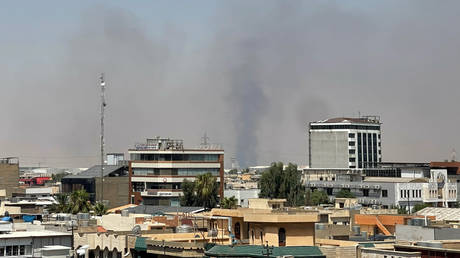
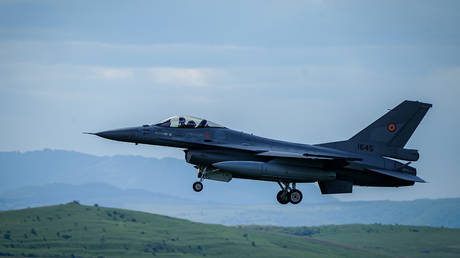
Israeli Prime Minister Benjamin Netanyahu is heading to Washington for a face-to-face meeting with U.S. President Donald Trump while nightly American airstrikes on Iranian infrastructure continue to rage. The trip highlights a stark strategic divergence between two allies whose interests are rapidly pulling apart. While the White House publicly frames the military campaign as a decisive display of strength, Washington remains stuck in a costly stalemate in the Strait of Hormuz that is destabilizing global energy markets. Netanyahu, meanwhile, faces mounting political pressure at home and a delicate balancing act with his coalition partners.
The upcoming bilateral discussions in Washington are nominally built around attending a memorial service for the late Senator Lindsey Graham, but the real work will happen behind closed doors. For weeks, U.S. Central Command has carried out repeated bombing runs targeting Iranian drone sites, coastal radar installations, and military hangars. Yet despite the tonnage dropped across the Iranian interior, Tehran has refused to capitulate. Instead, the conflict has widened into an asymmetrical war of attrition that threatens critical infrastructure across neighboring Gulf nations.
The Miscalculated Math of Operation Epic Fury
When American military operations expanded early this year, military planners operated on the assumption that focused pressure would break Tehran's resolve. That calculation failed to account for the structural resilience of Iran's defense apparatus. Rather than absorbing the strikes passively, Iranian forces decentralized their command chains and shifted toward targeting regional civilian assets.
Drones and ballistic missiles launched from the Iranian mainland have hit critical infrastructure in the Gulf, including power plants and essential desalination facilities in Kuwait. In arid desert nations, destroying a desalination plant isn't merely an attack on property; it cuts off the drinking water supply for millions of people.
The strategic misjudgment stems from a fundamental misunderstanding of regional deterrence.
American strategy relied on conventional air superiority to force a diplomatic outcome. Iran responded with cheap, mass-produced technology designed to inflict high economic and humanitarian costs on U.S. allies. Intercepting a $20,000 attack drone with a $2 million air defense missile creates a unsustainable financial drain. The math simply does not favor the defender when the battle space spans thousands of miles of coastline.
Furthermore, casualties among U.S. personnel stationed in the region have added domestic political risk for the White House. With service members killed and wounded in drone strikes on forward operating bases, the political space for prolonged engagement is narrowing quickly.
An Alliance Fractured Behind Closed Doors
On paper, the coalition between Washington and Tel Aviv appears firm. Both governments routinely issue declarations condemning Iranian aggression and affirming mutual security guarantees. Beneath the surface, however, the strategic objectives of both leaders have splintered.
Trump has repeatedly indicated a desire to secure a grand diplomatic bargain that reopens trade corridors and exits the conflict. His public statements reflect an interest in wrapping up military action, provided a deal can be framed as a political win. In contrast, Netanyahu views any short-term diplomatic compromise with skepticism.
The friction became undeniable when Washington attempted to negotiate a preliminary agreement to pause hostilities. Israeli forces subsequently executed targeted strikes against military assets in Lebanon and Iran, signaling that Tel Aviv would not be bound by agreements negotiated without its explicit consent.
Netanyahu's position is dictated by internal political realities. His governing coalition relies on right-wing faction leaders who reject half-measures against regional adversaries. Ending military operations without neutralizing the threat of short-range rocketry and long-range ballistic hardware could dismantle his parliamentary majority.
To illustrate how these competing priorities clash during executive decision-making, consider the following strategic divide:
| Policy Dimension | Washington Strategic Priority | Tel Aviv Strategic Priority |
|---|---|---|
| Primary Goal | Reopen maritime trade routes and exit the conflict | Permanently degrade strike capabilities and nuclear capacity |
| Risk Tolerance | Low tolerance for rising energy prices and U.S. casualties | High tolerance, viewing the threat as an existential survival issue |
| Diplomatic Stance | Open to tactical deals to secure shipping lanes | Opposed to premature agreements that leave infrastructure intact |
| Domestic Pressure | Voters weary of foreign military deployments | Coalition partners demanding complete victory |
This divergence creates a classic diplomatic dilemma. If the U.S. pushes too hard for an immediate pause, it risks alienating its primary regional partner. If it continues military strikes indefinitely, it risks being dragged deeper into an open-ended air war with no clear exit criteria.
The Strait of Hormuz Standoff and Economic Fallout
The real center of gravity in this crisis is not a battlefield, but a narrow stretch of water. The Strait of Hormuz serves as the arterial passage for roughly twenty percent of the world's petroleum supply. Commercial shipping through the waterway has ground to a virtual halt as marine insurers refuse to cover tankers operating in active combat zones.
Dozens of fully loaded supertankers remain anchored outside the passage, unwilling to run a gauntlet of Iranian anti-ship missiles, naval mines, and drone swarms. The economic ripple effects are expanding far beyond the Middle East.
Global oil benchmarks have experienced sharp volatility, driving up fuel costs for consumers in Europe, Asia, and North America. Fertilizer exports from the region have also suffered severe disruptions, threatening agricultural supply chains and raising food production costs globally.
Washington's stated goal of restoring freedom of navigation has proven far more difficult than anticipated. Escorting individual tankers with naval destroyers requires immense resources and leaves military vessels vulnerable to asymmetric saturation attacks. Tehran understands this dynamic completely. By enforcing an informal blockade through the threat of violence, Iran retains economic leverage even while taking physical damage from American airstrikes.
Negotiating a reopening of the strait has become complicated by Iran's demand to collect transit tolls and regulate maritime lanes. Accepting those terms would represent a major concession on international maritime law, something the U.S. state department has repeatedly refused to entertain.
Why Neither Side Can Afford a Way Out
Escalation dynamics follow a rigid logic once military forces are engaged. For Washington, pulling back without guaranteeing the safety of international shipping routes would signal a major retreat of American maritime dominance. For Tehran, accepting a cease-fire under bombardment without securing sanctions relief or regional security guarantees would be viewed internally as total surrender.
This leaves both powers trapped in a cycle of action and response. American commanders order another night of precision strikes against missile assembly factories. Iranian command units respond by launching salvoes against regional energy facilities or military outposts.
The diplomatic track remains active, but it operates under severe constraints. Brief memorandums of understanding have repeatedly collapsed because neither party trusts the other to abide by the terms once pressure is eased.
When Netanyahu sits down at the White House this week, he will not be looking for a peaceful off-ramp. He will be seeking commitments that American firepower will remain deployed until Iran's strike capacity is systematically dismantled. Trump, conscious of a domestic audience tired of overseas military operations, will be pressing for a quick resolution that allows him to claim a diplomatic victory.
These two objectives cannot be reconciled through rhetoric alone. As long as political survival in Tel Aviv requires maximum pressure and political survival in Washington demands an swift exit, the conflict in the skies over the Middle East will continue to widen.