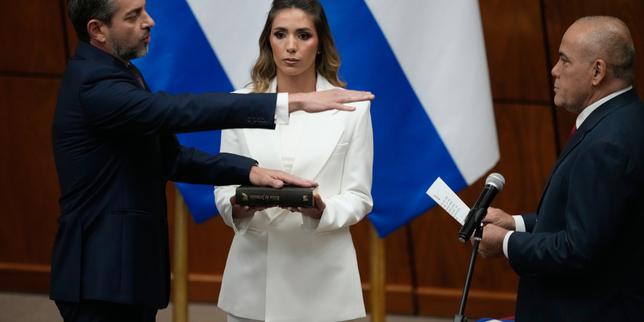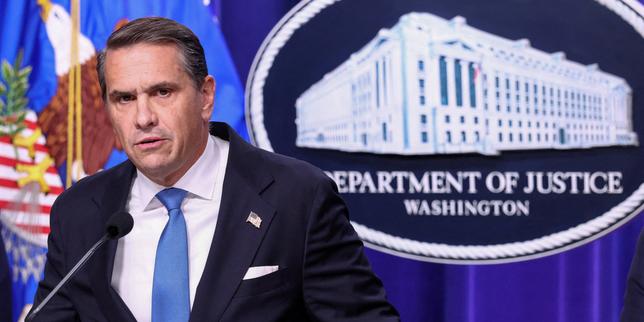
A quiet exodus is draining institutional memory from the upper and middle ranks of the United States Department of Justice. Career prosecutors, civil rights attorneys, and national security specialists are leaving their posts in concentrated waves, driven by shifting enforcement priorities, political friction, and intense pressure over prosecutorial independence. Unlike routine post-election turnover, these departures strip active investigations of lead counsel mid-stream and force remaining staff to absorb unsustainable caseloads while navigating sudden policy reversals from leadership.
The headlines usually focus on the marquee names. When a high-profile federal prosecutor or a deputy assistant attorney general steps down in protest, cable news panels debate the optics for forty-eight hours before moving on. That fixation misses the actual story. The real damage happens three tiers down the organizational chart, inside the specialized sections of Main Justice and the regional United States Attorney offices where decade-long cases are built brick by brick. Discover more on a related subject: this related article.
The Anatomy of an Institutional Exodus
Federal prosecution is an apprenticeship business. You do not learn how to untangle a cross-border money laundering scheme, prosecute a complex civil rights violation, or manage classified intelligence under the Classified Information Procedures Act in law school. You learn it by sitting second chair to a veteran trial attorney who has spent fifteen years memorizing the quirks of local federal judges and grand jury procedures.
When a wave of resignations hits the Department of Justice, that transfer of knowledge stops dead. More reporting by Reuters highlights comparable views on this issue.
Consider how a typical public corruption or antitrust case moves through the building. Investigations routinely span three to five years from the initial subpoena to a jury verdict. During that window, a small team of career attorneys builds personal rapport with cooperating witnesses, masters terabytes of discovery, and drafts airtight indictments designed to survive appellate scrutiny. When two senior lawyers on a four-person team walk out the door, the case does not simply pause. Witnesses grow nervous. Defense attorneys smell blood and file aggressive motions to dismiss or delay. The remaining junior lawyers, suddenly promoted beyond their experience level, spend months just trying to figure out where the files are stored and what promises were made to informants two years ago.
This friction is not theoretical. Across multiple administrations—and particularly during periods of sharp ideological swings at the top—specific divisions experience acute hemorrhaging:
- The Civil Rights Division, where shifts in voting rights enforcement and police consent decrees frequently clash with the career staff's long-standing litigation strategies.
- The Public Integrity Section, which operates under constant political scrutiny whenever investigations touch elected officials or campaign finance networks.
- The Environment and Natural Resources Division, where regulatory rollbacks can abruptly end years of corporate enforcement litigation.
- The National Security Division, where career lawyers balance intelligence community demands against strict constitutional standards.
Why Career Prosecutors Actually Walk Away
Outside observers often assume prosecutors resign over a single dramatic directive—a "Saturday Night Massacre" moment where an official refuses an unlawful order and hands in their badge. Those moments happen, and they make great television, but they account for a fraction of the departures.
Most resignations are cumulative. They are the result of death by a thousand bureaucratic cuts.
The Erosion of Prosecutorial Discretion
At the heart of the American justice system sits a delicate, unwritten bargain. The President sets broad policy priorities through the Attorney General, while career attorneys retain prosecutorial discretion—the day-to-day authority to decide whether the evidence supports a charge, what plea deal makes sense, and when a case lacks merit.
When political appointees begin micromanaging individual charging decisions, or when leadership signals that certain categories of defendants will receive scrutiny while others receive a pass, career lawyers face an immediate ethical bind. Under state bar rules and the Department's own Justice Manual, a prosecutor cannot bring a charge unless they believe admissible evidence will prove guilt beyond a reasonable doubt. Conversely, walking away from a rock-solid case because the target is politically connected violates the core ethos that brings most attorneys into public service in the first place.
If you are a veteran prosecutor and leadership suddenly demands you drop an investigation you spent three years building—or orders you to pursue an indictment you know will get laughed out of court—you have two choices. You put your name on the pleading, risking your law license and personal reputation, or you resign.
The Compensation Chasm
Ideals keep people in government; economics eventually push them out. A senior Assistant United States Attorney or a trial attorney at Main Justice earns a salary capped by the federal General Schedule, typically topping out around $190,000 to $220,000 depending on locality adjustments.
Walk three blocks down K Street in Washington, D.C., or step into a major firm in Manhattan, Chicago, or Los Angeles, and that exact same lawyer commands $800,000 to over $1.5 million a year as a white-collar defense partner. Private firms actively track waves of resignations at the Department of Justice. They maintain standing recruitment pipelines specifically designed to harvest disillusioned career prosecutors the moment an administration changes or an internal policy dispute turns toxic.
During stable periods, career attorneys turn down those private-sector paydays because the mission matters. They get to stand up in federal court and say, "I represent the United States." When internal turmoil strips away the autonomy that makes the job rewarding, the financial sacrifice stops making sense. Why endure eighty-hour weeks, hostile congressional subpoenas, and internal second-guessing for a fifth of your market value?
The Unspoken Cost of Silence
When seasoned attorneys leave, they rarely hold press conferences. Federal ethics rules, non-disclosure agreements covering grand jury secrecy under Federal Rule of Criminal Procedure 6(e), and basic professional survival keep them quiet. A lawyer looking to land a partnership at a major firm or a seat on the bench does not want a reputation as a whistleblower who airs internal departmental dirty laundry in the press.
That silence creates a dangerous optical illusion for the public. Because the departures happen quietly—announced via brief internal emails wishing a colleague well in their "next chapter"—citizens rarely grasp the scale of the brain drain until months or years later, when major enforcement actions quietly vanish from the docket or high-profile trials end in embarrassing acquittals.
How Leadership Replaces Lost Talent
When a wave of resignations hits a critical unit, political leadership cannot simply leave the desks empty. Yet hiring replacements inside the federal government is notoriously slow. Background checks conducted by the FBI for Top Secret or Sensitive Compartmented Information clearances routinely take six to twelve months.
To bridge the gap, leadership relies on temporary workarounds that carry their own risks:
- Detail Assignments: Pulling attorneys from less politically sensitive units—like tax enforcement or civil defensive litigation—and dropping them into high-stakes criminal or civil rights cases they have never handled before.
- Schedule C and Political Appointments: Expanding the ranks of non-career appointees inside operational sections, blurring the traditional firewall between policy-making leadership and case-by-case litigation.
- Case Triaging: Quietly closing preliminary inquiries and declining referrals from federal agencies like the Securities and Exchange Commission, the Environmental Protection Agency, or the FBI, simply because nobody is left in the building to read the files.
Let us look at a hypothetical example to see how this plays out in practice. Imagine a regional U.S. Attorney's office loses three of its five senior healthcare fraud prosecutors over a four-month stretch due to frustration over new settlement guidelines. The office cannot hire permanent replacements for nearly a year due to budget freezes and background check delays. To keep existing trials moving, the Criminal Chief pulls two prosecutors from the narcotics unit. Those attorneys spend six months learning the labyrinthine billing codes of Medicare and Medicaid while their own drug-trafficking cases stall. Meanwhile, six new whistleblower lawsuits filed under the False Claims Act sit untouched in a drawer, losing investigative momentum with every passing week. Nobody issued a memo canceling healthcare fraud enforcement, yet enforcement effectively stops.
The Counterargument Is Worth Hearing
Not everyone inside the legal establishment views a wave of resignations as an unmitigated crisis. In fact, a vocal school of thought—rooted in the unitary executive theory—argues that periodic purges and voluntary departures are healthy, necessary features of constitutional democracy.
Proponents of this view point out a basic structural truth: career prosecutors are unelected officials. When voters elect a President, they are voting for a specific vision of law enforcement, regulatory restraint, or aggressive prosecution. If career staff inside the Department of Justice dig in their heels and use bureaucratic inertia to slow-walk the policies of an elected administration, they subvert democratic accountability.
From this perspective, if a career attorney cannot in good conscience execute the lawful directives of the Attorney General, resigning is not a tragedy—it is the exact right thing to do. It clears space for new attorneys who align with the administration's mandate and forces the executive branch to own the consequences of its legal choices directly at the ballot box.
There is real merit to that argument, up to a point. An agency insulated entirely from elected leadership quickly becomes an unaccountable fourth branch of government. However, the unitary executive framework assumes that political appointees can seamlessly step in and run complex litigation without losing institutional competence. Decades of bureaucratic history prove otherwise. Policy direction comes from the top, but operational execution depends entirely on institutional memory. When you burn down the library because you dislike the librarian, nobody left in the building knows how to read the maps.
What Actually Happens to Active Investigations
The public often assumes that criminal and civil enforcement operates like a light switch—turn it off during one administration, flip it back on four years later. In reality, legal enforcement is bound by hard clocks and fragile human memory.
Every federal crime carries a statute of limitations, typically five years for standard white-collar and public corruption offenses. If a wave of resignations stalls an investigation for eighteen months while new attorneys get up to speed, the clock does not stop ticking. Targets destroy informal records, witnesses relocate or forget critical dates, and corporate defendants restructure their operations to shield assets.
Even worse is the damage done to cooperating witnesses. Federal white-collar and organized crime prosecutions rely heavily on insiders who flip against their bosses or co-conspirators. Convincing an executive or a mid-level operative to wear a wire or testify before a grand jury requires immense trust. That witness is betting their freedom, their career, and sometimes their physical safety on the personal integrity of the specific prosecutor sitting across the table. When that prosecutor abruptly resigns amid internal turmoil, the cooperator panics. Defense lawyers immediately exploit the vacuum, arguing to judges that the government's case is in disarray and pushing to withdraw guilty pleas or renegotiate cooperation agreements.
The Long-Term Scar Tissue
Rebuilding a hollowed-out legal division takes far longer than emptying it. Law school graduates watching a chaotic cycle of resignations, public feuds, and sudden policy reversals rethink whether public service is a viable career path. The Attorney General's Honors Program—historically the gold standard for recruiting the sharpest legal minds straight out of law school and federal clerkships—feels the chill immediately when the building looks unstable.
Once a section loses its reputation for independence and professional rigor, federal judges take notice too. Career prosecutors enjoy a massive built-in advantage in federal court: the presumption of regularity. Judges trust that when a career Assistant United States Attorney makes a representation at the podium, the facts have been vetted, the exculpatory evidence has been turned over under Brady v. Maryland, and the motion is filed in good faith. When waves of veterans exit and inexperienced replacements stumble through court appearances or reverse prior government positions overnight, that judicial deference evaporates. Judges begin demanding exhaustive evidentiary hearings, questioning government motives, and holding prosecutors to a far more skeptical standard.
Watching the Dockets Instead of the Headlines
If you want to understand the true impact of a wave of resignations at the Department of Justice, stop watching press briefings and start watching the federal court dockets in Washington, Manhattan, Chicago, and Los Angeles. The real story is written in the margins of routine filings. Look for sudden joint motions to stay proceedings for ninety days. Watch for career trial attorneys quietly filing notices of withdrawal of appearance on major indictments, leaving a single supervisor's name on the signature block. Pay attention when long-running corporate monitorships end early without explanation, or when major civil rights consent decrees are abruptly modified before a single reform takes hold.
Institutional collapse rarely announces itself with a bang; it arrives as a stack of unreturned phone calls, a series of missed filing deadlines, and an empty corner office where a twenty-year veteran used to keep the keys to the filing cabinet.