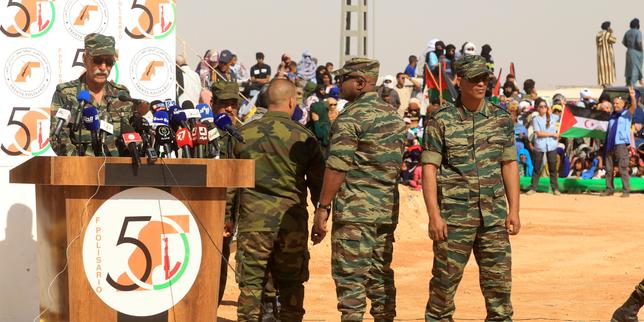
Diplomatic paralysis over Western Sahara has handed hardliners inside the Polisario Front their strongest argument in decades. As United Nations negotiations stall and international momentum shifts decisively toward Morocco's autonomy plan, younger factions within the Sahrawi independence movement are abandoning faith in peace talks and pushing for a full-scale military escalation against Rabat.
For nearly thirty years, the 1991 UN-brokered ceasefire held a fragile peace across the arid expanse of the Maghreb. That illusion shattered in November 2020 when Moroccan forces cleared a Polisario blockade at the Guerguerat border crossing near Mauritania. Since that morning, a low-intensity war of attrition has simmered along the 2,700-kilometer Moroccan defensive berm. Artillery exchanges, drone strikes, and nightly skirmishes have become routine. Yet the real danger lies not in the daily shelling, but in the internal political rupture taking place inside the Tindouf refugee camps in southwestern Algeria.
The Generational Split Inside Tindouf
To understand why escalation is looming, look at the demographics of the camps. A generation of Sahrawis has been born, raised, and educated entirely in exile under the administration of the Polisario Front and its self-proclaimed Sahrawi Arab Democratic Republic (SADR). Unlike the aging leadership—men in their seventies and eighties who fought the brutal desert war of the 1970s and 1980s and remember the exhaustion that led to the 1991 truce—these younger fighters see diplomacy as a trap designed to buy Rabat time.
The old guard promised a UN-supervised referendum on self-determination. That referendum never happened. Disputes over voter eligibility—specifically whether Moroccan settlers who moved into the territory after the 1975 Green March should cast ballots—paralyzed the UN Mission for the Referendum in Western Sahara (MINURSO) for three decades. Today, the word "referendum" has quietly vanished from the vocabulary of the UN Security Council.
For a twenty-five-year-old recruit in Tindouf, the diplomatic track has yielded nothing but permanent statelessness. Generational impatience has become the primary fuel for the militant wing. Within the Polisario’s political bureau and military command, younger commanders are openly questioning the strategy of restraint. They argue that keeping the conflict confined to symbolic harassment along the sand wall allows Morocco to consolidate its economic and diplomatic hold on the territory without paying a military price.
How Diplomatic Shifts Cornered the Independence Movement
The desperation among Polisario hawks is directly tied to a string of geopolitical victories scored by King Mohammed VI’s government. For years, Rabat’s 2007 Autonomy Plan—which offers Western Sahara local self-governance under Moroccan sovereignty—was treated by many capitals as merely one option among several. That is no longer the case.
In December 2020, the United States broke decades of diplomatic precedent by recognizing Moroccan sovereignty over Western Sahara in exchange for Rabat


