The casualty counts arriving from the front lines in Yemen rarely capture the quiet structural collapse that makes such rapid territorial shifts possible. When reports surfaced detailing more than one hundred deaths in a matter of days following a fierce Houthi military push, international monitors treated the numbers as yet another grim milestone in a decade-long war. That reading misses the mechanics. What happened on the ground was not merely a localized skirmish or a seasonal flare-up in a frozen conflict. It was a calculated escalation designed to exploit a fractured security vacuum, shifting regional priorities, and an exhausted civilian population caught between shifting front lines and collapsing institutions.
To understand why this offensive achieved such brutal velocity, we have to look past the immediate battlefield reports and examine the underlying dynamics of the Houthi military apparatus. For years, the movement has evolved from an insurgency into a deeply entrenched de facto governing authority across much of northern Yemen. This transition brought administrative control, taxation systems, and an institutionalized recruitment pipeline that sustains high-intensity operations even under severe economic strain. When the command structure orders a coordinated push across contested governorates, the resulting momentum catches adversary factions off guard, particularly when those factions are plagued by internal rivalries and fragmented command chains.
The Anatomy of a Rapid Advance
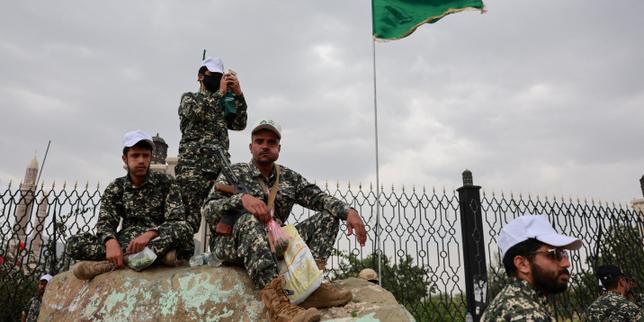
Military analysts often struggle to map out Houthi operational strategy because it diverges sharply from conventional doctrine. Traditional state militaries rely heavily on mechanized supply lines, heavy armor, and centralized communications. The Houthi forces operate with a decentralized, highly mobile cellular architecture that utilizes rugged terrain to absorb airstrikes and concentrate force at vulnerable points of contact.
Asymmetric mobility remains the primary driver of their battlefield success. By utilizing lightweight transport, pre-positioned local caches, and deep intelligence networks embedded within contested communities, attacking units can bypass fortified positions and encircle defensive pockets before a coordinated counter-offensive can be mounted.
The human cost of this operational model falls disproportionately on local communities who are conscripted or trapped in the crossfire. Hospitals in central governorates report acute shortages of surgical supplies, fuel for generators, and basic pharmaceuticals as casualty numbers overwhelm emergency wards. International aid organizations face persistent bureaucratic obstacles, movement restrictions, and security threats that hinder rapid triage and evacuation. The casualties are not just statistical points on a daily sitrep; they represent a compounding humanitarian deficit that deepens with every kilometer of advanced territory.
Regional Calculations and External Distractions
No major military maneuver in Yemen occurs within a vacuum. The timing of this offensive aligns with a broader regional recalibration where international attention is heavily fractured across multiple global crises. Major diplomatic actors who once maintained active mediation tracks in Sanaa and Riyadh have shifted their diplomatic capital toward other theaters, leaving local Yemeni actors with fewer external constraints.
The economic dimensions are equally critical. Control over internal transit routes, fuel distribution networks, and key logistical hubs provides the financial oxygen necessary to sustain military campaigns. Taxation of commercial goods moving through ports and checkpoints generates steady revenue, insulating the military wing from external economic shocks and allowing long-term campaign planning that defies conventional logic.
+-------------------------------------------------------------+
               Houthi Offensive Operational Drivers
+-------------------------------------------------------------+
| Decentralized Command    | High mobility, localized supply  |
+--------------------------+---------------------------------+
| Fragmented Opposition    | Internal rivalries among foes   |
+--------------------------+---------------------------------+
| Regional Divergence      | Fractured international focus   |
+--------------------------+---------------------------------+
| Logistical Self-Sufficiency| Internal taxation & transit control|
+-------------------------------------------------------------+
The Illusion of a Frozen Conflict
For years, observers categorized the war in Yemen as a stalemate, a low-intensity conflict frozen in place by an expired nationwide truce and sporadic diplomatic talks. This categorization fostered a dangerous complacency in foreign policy capitals. A conflict is only frozen until one side decides to rewrite the map. The recent surge in fatalities proves that the structural drivers of violence—unresolved territorial claims, unintegrated armed factions, and the complete absence of a unified political settlement—remain as potent as they were at the height of the war in 2015.
The international community's reliance on intermittent peace talks has often papered over the reality on the ground. While diplomats focus on high-level frameworks for power-sharing and civil servant salary payments, military commanders on both sides view negotiations as a tactical pause to rearm and reposition. When talks stall or fail to deliver immediate tangible gains, the default mechanism reverts swiftly to kinetic action.
Navigating the Informational Fog
Reporting on casualties and territorial shifts in Yemen requires constant triangulation. Official statements from military spokespersons routinely inflate enemy losses while minimizing their own, and local journalists face severe risks of detention, harassment, or worse if they step outside permitted narratives. Independent verification of front-line movements often relies on fragmented local testimonies, satellite imagery analysis, and humanitarian loggers who track displacement patterns in real time.
Displacement remains the truest barometer of military severity. When thousands of families flee overnight from rural districts into overcrowded urban peripheries, it signals an escalation far beyond normal skirmishing. These displaced populations carry tales of artillery barrages, mined agricultural lands, and forced recruitment drives that paint a harrowing picture of daily existence under offensive pressure.
The Broader Horizon
The trajectory set by this offensive points toward a volatile period ahead. If opposing factions fail to bridge their deep-seated divisions and establish a cohesive joint defense strategy, further territorial losses are practically guaranteed. The human toll will continue to mount, measured not just in immediate casualties, but in the permanent displacement of families, the destruction of scarce infrastructure, and the deepening of an already catastrophic humanitarian emergency. The war in Yemen is not winding down; it is simply entering a new, more unpredictable phase of violent adaptation.