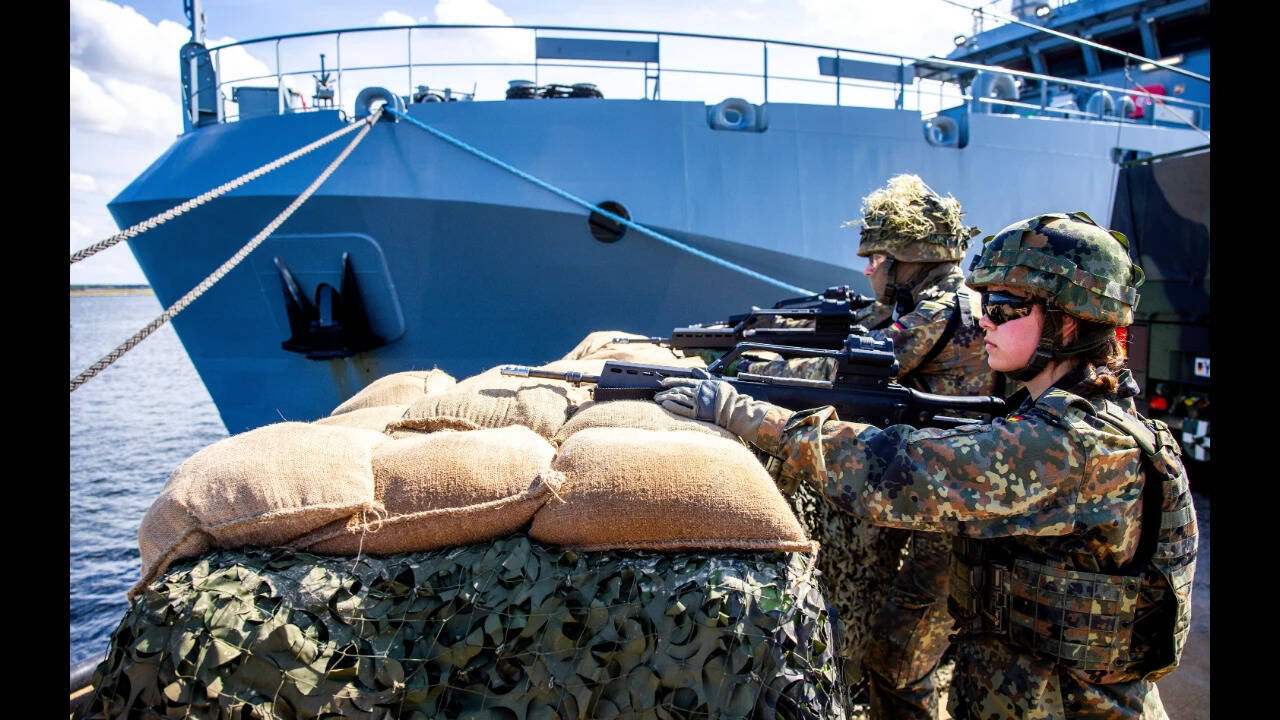
Command structures built on rigid hierarchy systematically suppress internal dissent and protect institutional reputation over individual welfare. When the German Ministry of Defense acknowledges widespread sexual misconduct within the Bundeswehr, the resulting pledge for reform exposes a predictable failure of organizational design rather than an isolated breach of discipline. Fixing this systemic breakdown requires dismantling the dual-role conflict of unit commanders, decoupling internal reporting from the chain of command, and tying officer promotion directly to unit climate metrics.
The Structural Mechanics of Military Misconduct
Standard news coverage treats military misconduct as a series of individual moral failings met with administrative promises of zero tolerance. That framing misses the operational reality. In any closed, hierarchical organization, behavior is dictated by incentive structures, friction in reporting channels, and the distribution of power. You might also find this similar article useful: Inside the Coordinated Hoax Bomb Threats Paralyzing European Schools.
The Bundeswehr operates under the doctrinal principle of Innere Führung—the concept of the "citizen in uniform," which theoretically balances military obedience with democratic rights and individual dignity. When misconduct proliferates across ranks, it signals a severe divergence between formal doctrine and informal unit culture. Three operational variables drive this divergence:
- Asymmetric Power Concentration: Junior personnel rely entirely on immediate superiors for performance evaluations, leave approvals, career progression, and daily living conditions. This dependency creates a high-cost environment for reporting abuse.
- Closed Social Ecosystems: Barracks, training grounds, and deployments isolate service members from civilian oversight and external support networks, intensifying group conformity and peer pressure.
- Reputational Risk Aversion: Mid-level officers are evaluated on unit readiness and the absence of friction. Escalating a misconduct report signals a loss of command control, incentivizing local suppression over formal adjudication.
The Principal-Agent Problem in Command Discipline
To understand why official pledges of "decisive action" routinely stall in implementation, apply the economic framework of the Principal-Agent Problem. As reported in recent articles by Reuters, the implications are worth noting.
In this structure, the civilian leadership—the Minister of Defense and the parliamentary oversight apparatus, including the Parliamentary Commissioner for the Armed Forces (Wehrbeauftragter)—acts as the Principal. The unit commanders and non-commissioned officers (NCOs) act as the Agents. The Principal mandates an ethical, compliant force. The Agent is tasked with executing this mandate while simultaneously maintaining operational readiness and unit cohesion.
Because the Principal cannot directly observe daily life inside every platoon, an information asymmetry emerges. The Agent possesses total visibility into unit dynamics, while the Principal relies on filtered upward reporting. When a misconduct incident occurs, the Agent faces two conflicting payoff matrices:
- Path A (Formal Escalation): The commander reports the incident up the chain. Immediate consequences include administrative investigations, temporary loss of personnel, external scrutiny, and a implicit mark against the commander's leadership record. The reward is abstract compliance with ministerial policy.
- Path B (Informal Containment): The commander handles the matter internally through informal reprimands, quiet transfers, or outright dismissal of the complaint. Immediate consequences include preserved unit metrics, zero external scrutiny, and uninterrupted readiness scores.
Rational actors operating under poorly calibrated incentives choose Path B. Until the cost of informal containment exceeds the administrative friction of formal escalation, ministerial vows remain unenforceable rhetoric.
The Four Friction Points of Internal Reporting
Analyzing the lifecycle of a misconduct complaint within a military hierarchy reveals four distinct bottlenecks where cases disappear before reaching disciplinary tribunals.
1. The Chain-of-Command Filter
Requiring a service member to report misconduct through their immediate superior introduces a fatal conflict of interest when the superior is either the perpetrator or a close associate of the perpetrator. Even when external channels exist, informal retaliation—such as assignment to undesirable duties, social ostracization, or subtly downgraded evaluations—acts as an immediate deterrent.
2. Evidentiary Decay in Closed Environments
Verbal harassment, coercion, and boundary violations rarely leave physical evidence. In high-cohesion units, bystanders face intense social pressure to remain silent to protect the group. Without independent, rapid-response investigators stationed outside the local garrison, witness testimonies align around the dominant narrative within hours of an incident.
3. Administrative Latency
Military disciplinary proceedings (Wehrdisziplinarordnung) frequently run parallel to, or pause for, civilian criminal investigations. When an investigation spans twelve to twenty-four months, the accused and the accuser often remain within the same garrison or brigade. This prolonged proximity imposes severe psychological attrition on the complainant, leading to high rates of withdrawal before a verdict is reached.
4. The Transfer Mechanism
A persistent administrative failure across Western militaries is the geographic redistribution of problem personnel. Rather than executing a discharge, commanders frequently transfer an offending soldier or officer to a different battalion to restore immediate unit harmony. This practice preserves local readiness metrics while exporting the liability to another command, effectively hiding systemic recidivism from central tracking.
Recruitment Demographics and Operational Readiness
The operational cost of unchecked misconduct extends directly into force generation and national security. Germany faces severe demographic headwinds and is actively attempting to expand the Bundeswehr to meet NATO capability targets. Achieving these personnel numbers is mathematically impossible without substantially increasing the recruitment and retention of women and younger cohorts who hold strict expectations regarding workplace safety and institutional accountability.
When a defense ministry publishes a report confirming widespread misconduct, the damage registers across three strategic metrics:
- Acquisition Cost: Recruitment marketing expenditure yields diminishing returns when public reporting contradicts the narrative of a modern, inclusive employer. Qualified candidates self-select out before entering the application pipeline.
- Attrition Rates: Trained specialists leaving the service prematurely due to toxic unit climates represent a direct loss of capital. Replacing a technical specialist or junior officer requires years of training investment that cannot be recovered through emergency hiring.
- Unit Cohesion: True cohesion relies on mutual trust under stress. Sexual harassment and assault fracture vertical trust between ranks and horizontal trust among peers, degrading combat effectiveness long before a unit deploys.
The Limitations of Standard Policy Interventions
Following public exposure, defense ministries typically deploy a standardized toolkit: mandatory sensitivity training, updated codes of conduct, and the creation of new advisory hotlines. Operational analysis demonstrates why these measures fail to alter baseline behavior.
Mandatory compliance training treats a structural power imbalance as an educational deficit. Perpetrators rarely engage in coercion or harassment because they misunderstand the rules; they do so because they calculate that the probability of enforcement is near zero. PowerPoint briefings do not alter risk calculations.
Similarly, advisory hotlines without executive authority create an illusion of institutional action while leaving power dynamics untouched. If a hotline counselor can only offer psychological support or advise the victim on how to file a formal complaint back into the standard chain of command, the primary bottleneck remains intact.
Re-Engineering the Accountability Architecture
To convert political commitments into measurable behavioral change within the Bundeswehr, leadership must replace cultural appeals with structural redesign. Execution requires four specific operational shifts:
1. Strip Commanders of Adjudicative Authority for Misconduct
Remove all investigative and initial charging authority for sexual misconduct and severe harassment from the local chain of command. Establish an independent, centralized prosecutorial office within the Ministry of Defense that reports directly to civilian leadership, bypassing division and brigade commanders entirely.
2. Implement Automated Geographic Separation
Mandate immediate, non-punitive administrative reassignment for the accused—not the complainant—upon the filing of a credible formal complaint. Removing the complainant from their unit penalizes the victim and disrupts their career trajectory; moving the accused preserves unit stability and eliminates the risk of witness intimidation.
3. Tie Officer Promotions to Climate Audits
Integrate anonymous, biannual unit climate surveys directly into the promotion boards for battalion and company commanders. If a unit exhibits statistically anomalous rates of unreported grievances, high attrition among junior ranks, or suppressed complaints, the commanding officer becomes ineligible for advancement, regardless of tactical exercise scores.
4. Enforce Transparent Discharge Metrics
Eliminate the internal transfer of personnel found guilty of misconduct. Mandate dishonorable or administrative discharge for substantiated offenses, and publish quarterly, anonymized disposition data—detailing reports filed, investigations opened, timelines to resolution, and final penalties—to the Bundestag Defense Committee.
Institutional culture follows accountability. Only when protecting a perpetrator carries a higher career penalty for a commander than exposing one will the internal behavior of the force align with its public doctrine.


