The screen glows. It is 3:00 AM.
A thumb swipes upward, a mindless, rhythmic motion that has become the default human gesture of the twenty-first century. With that single movement, a wave of digital noise crashes forward. It carries no warmth, no nuance, no room for breath. Only friction.
We used to believe the internet was a vast, infinite ocean where ideas could drift, collide, and morph into understanding. We were wrong. The internet is actually a shrinking room. Every day, the walls move inward just a fraction of an inch. The air grows thick. The voices grow louder, sharper, and more desperate to wound.
Consider what happens when a single, well-meaning suggestion enters this pressure cooker. It does not spark a conversation. It ignites a firestorm.
This is not a story about policy, geography, or the logistics of rural education, though those elements matter. This is a story about the fragile ecosystem of human discourse, and how easily it shatters when we forget there is a living, breathing person on the other side of the glass.
The Spark in the Dark
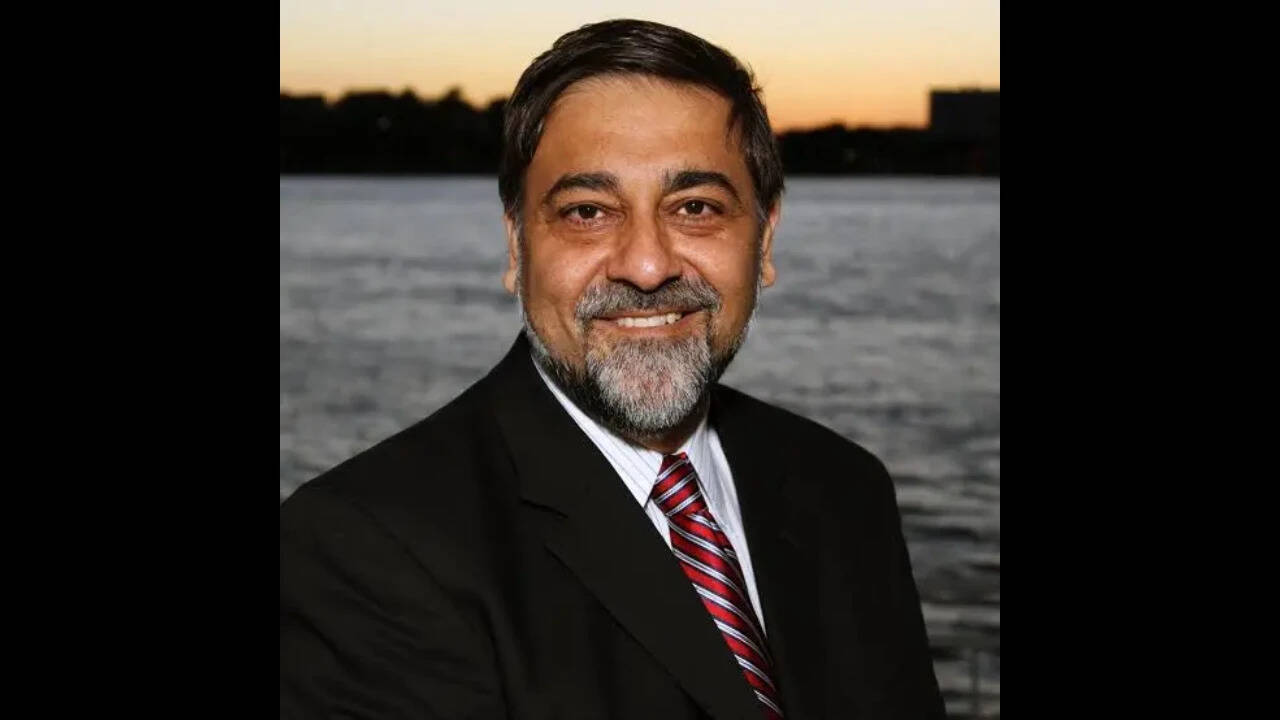
Vivek Wadhwa spent decades navigating the high-stakes, high-velocity world of Silicon Valley. He is a man accustomed to data, trends, and systemic problem-solving. When he looked at the growing crisis of teacher shortages in America’s most remote regions—specifically the isolated, icy expanses of rural Alaska—his mind did what an engineer’s mind always does. It looked for a bridge.
He saw an abundance of talent, energy, and intellect in India. He saw young, capable individuals who could fill these critical gaps, bringing knowledge to classrooms that had been empty for months. It was, in his view, a win-win scenario. A logistical puzzle solved with human capital.
So, he typed it out. A brief thought shared into the ether of social media.
Then came the avalanche.
The response was not a critique of visa logistics. It was not a debate on pedagogical methods in indigenous communities. It was a visceral, coordinated assault. Within hours, the narrative was ripped from his hands, twisted into something unrecognizable, and weaponized against him. The comments section transformed into a digital coliseum where the goal was not truth, but blood.
He was accused of modern-day colonialism. He was mocked, belittled, and targeted with a barrage of anti-India sentiment that felt deeply personal, organized, and relentless.
The businessman who had spent a lifetime analyzing disruption found himself disrupted in the most painful way possible. The attack felt coordinated, a symptom of a larger, darker trend where any voice originating from or associating with Indian success is immediately met with a fierce, irrational pushback.
The Geometry of Misunderstanding
To understand why this happens, we have to look at how we communicate now.
In a physical room, if you misinterpret my words, I can see the confusion freeze your face. I can soften my tone. I can raise my hands and say, "Wait, that is not what I meant." We have micro-expressions, the pitch of our voices, the shared atmosphere of the space.
Online, we have none of that. We have flat text.
Flat text is dangerous because it acts as a mirror for the reader’s own anxieties, biases, and anger. When Wadhwa suggested sending teachers to Alaska, some readers did not see a philanthropic or economic idea. They saw an outsider threatening local autonomy. Others saw an elite figure playing chess with human lives. The nuance was vaporized instantly.
But the real problem lies elsewhere. It rests in the algorithms that govern these platforms.
These digital engines do not care about harmony. Harmony is quiet. Harmony does not keep a user scrolling for three hours. Anger does. Outrage does. The systems are explicitly designed to amplify the most extreme reactions to any given statement. If someone responds to a post with a thoughtful, measured critique, it sinks to the bottom. If someone responds with a vitriolic, xenophobic insult, the system flags it as "highly engaging" and pushes it to the top of everyone’s feed.
Wadhwa wasn't just fighting angry individuals. He was fighting a multi-billion-dollar machine engineered to make people furious.
The Human Cost of the Digital Siege
It is easy to look at a public figure, an investor with a public profile and a platform, and assume they are immune to the venom. We imagine them sitting in comfortable offices, shielded by their achievements.
That is an illusion.
No one grows a thick enough skin to withstand thousands of people screaming at them simultaneously. The human brain is simply not wired for mass rejection. For hundreds of thousands of years, exile from the tribe meant literal death. When a digital mob descends, our ancient, evolutionary biology interprets that data as a physical threat. The adrenaline surges. The chest tightens. The sleep disappears.
Wadhwa noted that the anti-India attacks are getting completely out of control. That phrase—out of control—is telling. It reflects the terrifying realization that the guardrails are gone.
What we are witnessing is not a series of isolated incidents, but a shifting cultural tide. The internet, which once promised to democratize information and bring global communities closer together, is being used to build higher walls. The prejudice directed at Wadhwa is a reflection of a growing tribalism, a fear of the global citizen, and a resentment of success that crosses borders.
Imagine a young person watching this unfold. A teenager with a brilliant idea, a unique perspective, or a desire to bridge two cultures. They see a seasoned veteran of the industry get torn apart for a harmless suggestion. What do they do?
They shut up. They delete their draft. They retreat into the safety of silence.
Every time a digital mob wins, the collective intelligence of the internet drops by a fraction. We lose the ideas that were never shared because the creators were too terrified of the cost.
The Path Back to the Light
We cannot fix the internet by shouting louder into the void. We cannot fix it by demanding better moderation from corporate giants who profit off our collective rage.
The shift has to be internal. It requires a conscious, daily refusal to participate in the demolition of another human being's dignity. It means pausing before we hit reply. It means asking ourselves a simple question: Am I trying to understand, or am I just trying to win?
Wadhwa’s experience is a warning flare. It shows us where we are headed if we keep allowing the loudest, cruelest voices to dictate the boundaries of our conversation.
The sun rises over the horizon, casting a pale light across the cold landscape of Alaska, and thousands of miles away, across the vibrant, bustling streets of India. The physical world remains vast, beautiful, and full of people who genuinely want to help one another. The digital world, however, remains trapped in its own dark loop.
The screen stays bright, waiting for the next target, hungry for the next storm.