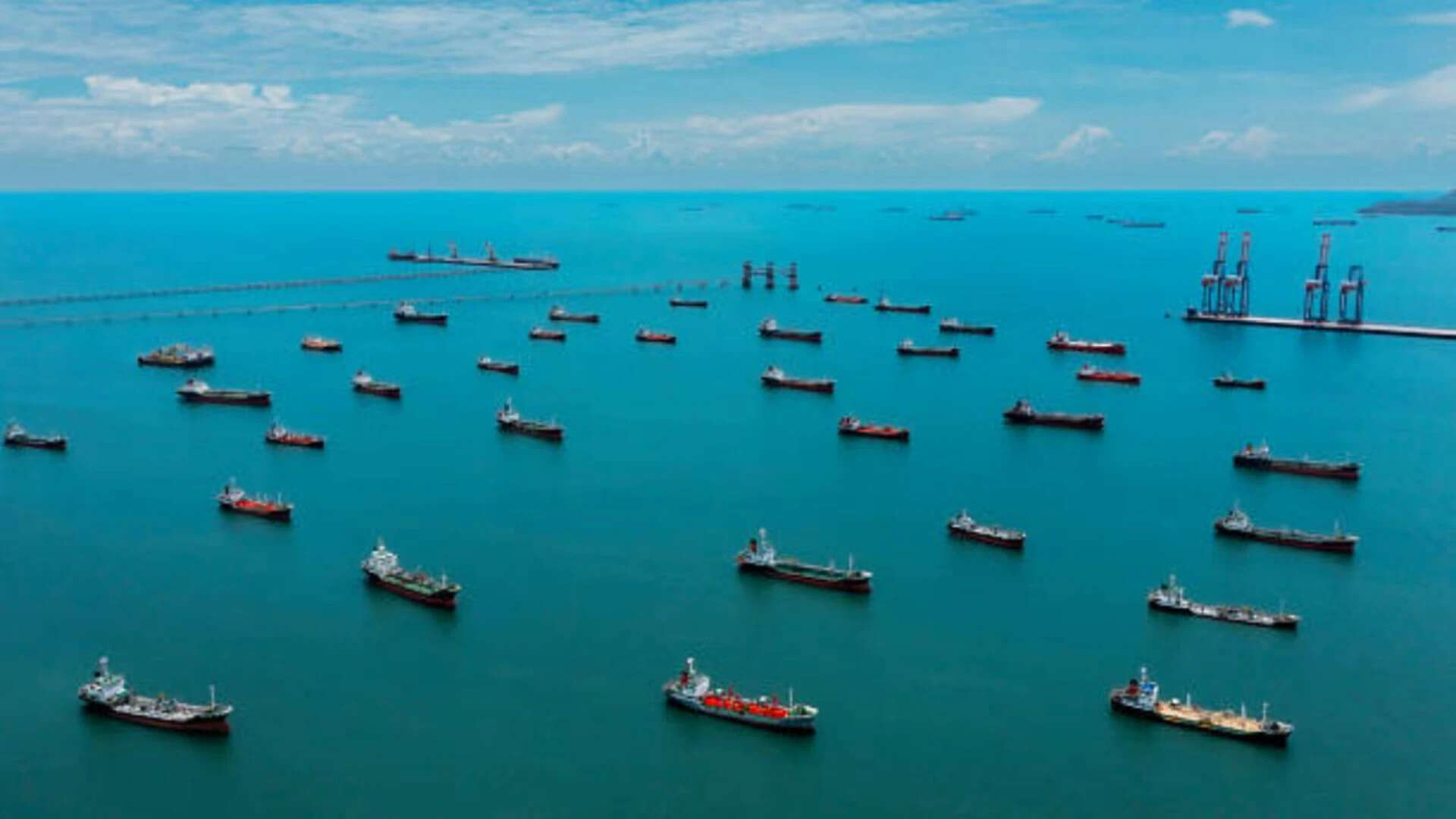
When geopolitical conflict grinding maritime trade to a halt gets reported on the news, analysts almost always focus on crude oil prices, supply chain bottlenecks, and rising insurance premiums. But right now, thousands of cargo vessels, tankers, and bulk carriers sitting idle in warm tropical waters near the Strait of Hormuz are quietly building up a different kind of crisis.
They're growing thick, bio-diverse layers of biofouling on their hulls.
When a commercial vessel moves constantly at 15 to 24 knots, marine organisms struggle to attach themselves. The friction created by movement acts as a natural cleaner, and antifouling paints on modern hulls work best when water is flowing past them. But leave a massive steel container ship motionless in warm, nutrient-rich waters for weeks or months, and the hull turns into a prime real estate strip for marine life. Algae attach first, forming a slimy film. Barnacles, mussels, tubeworms, and invasive bryozoans quickly follow.
If these thousands of idle ships trapped near the Strait of Hormuz start moving again without proper cleaning, they will carry millions of non-native organisms directly into sensitive ecosystems around the globe.
Why Standing Still in Warm Waters Creates an Ecological Powder Keg
The Persian Gulf and the Gulf of Oman present a unique biological scenario. The water is shallow, salty, and warm. Sunlight penetrates deep into the water column, fueling rapid algal growth.
Under normal shipping conditions, a vessel stops in port for a day or two, unloads, and resumes its voyage. The toxic compounds in antifouling paint—typically copper-based coatings or silicone foul-release systems—deter marine organisms. But those coatings require shear stress from water flow to shed biofouling layer by layer or to prevent settlement effectively.
When a ship sits stagnant in high-temperature water, several things happen simultaneously:
- Copper leaching rates spike initially and then drop off, rendering the coating far less effective.
- Silky micro-algae build a biofilm shield over the hull surface, creating a substrate where larger organisms can anchor.
- Marine larvae floating in the water column settle into sheltered niches like sea chests, propeller shafts, rudder trunks, and bow thrusters.
It doesn't take months for this to happen. In warm water environments, significant biofouling happens in under two weeks. A ship stationary for 60 days near the Strait of Hormuz isn't just dirty; it becomes a fully functional ecosystem.
The Hidden Nooks That Traditional Hull Cleanings Miss
When supply chains clear and these ships finally receive orders to sail, vessel operators will face massive pressures to make up lost time. Most shipowners won't send their vessels to drydock for a full biofouling scraping, which costs hundreds of thousands of dollars and takes weeks. Instead, they will rely on quick in-water hull cleanings or simple high-speed runs.
That is a huge mistake.
In-water cleaning often strips surface barnacles from the broad flat sides of the hull, but it misses internal seawater systems. Ships draw in massive quantities of seawater for engine cooling through intake grates called sea chests.
Inside these dark, warm, protected sea chests, organisms multiply without interference. While the outer hull might look clean to a diver, the internal piping can harbor dense colonies of invasive mussels, sea squirts, and crabs. When the main engines start up and the vessel travels across the ocean, these organisms stay protected inside the sea chest, surviving long voyages across freezing or deep-ocean waters before spilling out into fragile destination ports in Asia, Europe, or North America.
Why Biofouling Is Far Worse Than Ballast Water Discharge
For decades, the global shipping industry treated ballast water as the primary vector for marine invasions. In response, the International Maritime Organization established the International Ballast Water Management Convention, requiring modern ships to install ballast treatment systems that use ultraviolet light or chemical treatment to kill organisms before discharging water.
Biofouling is much harder to regulate and contain.
Unlike ballast water, which stays inside tanks until pumped out, hull biofouling is constantly exposed to the marine environment. Every hour an infested ship stays docked or anchored in a foreign port, organisms on its hull spawn. Female barnacles and invasive mussels release millions of larvae into local waters.
Studies from marine biologists at institutions like the Smithsonian Environmental Research Center show that biofouling accounts for up to 70% of non-native marine species introductions in regions like New Zealand and California. Ballast water gets the headlines, but the hull bottom does the actual damage.
The Financial Trap Facing Vessel Owners
This isn't just an ecological problem; it's an economic nightmare for vessel operators who think they are saving money by waiting out geopolitical delays.
When a vessel covered in heavy biofouling resumes transit, the added friction drastically increases hydrodynamic drag. According to studies published by the International Maritime Organization, even a thin layer of micro-fouling like slime can increase fuel consumption by 10% to 15%. Severe biofouling—like dense barnacle clusters or tubeworm colonies—can increase drag by up to 60%.
To put that into perspective, a large container ship burning 100 tons of fuel per day at sea could easily waste an extra 15 to 40 tons of fuel every single day just to overcome the drag caused by hull growth accumulated while idling near the Strait of Hormuz.
With modern carbon intensity standards like the IMO's CII (Carbon Intensity Indicator) regulations now strictly enforced, that extra fuel burn will tank a vessel's environmental rating, potentially leading to operational restrictions or severe financial penalties in strict jurisdictions like the EU.
How Ports and Maritime Authorities Must Handle Infested Vessels
If regulatory bodies want to avoid catastrophic ecological invasions in 2026 and beyond, they cannot treat returning vessels as business as usual. Port state control officers need to step up enforcement before ships drop anchor in sensitive regions.
Enforce Strict Pre-Arrival Biofouling Inspections
Port authorities in places like New Zealand and Australia already operate strict biofouling management regimes. Other major shipping hubs in North America, East Asia, and the Mediterranean must follow suit. Ships coming off prolonged idle periods near the Strait of Hormuz should be required to submit recent hull inspection logs or underwater video footage before entering territorial waters.
Ban Non-Recapturing In-Water Cleaning
A common practice in cheap ports is hiring divers to scrub hulls using motorized brush karts without capture technology. This practice actually makes the invasive species problem much worse. Brushing knocks live organisms and egg-laden fragments off the hull, dropping them directly onto the seabed of the port where they instantly colonize local habitats. Ports must mandate the use of closed-loop in-water cleaning systems equipped with filtration mechanisms that trap and destroy removed organic material.
Mandate Sea Chest Anti-Fouling System Audits
Inspectors must look beyond the flat bottom of hulls. Marine survey teams should require inspection logs for internal sea chest growth-prevention systems (MGPS). If a ship sat stationary with its generators running continuously, those internal systems may have run out of protective anodes or failed due to heavy siltation.
Ship operators idling near high-risk tropical corridors need to take immediate steps to protect both their bottom line and local marine ecosystems:
- Run anti-heeling and internal seawater circulation flushes regularly to prevent larval settlement inside sea chests.
- Schedule proactive hull grooming—gentle cleaning using soft micro-fiber brushes while fouling is still at the slime stage—before heading out on long ocean transits.
- Keep detailed records of all idle periods exceeding 14 days, including water temperatures and locations, to simplify compliance audits at destination ports.
- Budget immediately for propeller polishing and hull cleaning costs to offset the inevitable drag penalty before resuming full-speed operations.

/https://i.s3.glbimg.com/v1/AUTH_e84042ef78cb4708aeebdf1c68c6cbd6/internal_photos/bs/2026/g/B/3vpkvHQKizRKAfzDxjXA/vini-jr-antes-e-depois.jpg)